Comments Off on World Cup, World Heritage: Explore Special Places Near Boston and Around the Globe
This summer, the world is coming to Massachusetts.
With 2026 FIFA World Cup matches scheduled at Gillette Stadium, visitors from across the globe will arrive in Boston and Foxborough to cheer on their teams, celebrate the beautiful game, and experience a little of New England along the way. For those traveling from afar — or for locals looking to make the most of the moment — it is also a wonderful opportunity to explore the historic landscapes, coastal views, woodlands, farms, gardens, and cultural places that make this region so distinctive.
Thanks to The Trustees of Reservations, Massachusetts is home to 120 special places that protect the state’s natural, cultural, and historic heritage. And for National Trust for Scotland members, this moment is a reminder of something even bigger: heritage connects us across borders.
Through the International National Trusts Organisation, National Trust for Scotland Foundation USA membership opens the door to a world of extraordinary places cared for by kindred organizations around the globe.
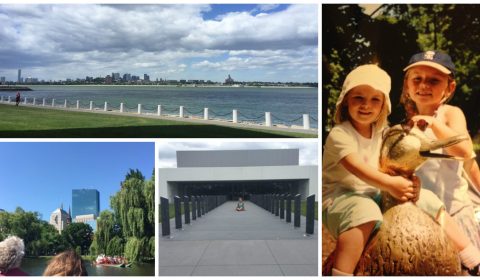
Governor Hutchinson’s Field in Milton
Heritage close to the action
For those staying in Boston during World Cup festivities, The Trustees have highlighted several easy day trips that are accessible by public transportation.
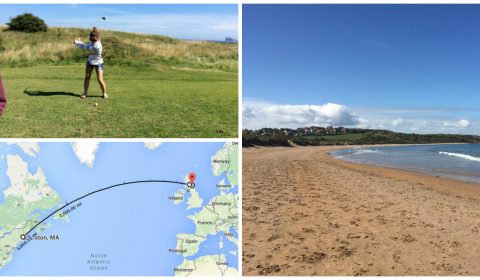
At World’s End in Hingham, visitors can walk more than four miles of carriage paths and footpaths across coastal drumlins, with views of the Weir River, Hingham Harbor, and the Boston skyline. Designed in part by landscape architect Frederick Law Olmsted, the site offers a peaceful escape from the city — close enough for an afternoon visit, but expansive enough to feel worlds away.
World’s End in Hingham.
Other Boston-area Trustees destinations include Governor Hutchinson’s Field in Milton, with views of the Neponset River marshes and Boston Harbor; City Natives in Mattapan, a native plant nursery and horticultural learning center; Weir River Farm in Hingham, one of the last working farms in the area; and Castle Hill on the Crane Estate in Ipswich, a grand seaside estate with designed gardens, natural areas, and the iconic Great House.
For fans staying closer to Gillette Stadium, The Trustees’ Foxborough guide offers several nearby options within a short drive. Moose Hill Farm in Sharon features trails, hayfields, pastures, and views toward Great Blue Hill and the Boston skyline. Francis William Bird Park in Walpole offers meandering paths, open lawns, ponds, and stone bridges. Signal Hill in Canton, Rocky Woods in Medfield, and the Governor Oliver Ames Estate in Easton all offer opportunities to step away from the crowds and experience the region’s layered landscape and history.
Moose Hill Farm in Sharon
A global network of special places
The connection between World Cup travel and heritage travel is not just local. It is international.
The National Trust for Scotland recently highlighted several places around the world cared for by fellow heritage organizations, including Villa Gregoriana in Italy, Ammersoyen Castle in the Netherlands, and World’s View in Zimbabwe, to name a few.
Each place tells a different story. Some preserve dramatic landscapes. Others protect architecture, wildlife, gardens, archaeology, or the memory of communities who shaped the land around them. Together, they reflect a shared belief: special places matter, and they need care.
For members and supporters of the National Trust for Scotland Foundation USA, that idea is at the heart of what we do. Whether your love of heritage begins with a castle in Aberdeenshire, a battlefield in the Highlands, a coastline in Massachusetts, or a garden halfway around the world, the work is connected.
Villa Gregoriana in Italy
Scotland, Massachusetts, and the world
NTSUSA exists to help Americans support the National Trust for Scotland’s work to protect and share Scotland’s irreplaceable places. But that mission is also part of a wider global movement.
Across the world, National Trusts and heritage organizations are caring for places that hold stories of art, architecture, nature, migration, conflict, innovation, memory, and community. These places are not static. They are living landscapes and buildings that continue to welcome visitors, inspire curiosity, and connect people to the past in ways that feel deeply present.
The World Cup brings people together through sport. Heritage does something similar. It reminds us that places can hold identity, pride, belonging, and shared experience — sometimes all at once, and occasionally with fewer penalty kicks.
Plan your own heritage adventure
If you are visiting Massachusetts for the World Cup, consider adding a Trustees property to your itinerary. If you are an NTSUSA member planning future travels, take a closer look at the global network of INTO places your membership may help you explore.
Before visiting any site, be sure to check the host organization’s website for current opening hours, admission information, and member access details.
Whether you are cheering from the stands in Foxborough, walking the paths at World’s End, or dreaming of your next trip to Scotland, this is a perfect season to celebrate the places that bring us together.
Castle Hill on the Crane Estate in Ipswich
Comments Off on Sunset Tea, Wine & Pimms (NYC, 7/14/26)
Sunset Tea, Talk & Reception in Central Park
Join the National Trust for Scotland Foundation USA and the American-Scottish Foundation for a summer evening celebrating Scotland’s islands, New York City’s outdoor arts legacy, and the beauty of Central Park.
The evening will feature a talk by Kirstin Bridier, Executive Director of The National Trust for Scotland Foundation USA, followed by an iced tea and Pimm’s reception on the rooftop of The Arsenal in Central Park.
A Journey Through the Hebrides
Presented by Kirstin Bridier, Executive Director, National Trust for Scotland Foundation USA
Join Kirstin Bridier as she explores Scotland’s islands aboard the Hebridean Princess. From Iona, the cradle of Scottish Christianity, to remote St Kilda, the UK’s only dual UNESCO World Heritage Site, this travelogue will pair stories of island history and culture with vivid views of turquoise seas, towering sea stacks, and spectacular wildlife.
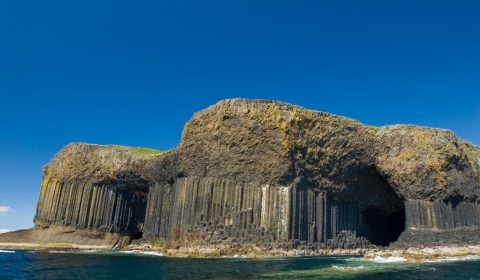
Guests will learn how American Margaret Fay Shaw helped preserve Gaelic language and song from her home on the Isle of Canna, virtually visit Fingal’s Cave on Staffa—the dramatic landscape that inspired Mendelssohn’s Hebrides Overture—and explore Inverewe Garden, an extraordinary garden created from barren wilderness by Sir Osgood Mackenzie in the 19th century.
About Kirstin Bridier
Kirstin Bridier is the Executive Director of The National Trust for Scotland Foundation USA.
She previously served as the curator of education for the Nantucket Historical Association during the renovation and reinterpretation of its flagship Whaling Museum, and led corporate and foundation giving for the Isabella Stewart Gardner Museum and Museum of Fine Arts, Boston.
Kirstin attended Smith College and holds an M.Sc. in historic preservation from the University of Pennsylvania.
Also On View: 40 in Focus
Guests will also have the opportunity to experience 40 in Focus: SummerStage through the Lens of Photographer Jack Vartoogian, an exhibition celebrating the 40-year legacy of SummerStage.
From 1987 to 2019, New York City photographer Jack Vartoogian captured hundreds of SummerStage performances across Manhattan parks, including Central Park, Marcus Garvey Park, and Tompkins Square Park. The exhibition features intimate and rarely seen images of outdoor live music in New York City, including backstage photographs and tributes to artists who have passed on.
Featured artists include Sun Ra Arkestra, Mavis and Pop Staples, Tito Puente, Hugh Masekela, Buddy Guy, Darlene Love, and many others.
Reception on the Arsenal Rooftop
Overlooking the Central Park Zoo, with sweeping views of Manhattan, The Arsenal’s rooftop will provide a striking backdrop for an iced tea and Pimm’s reception to close the day.
Guests will also learn more about the rooftop garden, which has been created and maintained by New York City Parks Department staff. As part of its support for the Arsenal rooftop garden, the American-Scottish Foundation will be donating and planting in the garden.
This event is presented by the American-Scottish Foundation in partnership with the National Trust for Scotland Foundation USA.
Following its sold-out run at the 2025 Edinburgh Festival Fringe, The Burns Project—an interactive, intimate theatrical experience created by the National Trust for Scotland in collaboration with theatremakerJames Clements, award-winning director Cora Bissett, and musician Lisa Rigby—is heading to the U.S. this March, offering audiences a closer look at Robert Burns through his letters, poems, and personal items from the Trust’s Burns collections, staged in an intentionally up-close setting inspired by a Burns Supper around a dining table.
Use the ticketing links below to book for Washington, D.C. (March 15, 2026), New York City (March 19, 2026), or Chicago (March 22, 2026).
The Tartan Day Parade on Saturday, April 11, 2026. Want to march with NTSUSA at the parade? Jump in—email Sarah MacPhee at [email protected] to get details and add your name to our list.
Comments Off on Emerging Leaders Pre-Gala Bash | April 15, 2026
Kick off gala week with fellow young professionals, Scottish university alumni, expats living and working in the U.S., and friends of Scotland at a special Emerging Leaders gathering the night before A Celebration of Scotland’s Gala.
Come meet your people, raise a glass, and support NTSUSA and the National Trust for Scotland.
Comments Off on A Celebration of Scotland’s Treasures
You are invited to join The National Trust for Scotland Foundation USA for our annual fundraising gala, A Celebration of Scotland’s Treasures.
The evening provides a festive opportunity for those who love Scotland to come together and celebrate the country’s heritage and natural beauty. Our gala features the presentation of the Great Scot Award, live and silent auctions with one-of-a-kind prizes, a whisky tasting, and a four-course dinner in the Metropolitan Club’s spectacular West Lounge followed by a spirited Scottish cèilidh in the Great Hall to draw the evening to a close.
Comments Off on National Trust for Scotland’s American Friends Raise $75,000 for Ben Lawers National Nature Reserve
Boston, January 30, 2026 – The National Trust for Scotland Foundation USA (NTSUSA) has met a challenge set by the Connecticut-based Jeniam Foundation, resulting in a gift of $75,000 to the National Trust for Scotland in recognition of the 75th anniversary of its acquisition of Ben Lawers National Nature Reserve. The gift comprises individual donations from more than 70 NTSUSA supporters across the United States, which were matched by the Jeniam Foundation.
The National Trust for Scotland purchased Ben Lawers in 1950 to protect its rare population of arctic-alpine plants, the largest in the United Kingdom. Since then, the Trust has embarked on a long-term program to understand the pressures affecting species and habitats by monitoring changes to the 11,000-acre landscape. These insights have helped reverse nature loss over the past 75 years.
Successes on Ben Lawers include forty years of regular footpath maintenance, allowing open access to the landscape for more than 40,000 annual visitors. Updated wayfinding and interpretation highlights the significance of the cultural landscape (which dates back thousands of years) as well as the biodiverse natural habitat.
Each January, communities across Scotland—and across the world—gather to celebrate Robert Burns, Scotland’s national poet. What began as a tribute to one writer’s work has become an annual tradition that blends poetry, music, dancing, and food, giving people a way to connect with Scotland’s culture
Comments Off on Gardens of the Scottish Borders Tour Aug 30 – Sept 5, 2026
You are invited to join The National Trust for Scotland Foundation USA for six nights in Scotland to explore the Scottish Borders — an area of great scenic beauty with high hills, rivers and fertile lowlands steeped in history. This five-day tour will encompass visits to a selection of interesting and very different gardens as well as historic houses with outstanding collections of art.
In our 25th anniversary year, NTSUSA donors have made significant contributions to protecting Scotland’s heritage and natural beauty at National Trust for Scotland properties. We’re pleased to share a report from Scotland on just some of the work that you made possible this year.
Comments Off on Finding Home in History: An American at Culloden
When Abigail “Abby” Wyatt boarded a plane to Inverness for the very first time, she had no idea that an email waiting in her inbox would change her life. It was an invitation to interview for what felt like her dream role: Events Supervisor with the National Trust for Scotland.
Today, just five months later, Abby is based at one of Scotland’s most powerful historic sites—the Culloden Battlefield and Visitor Centre—where she’s creating new ways for visitors to connect with history. “It’s really about accessibility,” she explained. “One of my main goals is creating a place where history, heritage, and culture are accessible to people in different ways. Whether that’s an immersive Jacobite afternoon tea with quill-writing and wax seals, or exploring the role women played on both sides of the battle, I want people to leave excited to share what they’ve learned.”
That fresh perspective comes not only from Abby’s background in history and performing arts, but also from her experience as an American living in Scotland. Originally from the U.S., she earned her master’s degree in Belfast before moving to Scotland. “I got incredibly lucky,” she says of her journey. “It was right place, right time, right background.”
At Culloden, she sees firsthand how deeply the site resonates with visitors from across the Atlantic. “We get tons of Americans. I think we’re one of the busiest sites in Scotland,” she noted. For many of those visitors, Culloden is their most-anticipated stop—a place that links family lore, ancestral heritage, and Scotland’s global story.
Comments Off on Celebrating 75 Years of Ben Lawers
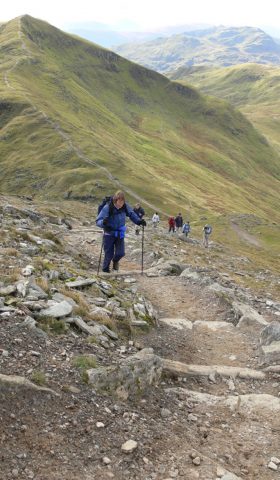
This year, the National Trust for Scotland celebrates 75 years of caring for Ben Lawers National Nature Reserve. With seven munros (mountains over 3,000 ft), a treasure trove of archaeological remains, and wildlife including majestic red deer, ptarmigan, and golden ringed dragonflies, this breathtaking landscape is a special place for nature lovers, adventurers, and history enthusiasts alike.
In recognition of this significant milestone, NTSUSA is raising $75,000 to help the Trust protect Ben Lawers for the next 75 years – and beyond! The Jeniam Foundation has pledged to match all gifts to Ben Lawers dollar-for-dollar up to a total of $30,000, doubling the impact of your gift!
Comments Off on Ceilidh the Musical: Where Scottish Tradition Meets Modern Storytelling
What happens when you combine centuries-old Scottish reels, a pint or two, and a heartfelt family story—and wrap it all in a night of live theatre? You get Ceilidh, a genre-defying new musical created by Scott Gilmour and Claire McKenzie of Noisemaker, making its U.S. debut in Baltimore this summer, with a special NTSUSA Members’ Night gathering scheduled for opening night on September 6th.
More than a musical, Ceilidh is a gathering. It’s a party, a session, a celebration. And that’s entirely by design. “We wanted it to feel like an event that’s happening right now, in this city, with this audience,” says Gilmour. “It’s not a re-creation of something historical—it is the thing.”
At its core, Ceilidh is a story about family, heritage, and the power of coming together. It centers on a modern-day caller—someone who leads traditional Scottish dances—and the legacy passed down from his father, once a famous caller himself. But while the story is intimate and specific, the experience is anything but small. It’s vibrant, visceral, and deeply immersive.
Comments Off on Bringing Burns to the Blue Ridge: Reflections from the Grandfather Mountain Highland Games
Each year, the National Trust for Scotland Foundation USA sends a representative from the Trust to the Grandfather Mountain Highland Games in North Carolina—one of the largest Scottish gatherings in the United States. This July, we were thrilled to have Chris Waddell, Learning Manager at the Robert Burns Birthplace Museum, return for his second visit. Below, Chris reflects on the meaningful connections, cultural celebrations, and memorable moments that made this year’s trip so special.
After nine years of fundraising, planning, and logistically challenging conservation work, Canna House reopened to the public earlier this month. The island home of Gaelic scholars John Lorne Campbell and his American-born wife Margaret Fay Shaw has long been a beloved property of NTSUSA supporters, and we are deeply proud of the role Americans have played in preserving their home, garden, and archive.
Extensive repairs have been made to the building, roof, and windows of the house to withstand the Hebridean weather and protect its important and historic contents, which include an internationally significant archive collection of Gaelic music, folklore, and culture.
With the restoration, the Trust has created an atmosphere that will give visitors a sense that someone has just left the room, with a warm, lived-in feel throughout. Gaelic song and language will fill the air, as audio devices are triggered when visitors move through each room. The couple’s extensive collection of personal items acquired over a lifetime are displayed in an organic and eclectic way, showcasing how the house would have looked in the mid-20th century, not long after World War II, when it would have been full of visitors, such as the author Compton MacKenzie and the artist Winifred Nicholson, coming to spend time with the couple
Among the highlights on view are a dictaphone recording machine, which John used to capture Gaelic speakers in the Western Isles and Cape Breton; Margaret’s favorite Graflex camera used to record a disappearing way of life; and the Book of Pooni, dedicated to their favorite cat.
Comments Off on Resilience in Bloom: A Journey Through Scotland’s West Coast Gardens
This May, I had the opportunity to join fellow NTSUSA supporters on a week-long journey through some of the most extraordinary gardens in the care of the National Trust for Scotland. From the architectural charm of Helensburgh to the rugged beauty of Argyll, Arran, and Gigha, we encountered landscapes bursting with life, shaped by centuries of vision and care.
But alongside the vivid spring blooms, we also saw signs of strain. In the wake of Storm Eowyn, many of these treasured places bore visible damage—fallen trees, disrupted paths, and structural wear that underscored the vulnerability of even the most carefully tended landscapes.
Comments Off on The Burns Project: Bringing the Poet to Life
The National Trust for Scotland, NTSUSA, and Scottish performer James Clementsare collaborating on a new piece of theater inspired by the life and work of Robert Burns.The Burns Project will premiere at the celebrated Edinburgh Festival Fringe in August 2025 and laterwill travel to venues inScotland and the US.
More than 250 years ago, poet Robert Burns danced to traditional Scottish tunes played on a Baroque painted fiddle at the Bachelor’s Club in rural Ayrshire.
On April 5, the historic instrument – known as the Gregg fiddle – made its debut at Carnegie Hall in the hands of celebrated fiddler and composer Duncan Chisolm. A highlight of the inaugural Scotland’s Hoolie in the City concert, which capped off NYC Tartan Week activities, Chisolm and the fiddle shared the stage with contemporary Scottish icons Alan Cumming (NTSUSA’s 2009 Great Scot), Dougie MacLean, Julie Fowlis, and Mànran, as well as performers from the Royal Edinburgh Military Tattoo and the Oban High School Pipe Band.
The process of bringing the Gregg Fiddle to the US involved significant planning by the National Trust for Scotland’s conservation and curatorial staff and was made possible with the support of Virgin Atlantic and Freeman’s|Hindman. The instrument was described as “an aging celebrity who flew into New York, accompanied by a personal bodyguard” by The New York Times, which highlighted the significance of the “national treasure.” (New York Times: A 270-Year-Old Scottish Folk Fiddle Makes Its Carnegie Hall Debut)
The Gregg fiddle, named for Burns’s dancing master and usually kept safely on display in the Robert Burns Birthplace Museum in Alloway, Scotland, was thought to have been constructed around 1750 and is played a handful of times each year – an important element of the National Trust for Scotland’s efforts to conserve the one-of-a-kind instrument.
Comments Off on A Celebration of Scotland’s Treasures 2025: A Record-Breaking Year in NYC!
On Thursday, April 10th, NTSUSA celebrated its 25th anniversary at the annual A Celebration of Scotland’s Treasures gala, raising over $425,000 to support the National Trust for Scotland’s conservation work – a new record!
Held at New York City’s historic Metropolitan Club, the evening included a performance by Highland dancers A Shot of Scotch; libations provided by The Macallan and The Isle of Harris Distillery; a live auction that featured not one but two Andy Scott sculptures; and a joyous “Auld Lang Syne” at the end of the night.
The highlight of the evening was Robert Carlyle OBE’s acceptance of the 2025 Great Scot award, presented to him by National Trust for Scotland president Jackie Bird MBE. Carlyle, a Glasgow native who is known for roles in Trainspotting, The Full Monty, and most recently Toxic Town, gave a moving acceptance speech that reminded us all of the enduring power of identity in storytelling, the global legacy of Scotland, and the importance of staying connected to our roots.
Comments Off on Not Your Usual Burns Ceilidh 2025: A Night to Remember in Somerville
The Scottish spirit was alive and well in New England on January 24 at the second annual Not Your Usual Burns Ceilidh. Nearly 300 revelers packed The Crystal Ballroom in Somerville for an unforgettable evening of poetry, music, and, of course, dancing.
The event drew an enthusiastic crowd—seasoned Burns Night veterans and first-timers alike—ready to toast Scotland’s national bard Robert Burns and enjoy an evening of tradition with a modern twist.
Comments Off on The Gregg Fiddle Returns to New York
An 18th-century fiddle thought to be played by Robert Burns will return to New York City in April thanks to a special partnership between Hoolie in the Hydro, the National Trust for Scotland, and NTSUSA.
Comments Off on The History and Modern Celebration of Burns Night: A Timeless Scottish Tradition
Every January 25, Scotland and Scots around the world come together to honor the legacy of Robert Burns, the national poet of Scotland. Known affectionately as the Bard of Ayrshire, Burns penned iconic works like Auld Lang Syne and Tam o’ Shanter, capturing the heart and soul of Scottish culture. Burns Night is a celebration of his life, his poetry, and the enduring heritage of Scotland.
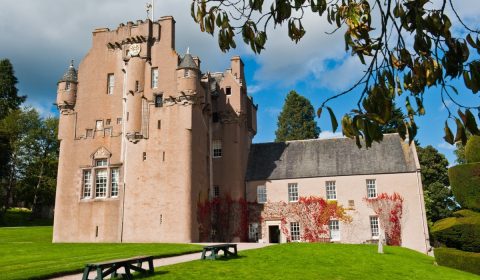
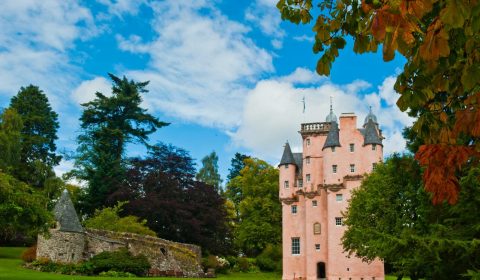
Nestled in the scenic Aberdeenshire countryside, Craigievar Castle has long been a symbol of Scottish heritage and the legacy of Clan Sempill. Yet, this enchanting pink castle holds more than architectural beauty—it was once the unlikely home of a long-lost manuscript by Colin MacLaurin, one of Scotland’s most celebrated mathematicians. After centuries of mystery and intrigue, this remarkable notebook has found its way back to its rightful place at the University of Glasgow. David Horowitz explores the incredible journey of this historic artifact and its connection to Craigievar Castle, where history, mathematics, and discovery converge.
Canna is the most remote of the Scottish Isles, situated in the west of the Inner Hebrides. It has been under the National Trust of Scotland’s protection since 1981, but in recent years a huge project has begun to restore Canna House.
This is of particular importance considering Canna House is home to a vast collection of research curated by late owners of the house and long-term residents of the Island, John Lorne Campbell and Margaret Fay Shaw Campbell. This significant collection is of international importance, with over 60 years of research. It contains unique and irreplaceable books, photographs and recordings which are essential in understanding the rich history of the Hebridean isles. The library within Canna House holds all the main scholarly journals for Celtic and Scottish studies, meaning the restoration, organization and preservation of this space is crucial.
Thanks to generous gifts from our American donors, NTSUSA have pledged an incredible $600,000 to go towards this project of immense scale and importance. The mission to restore and preserve Canna House and its extensive archive is well underway, with the goal of opening to the public in Spring 2025 approaching quickly.
So, what are the American donations going towards?
Firstly, the exterior and interior of the house itself were in a bad condition, susceptible to unpredictable weather conditions and putting the collection at risk. Therefore, beginning in 2018, urgent repairs of the house itself began, ensuring that Canna House was wind and watertight.
A few years later in 2021, the Canna Compound was delivered. This provided specialist storage, providing a secure and organized space for the collection to be placed. There are major plans for the archives themselves which will facilitate access for researchers both physically and more so digitally in the future. An important step in the future of the collection, this will mean the archives can reach a wider audience globally, providing further recognition of Scotland’s incredible history.
As far as a current update goes, the construction work is due to be completed in June 2024 and in August 2024, a team of students will work to clean the collection before it is returned safely to Canna House. In only a few months’ time, Canna House is set to open for the public meaning the story of the passions and motivations of the Campbells’ will reach far and wide. Canna’s breathtaking beauty and history will thrive for generations to come.
Once again, it is thanks to the unbelievable support that our members provide which enables challenging, yet immensely rewarding projects like these to be sustained. Through undertakings like Canna House it becomes clear to see how vital and valued your support and gifts are to NTSUSA.
Comments Off on An Enduring Legacy- Jock and Elly Elliott’s Staffa
Staffa is a breathtaking, remote island situated in the Inner Hebrides off the west coast of Scotland. The isle came under the protection of the National Trust for Scotland in 1986 after John Elliott Jr. of New York, fondly known as Jock, purchased the island to honor his wife Eleanor’s 60th Birthday. The couple decided that gifting this remarkable landscape to the Trust would be critical to ensure their beloved Staffa was preserved and looked after for generations to come. This particularly inspiring outlook on the necessity of conservation is attested to in their philanthropy and deep care for Staffa, and in 2001 the island was officially designated a National Nature reserve.
Staffa Landscape
Jock and Elly with niece Cammy Thomas and her husband Tony Siesfeld at the original monument
I had the honor of speaking to Skeffington Thomas, Professor of Art at Rowan University and one of John Elliott’s nephews. Skeff told me more about the rich history of Staffa and his incredible family connection to the remote island.
Skeffington and Dorothy Thomas
John and Eleanor, before purchasing the island, had a strong affiliation and deep love for Scotland as they had been visiting the country for over 30 years. They recognized the importance of keeping these Scottish landscapes preserved for future generations to experience, study and enjoy. The couple were particularly drawn to Staffa because of their passion and strong appreciation of beauty and art. A love and respect was developed for the majestic beauty and awe-inspiring scale of the island which to Jock and Elly was truly mesmerizing. The need for others to be able to see and experience this immense beauty became a vital reason why they generously gifted the island to the Trust. This gift would protect the history and longevity of the island.
As Skeff fondly states when remembering his aunt and uncle, ‘The concept that all of us are here but for a short time, and our obligation to care, nurture and preserve that which has been entrusted to us was realized in the life and Jock and Eleanor Elliott.’ This inspiring philosophy was essential to the legacy the couple left to Scotland, and to honor this, a new monument was erected in 2012 in the memory of the Elliotts’ gift.
NTS Staff, Dorothy Thomas, Skeffington Thomas, Colin and bagpiper
New Cairn 2012
The monument celebrates the history of Staffa, the longevity of the island and importantly, the love of the couple had for this truly beautiful place. 2012 was the first year that Skeff and his sister Dorothy visited Staffa for the monument rededication. He was amazed by the remoteness of Staffa but mentioned there was a beautiful community feeling and solidarity which could be felt across the island.
Departing Staffa
In August 2024, in the year of his and his twin sister Augusta’s 60th birthday, he will return to Staffa with his wife Diane and daughter Elly. As birthday gifts, Skeff and Augusta asked their siblings to donate to NTSUSA for the benefit of Staffa in the memory of Jock and Elly Elliott. With the 50th Anniversary of the gift of Staffa to NTS soon approaching, the trip this year will certainly be a special and unforgettable one.
Staffa remains under the dedicated protection of NTS, allowing for the island to be experienced and appreciated by visitors, just as the couple envisioned. Thanks to ongoing preservation and conservation efforts, Staffa’s beauty will continue to amaze and inspire for generations to come.
Comments Off on British Historian Flora Fraser to speak at Nantucket Atheneum
Author Photo / Michael Lionstar
Nantucket, Massachusetts – Award-winning historical biographer and former Siasconset resident Flora Fraser will speak on her latest book Pretty Young Rebel: The Life of Flora MacDonald at the Nantucket Atheneum on Friday, July 12, at 6:30pm.
Flora Macdonald (Richard Wilson) / National Galleries of Scotland
Pretty Young Rebel is a captivating biography of Fraser’s namesake, a remarkable young Scotswoman whose bold decision to help Bonnie Prince Charlie—the Stuart claimant to the British throne—evade capture and flee the country in 1746 has become the stuff of legend.
Fraser’s lecture is co-presented by The National Trust for Scotland Foundation USA, the American friends group of Scotland’s largest conservation charity. Among the properties in the care of the National Trust for Scotland is Culloden Battlefield, where Prince Charles Edward Stuart was decisively defeated in the last pitched battle on British soil. In less than an hour, around 1,300 men were slain – about 1,250 of them loyal to the prince.
Culloden Battlefield / National Trust for Scotland
Bonnie Prince Charlie Entering the Ballroom at Holyroodhouse (John Pettie) / Royal Collection Trust, His Majesty King Charles III
A man on the run, Charles found an unlikely ally in Flora MacDonald, a young woman in her early twenties, who disguised the prince as an Irish maid and conveyed him by boat to Skye. But her story does not end there. Arrested for treason, Flora eventually fled the impoverished Scottish Highlands for the mountains of North Carolina, utterly unaware of the burgeoning revolution that would upend their lives there.
Speaking about her upcoming event, Fraser writes, “It is always a privilege and an honour to present my books at the Atheneum, and I look forward to exploring with guests Flora MacDonald’s charm and canny ways that helped her to navigate a path through civil war on either side of the Atlantic.”
Kirstin Bridier, executive director of NTSUSA added, “I cannot imagine a more appropriate location in the US to share the story of this bold and courageous 18th-century woman, born and raised in the islands of the Outer Hebrides, than at the Nantucket Atheneum.”
Flora Fraser’s previous historical biographies include: Beloved Emma: The Life of Emma, Lady Hamilton; Princesses: The Daughters of George III; The Washingtons: George and Martha, which won the 2016 George Washington Book Prize. She is the daughter of Lady Antonia Fraser.
Previously a Trustee of the London National Portrait Gallery, Flora is a member of the Royal Historical Society and has an honorary Doctorate from King’s College London. The Elizabeth Longford Prize for Historical Biography, which Flora co-founded with Peter Soros in 2003 in affectionate memory of her late grandmother, the biographer of Queen Victoria and the Duke of Wellington, is now in its 21st year.
Comments Off on 2024 Tartan Week and ‘A Celebration of Scotland’s Treasures’ honoring Tom Conti
2024 marks a milestone in the achievements of NTSUSA. Whilst NTSUSA has participated in New York Tartan Week events previously, this was the first time with the enthusiast support and participation of our Emerging Leaders group that NTSUSA marched in the annual Tartan Day Parade in New York City. Beginning in 1999, the first parade was a reasonably small affair consisting of a march from the British Consulate to the UN by two pipe bands and a small group of Scottish Americans. However, as the years have gone by the event has become a celebrated, significant part of New York Tartan Week. NTSUSA was lucky enough to march with National Trust of Scotland President, Jackie Bird, who attended the week’s festivities in the city.
Silent Auction Table. Image courtesy of Hechler Photographers
Whilst NTSUSA attended many Tartan Week events to collaborate and support other Scottish organizations, the following week was host to many anticipated events held by NTSUSA itself. On Tuesday April 9, the organization hosted an event together with textile designer Araminta Campbell in the Museum of Arts and Design. This exclusive event featured a private tour of the museum’s latest exhibition followed by an interesting Q+A with the artist herself to learn how her atelier uses traditional Scottish weaving combined with modern techniques.
Ali Mcleod, Head of NTS Fundraising addressing audience
The following evening, April 10, an inspiring event took place in downtown New York hosted by The MaCallen, the official whiskey sponsor of NTSUSA’s A Celebration of Scotland’s Treasures gala. This event was specifically to honor and introduce NTSUSA’s next generation of leaders. Amongst many influential Emerging Leaders were Iona MacGowan, a talented media host and content creator and Molly Melville, the national brand ambassador for The Macallan, both admired representatives of Scotland.
Marking the final celebration of the week, NTSUSA’S 17th annual fundraising gala, fondly known as A Celebration of Scotland’s Treasures took place on April 11, 2024 at the magnificent Metropolitan Club in New York City. In attendance were around 250 valued trustees and members of NTSUSA, coming together to celebrate the organization, and Scotland’s heritage. Raising an incredible $380,000, the funds gathered from this spectacular event are critical in ensuring the beautiful sites in Scotland remain protected and preserved by NTSUSA for years to come. With over 100 sites, the mission to preserve Scotland’s rich history and landscape was at the forefront of this event, with a Silent Auction being held to raise as much money as possible. Included in this auction were one-of-a-kind items such as a beautiful gold necklace, as well as incredible exclusive experiences from Scottish brands and partners such as Scottish Creations, Barbour and Luxury Scotland.
MaCallen Whiskey, sponsor of NTSUSA Gala. Image courtesy of John Sanderson
Ceilidh Dancing. Image courtesy of Hechler Photographers
In celebrating Scotland’s rich culture, this evening included a much-loved whiskey tasting by renowned distillery and cherished partner of NTSUSA, The Macallan, as well as incredible live music by the Skye Trio. Adding to the wonderful atmosphere of this evening was the final Ceilidh hosted in the Great Hall of the Metropolitan Club where guests of the gala enjoyed Scottish dancing, a tradition so dear to Scottish cultural heritage.
Tom Conti, Great Scot 2024. Image courtesy of Hechler Photographers
As with every year previous, the Gala holds the honor of naming a Great Scot, an award which, as president of the National Trust of Scotland, Jackie Bird, describes, acts as ‘a tribute to someone who has enhanced Scotland’s Reputation around the World.’ This year, the award was given to acclaimed Scottish actor, director, and novelist Tom Conti who has featured in notable films such as Oppenheimer, Reuben, Reuben, and Shirley Valentine. Conti has received several awards for his roles including a Tony award, as well as being nominated for an Oscar. He was chosen as the Great Scot of 2024 for proudly representing Scotland through his distinguished achievements within the arts, as highlighted by Jackie Bird in an inspiring speech moments before the award was received.
Next year will be the 25th Anniversary of NTSUSA as well as the 18th Gala, undoubtedly an important year to celebrate the achievements of the organization and the continued support and appreciation of our valued members. It is thanks to the generous donations and passionate supporters that NTSUSA continues to acquire Scottish properties for preservation, sustaining the protection of Scottish heritage and landscapes.
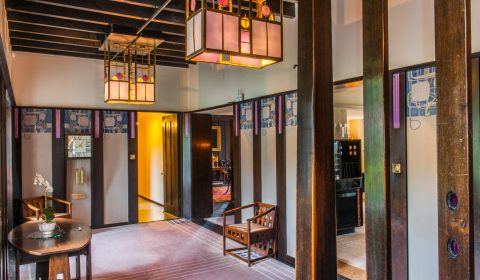
Comments Off on National Trust for Scotland Acquires Mackintosh at the Willow
Mackintosh at the Willow, on Glasgow’s Sauchiehall Street, is to become part of the National Trust for Scotland’s portfolio of heritage properties.
The Trust’s acquisition was made at The Willow Tea Rooms Trust’s request following difficult operating conditions that threatened the future of the property. Enabled by support from its members and donors, including Americans via The National Trust for Scotland Foundation USA, the National Trust for Scotland is using $2.2 million of its reserves and acquisition funds to secure this important and original work by Charles Rennie Mackintosh. Vital additional support was provided by the National Lottery Heritage Fund (NLHF), the Royal Bank of Scotland, the Architectural Heritage Fund (AHF), Glasgow City Council, and Celia Sinclair Thornqvist MBE and her husband, Rolf Thornqvist. As a result, the property will continue operating as normal with many jobs preserved.
Please join The National Trust for Scotland Foundation USA, NHSCOT, Scots in New England, Scottish Development International, and the British Consulate General Boston for our inaugural “Not Your Usual Burns Night” celebration on Thursday, January 25, 2024, at the Crystal Ballroom in Somerville’s Davis Square.
Three levels of tickets are available for our modern take on the traditional Burns Supper. A VIP hour features a whisky tasting by up-and-coming Scottish distilleries as well as a classic performance by Maureen McMullan. Our Burns Night celebration will be hosted by Iona MacGowan, recently named New England’s Emerging Scot of the Year, and will include live recitations and footage from Alloway. Our traditional ceilidh, called by Summer McCall, featuring Maura Shawn Scanlin, Adam Hendey and Elias Alexander followed by an EDM dance party with Ramblxr.
EVENT PROCEEDS WILL SUPPORT CONSERVATION OF ROBERT BURNS SITES IN AYRSHIRE, SCOTLAND
Comments Off on Online Access to the Robert Burns Collection
American donors are making it possible for the National Trust for Scotland to publish its unparalleled collection of Robert Burns manuscripts, objects, and ephemera online, where they can be explored by scholars and enthusiasts from around the world.
Comments Off on Your Gift in Action: Our Year in Review
Forget Hogmanay: at The National Trust for Scotland Foundation USA, our new (fiscal) year ends on June 30. We’re delighted to share some of the successes that American donors like you made possible in fiscal year 2023 – including more than $530,000 granted to the National Trust for Scotland for its most urgent conservation priorities.
Comments Off on Grandfather Mountain Highland Games 2023
The National Trust for Scotland Foundation USA was delighted to attend the Grandfather Mountain Highland Games in Linville, North Carolina, again this summer. Our friends at Scottish Heritage USA have invited us to join them at the Games – among the largest in the US – for many years now, and we’ve been able to bring over a range of expert speakers from the National Trust for Scotland, including Head of Archaeology Derek Alexander and Culloden’s Kat McIntosh, to speak about conservation work underway at the Trust.
This year, Chris Waddell of the Robert Burns Birthplace Museum made the trip over from Ayrshire, bringing the spirit of Scotland’s bard with him. Here is his account of his visit:
Comments Off on American Support for the Acquisition of the Treshnish Isles by the National Trust for Scotland
On July 10, The National Trust for Scotland acquired the Treshnish Isles. These islands are an internationally significant seabird nesting site located in the Inner Hebrides, and their acquisition builds on decades of American support for the National Trust for Scotland’s conservation initiatives across the Hebrides and beyond.
Comments Off on 2023 A Celebration of Scotland’s Treasures Honoring Judy Murray
Tartan-clad philanthropists assembled at the Metropolitan Club on April 20 to celebrate Scottish heritage, raising more than $350,000 to support the work of Scotland’s largest conservation charity. The National Trust for Scotland cares for more than 100 iconic places, including Culloden Battlefield, the islands of St Kilda and Iona, and Robert Burns’s birthplace.
Comments Off on 2022 A Celebration of Scotland’s Treasures and Great Scot Honoree, Diana Gabaldon
Tartan-clad philanthropists gathered at New York City’s The Metropolitan Club on April 14 to honor American author Diana Gabaldon as the 2022 Great Scot. Gabaldon’s bestselling Outlander novels have brought the romance and drama of Scottish history to life for more than 50 million readers worldwide.
The presentation of the Great Scot Award was the highlight of the event, which this year raised $375,000 to support the conservation of heritage sites in the care of the National Trust for Scotland, including Culloden Battlefield and Robert Burns’s birthplace.
Actors Sam Heughan and Graham MacTavish, stars of the Starz television series Outlander, presented the award to Gabaldon virtually from the United Kingdom, where they were filming.
Comments Off on International Tennis Icon, Author, and Philanthropist Judy Murray to be Honored with 2023 Great Scot Award
Judy Murray OBE, mother of tennis stars Andy and Jamie Murray, is an accomplished international athlete and coach who has improved access to tennis across Scotland
Judy’s first book of fiction, The Wild Card, will be published in June
The Great Scot Award will be presented on April 20 at The National Trust for Scotland Foundation USA’s annual gala
Last year, The National Trust for Scotland Foundation USA undertook a strategic planning process with input from our members and supporters at its heart. We are proud to announce our new vision for 2023 and beyond: Protecting Scotland’s heritage and natural beauty now and for generations to come.
Comments Off on Exploring the Gardens of Perthshire, Kinross, and Fife
NTSUSA staff member Emily Fitzsimmons embarked on one of our garden tours this past September. Traveling with NTSUSA members and several of our Trustees, the group traversed across Scotland for six days, exploring its cities, castles, and gardens.
In September, I had the pleasure of joining a lovely group of NTSUSA patrons, friends, and newcomers on our Great Gardens of Perthsire, Kinross, and the Kingdom of Fife tour. This was the second of our three garden-focused trips in 2022 and 2023, with the help of Patrick Scott, co-founder of Discover Scottish Gardens. It was also my first trip to Scotland in many years, and my first opportunity to see some of Trust properties in person.
As I reflect on my travels, it is the peak of autumn here in New England. Vibrant red and golden ochre leaves are falling from the trees and blanketing our cobblestone sidewalks. We had an early taste of autumn on the trip, with surprisingly warm and sunny weather (by Scotland’s standards) that carried just a hint of chill in the air. Although some plants were past their blooming season by early September, we saw plenty of color and just as importantly, texture, which made each and every one of the places we visited a visual delight. On top of it all, our tour was highlighted by warm Scottish welcomes everywhere we went – always including of a hot cup of tea and freshly baked scones.
Are you planning a visit to Edinburgh and interested in venturing further afield, but not sure how to? This article highlights some of the National Trust for Scotland properties located outside of the city that can easily be visited by train or bus. In fact, each property on this list can be visited by traveling via train or bus only, reducing the need to rely on catching connections. To plan your visit, make sure to check the online timetables that are highlighted in the post (as well as searching for any updates to the routes or timetables). The links also include information about the ticket options and prices.
Saltire Scholar Eilidh describes herday trip to the Isle of Arran, where she visited Brodick Castle, explored the Country Park, and reached the peak of Goatfell.
To round off my road trip adventure, my last stop was a day trip to the Isle of Arran. I have many fond childhood memories of going on holidays to Arran, camping overnight and exploring the endless beaches. The last time I visited the island was several years ago in winter, so I was looking forward experiencing Arran in much sunnier, brighter weather! Early in the morning, I made my way to Ardrossan on the west coast of Scotland to catch the ferry. After the hour-long sail to the shores of Arran, I arrived at the picturesque village of Brodick.
I walked along the sandy shore to Brodick Castle, which overlooks the Firth of Clyde, and instantly got lost in the vast Country Park and its many different trails and attractions before even arriving at the Castle. Naturally, I made a quick detour to the Red Squirrel Hide to see if I could spot any of the elusive beasts – I did manage to see just one before it scampered off into the trees! After waiting for some time in hope of spotting another, I admitted defeat and made my way to the Castle in time to take a tour.
Comments Off on Rugged Beauty: The Gardens of Ayrshire, Arran, and Argyll
NTSUSA Executive Director Kirstin Bridier shares her experience visiting some of Scotland’s most beautiful gardens and estate homes during NTSUSA’s Glorious West Scotland Garden Tour in May 2022.
Sitting at my desk in Boston in the midst of a summer heatwave, I’m feeling nostalgic for NTSUSA’s May 2022 tour of the gardens of Ayrshire, Arran, and Argyll. While I know the sun did shine on at least a few of our days of exploring Scotland’s west coast, my enduring memories of our trip are of riotous azaleas and rhododendrons bursting brightly against misty gray skies. Scotland’s changeable weather provided the perfect backdrop for the gorgeous gardens of this wild and rugged part of the country.
Scotland’s Glorious West Coast Gardens was the first of three garden-focused tours NTSUSA has planned for 2022 and 2023 with the help of Patrick Scott, co-founder of Discover Scottish Gardens. Our itinerary combined behind-the-scenes access to National Trust for Scotland properties and garden staff with visits to private gardens, delicious food, and wonderful company.
Comments Off on An Afternoon at Leith Hall and House of Dun
In this blog, Saltire Scholar Eilidh shares her experience visiting the grounds and gardens of Leith Hall and the Angus Folk Collection at the House of Dun.
One of my favorite things about road trip adventures is having the freedom to visit places without planning extensively in advance. Some of my best memories are of places that I visited rather spontaneously, beginning byjust jumping in the car, seeing where the road takes me, and then discovering something new.With myyoung adult membership, I have one less thing to think about whilst arranging a last-minute getaway, knowing I have the flexibility to visit some of Scotland’s finest heritage sites at such short notice.Following on from my visits to two famous castlesin the morning, I was enthusiastic to see more Scottish Baronial architecture, so paid a visit in the afternoon to a fine example of the style, Leith Hall.
The grounds of Leith Hall were silent, except for the birdsong and the wind in the trees. I walked through the entrance into the courtyard, where I was greeted by a friendly ginger cat basking in the Scottish sun. Leith Hall was once the family home of the Leith-Hay family until it was donated to the Trust in 1945. Construction on the house began in 1650, with elements being added or adapted to the property throughout the centuries, such as the Georgian Wing and the recently renovated Edwardian rock garden. The gardens of Leith Hall are particularly lovely, with the moon gate, herbaceous borders in bloom, and the beautiful views of the surrounding hills of Aberdeenshire. I particularly enjoyed wandering around the Estate on this unusually sunny afternoon and taking in all aspects of the property. With thanks to a generous American supporter, the garden wall and ironwork were recently repaired, restoring and conserving this property for future visitors to enjoy.
NTSUSA Executive Director Kirstin Bridier recounts her visit to the Isle of Canna earlier this year, describing the magic of the island and the activities going on at Canna to preserve the island and its heritage.
In the classic musical Brigadoon, two American tourists stumble across an enchanted village in the Scottish Highlands that appears only once every century. They fall in love with the town and its inhabitants and (spoiler alert!) one decides to stay forever.
I’d heard endless reports about the magic and charm of the remote Hebridean Isle of Canna during my six years at NTSUSA but, never having actually made it out to the island, you’ll forgive me if it took on the mythical air of Brigadoon in my mind.
In May, time and tide cooperated, and I was finally able to experience Canna for myself. My three days on the Small Isle were filled with black sand beaches and frolicking puffins, fresh-caught lobster and home-baked tea cakes, baby lambs and stone barns. I met almost all of Canna’s 16 residents (two were off island having a baby, so technically now there are seventeen who call the island home) and cooed over almost all of its 600+ sheep. I experienced sun, mist, rain, and fog within the span of two minutes. I saw the smoke-stained rooms where John Lorne Campbell and Margaret Fay Shaw curated their remarkable collection of Hebridean song and folklore.
Comments Off on Grandfather Mountain Highland Games 2022
On behalf of all of us at The National Trust for Scotland Foundation USA, thank you for stopping by our booth at the Grandfather Mountain Highland Games. With rain and shine, bagpipes and bridies, and sportsmanship and kinship, the spirit of Scotland was certainly alive in the highlands of North Carolina! Emily and Lisa from our team in the United States and Catriona from the Trust’s team at Culloden enjoyed meeting each and every one of you. It was a pleasure to hear your stories, and to share information about what we do to support the Trust’s work in caring for Scotland’s special places—from coastlines to castles—for today and forever.
Comments Off on Combat, Conservation, and Coos at Culloden Battlefield
On the next stop of her trip, our Saltire Scholar Eilidh travelled north to visit Culloden Battlefield, the site of one of the most significant battles in Scottish history.
Comments Off on Walking in the Steps of our Ancestors
Our Saltire Scholar Tierney catches up with Bruce and Judy McRae of Clan MacRae Society of North America following their recent visit to the Grandfather Mountain Highland Games, to find out what being part of a clan means to them and why they keep returning to the Games year after year. They discuss the importance of preserving Scottish heritage, and how walking in the steps of our ancestors can enrich our lives today.
Comments Off on Protecting and Restoring the Natural Heritage of Arran
NTS Technical Bids Manager Joanne Mould helps replant native woodland while tackling invasive spaces as she explores the natural heritage of Arran
After so many months of lockdown it was such a treat to step on to the ferry at Ardrossan bound for Arran. The day was drizzly but the CalMac café was cosy and I joined the Trust’s new Operations Manager for Arran, Stuart McKinnon, over a vegan bacon roll and a good blether.
The sea around Arran was experiencing a rare algal bloom, turning the water a tropical turquoise and as the rain cleared it was easy to mistake Brodick for Ibiza (well, maybe if you squinted!)
We were collected by our guides for the day – the Senior Ranger Kate Sampson, Ranger Corinna and Seasonal Ranger Jake – to see the progress of some of the key nature conservation projects happening on Arran.
Comments Off on Brodick’s Walled Garden: Visions of the Past and Future
Our Saltire Scholar Tierney takes a tour around the Walled Garden at Brodick Castle, led by NTS Garden Manager Tim Keyworth, as they discuss Tim’s vision for the future of the gardens.
As a young professional from the center of Glasgow, I’d had little exposure to the wonders of horticulture and quite honestly had very little interest in the topic. Luckily, my meeting with Tim and his passion for the work they do at Brodick was about to change that!
Tim has been managing a skeleton crew across Brodick’s 74 acres of gardens since the pandemic hit, but you wouldn’t know by looking at it. We stand on the pathway above the Walled Garden, looking down across the immaculately manicured lawns and bright floral bursts that pop against the backdrop of Brodick Bay, and Tim begins to talk me through the past, present, and future of the space.
in partnership with New England Historic Genealogical Society
presents
Ye Jacobites by Name: Recent Archaeology in Scotland’s Glencoe and Glenshiel
with
Derek Alexander, Head Archaeologist
National Trust for Scotland
National Trust for Scotland Head of Archaeology Derek Alexander will be in Boston, MA to present a lecture at the New England Historic Genealogical Society on Thursday, July 18. Tickets and reservations available at AmericanAncestors.org.
Ye Jacobites by Name: Recent Archaeology in Scotland’s Glencoe and Glenshiel
with
Derek Alexander, Head Archaeologist
National Trust for Scotland
National Trust for Scotland Head of Archaeology Derek Alexander will be on Nantucket to present a free lecture at the Atheneum on Tuesday, July 16, at 7pm.
Nestled within an idyllic location in the beautiful East Lothian region of Scotland, Preston Mill is an iconic and memorable sight. Made famous by its use as Lallybroch in Outlander, when you first see Preston Mill you might think you’ve taken a step back in time. With its curious Dutch-style conical roof, the mill is an architectural oddity that enchants visitors as much as it delights painters and photographers.
However, in winter 2018, the Mill’s water wheel fused and would no longer turn. NTS USA partnered with NTS on what turned out to be a wildly successful social media crowdfunder to fund the repairs needed to fix the wheel. With the help of Outlander fans around the globe, the necessary funds were raised in just a couple short weeks!
The Lorimer family is usually remembered for its lineage of successful male artists: Robert, John Henry and Hew. It’s time the multi-talented Hannah is equally celebrated for her art.
The Wall Street Journal Magazine recently featured Charles Rennie Mackintosh’s Hill House and the innovative conservation approach currently underway at the property. Follow the link below to read the full article!
2019 Great Scot Award was presented to sculptor Andy Scott, best known for his monumental equine installation The Kelpies
National Trust for Scotland President, historian Neil Oliver, sent thanks from Charles Rennie Mackintosh’s Hill House, currently under restoration with the support of American donors
Proceeds from this year’s gala will restore the baroque fountain at Culzean Castle, once known as President Eisenhower’s Scottish White House, to working order
Alloway’s magnificent monument to Robert Burns opened 27 years after the death of the poet, and it continues to yield secrets about the movement to build it and the meaning behind its design.
Burns Monument, and the movement that created it, was in many senses ahead of its time. But now the building that has come to define how we remember Burns in Alloway needs our help.
Gardening at the Edge: Gardens of the West Coast of Scotland
with
Simon Jones, National Trust for Scotland
Gardens & Designed Landscape Manager
Join us on February 10th at the Bedford Presbyterian Church for an introduction to three of the most remarkable coastal gardens on the British Isles where visionary gardeners have created landscapes of extraordinary natural beauty containing both native and subtropical plants. RSVP below.
Simon Jones, Gardens and Designed Landscapes Manager of the west coast of Scotland for the National Trust for Scotland, will take audiences on a tour of three of the Trust’s coastal gardens, of Inverewe,created by Sir Osgood Mackenzie and begun with a deer fence and windbreak in 1862, which is now a lush, tropical oasis as well as a botanical garden of extraordinary breadth and fame; Arduaine, created by James and Ethyl Campbell on a barren headland in 1897, a place of peace on a wild shore, whose sheltered gardens lead to woodland trails, magnificent rhododendrons, and a stunning lookout point across the Sound of Jura to the Atlantic ocean; and Brodick Castle, on the island of Arran, whose 74 acres of gardens include a walled garden created in 1710. There has been a fortress on this site, strategically placed at the mouth of the river Clyde, since at least the fifth century. The present castle, built by James Hamilton in 1510, was greatly improved, with the gardens becoming a passion, from 1844 under the 10th Duke of Hamilton and from 1895 when Lady Mary Louise Hamilton inherited and became the Duchess of Montrose.
Each of these gardens has extraordinary collections of subtropical plants, collected from all around the world, which flourish in a rugged landscape where there can be almost 100 inches of rain a year, strong gales, occasional snow, and summer temperatures rarely rising above 72 degrees, thanks to the passing Gulf Stream which nurtures them.
Besides taking us on a tour of these glorious gardens, Simon will explore some of the issues they face to balance the needs of history, heritage and modernity. What inspired the original creators of the designed landscapes? How do the gifted gardeners of the National Trust for Scotland adapt to a changing climate, as well as the biosecurity obstacles generated by the modern-day movement of plants and people? What does the future hold for these collections of historic landscape plants?
The National Trust for Scotland Foundation USA and Green Mountain Academy for Lifelong Learning
invite you to
Gardening at the Edge: Gardens of the West Coast of Scotland
with
Simon Jones, National Trust for Scotland
Gardens & Designed Landscape Manager
Join us on February 14th at the Manchester Community Library for an introduction to three of the most remarkable coastal gardens on the British Isles where visionary gardeners have created landscapes of extraordinary natural beauty containing both native and subtropical plants. RSVP below.
Simon Jones, Gardens and Designed Landscapes Manager of the west coast of Scotland for the National Trust for Scotland, will take audiences on a tour of three of the Trust’s coastal gardens, of Inverewe,created by Sir Osgood Mackenzie and begun with a deer fence and windbreak in 1862, which is now a lush, tropical oasis as well as a botanical garden of extraordinary breadth and fame; Arduaine, created by James and Ethyl Campbell on a barren headland in 1897, a place of peace on a wild shore, whose sheltered gardens lead to woodland trails, magnificent rhododendrons, and a stunning lookout point across the Sound of Jura to the Atlantic ocean; and Brodick Castle, on the island of Arran, whose 74 acres of gardens include a walled garden created in 1710. There has been a fortress on this site, strategically placed at the mouth of the river Clyde, since at least the fifth century. The present castle, built by James Hamilton in 1510, was greatly improved, with the gardens becoming a passion, from 1844 under the 10th Duke of Hamilton and from 1895 when Lady Mary Louise Hamilton inherited and became the Duchess of Montrose.
Each of these gardens has extraordinary collections of subtropical plants, collected from all around the world, which flourish in a rugged landscape where there can be almost 100 inches of rain a year, strong gales, occasional snow, and summer temperatures rarely rising above 72 degrees, thanks to the passing Gulf Stream which nurtures them.
Besides taking us on a tour of these glorious gardens, Simon will explore some of the issues they face to balance the needs of history, heritage and modernity. What inspired the original creators of the designed landscapes? How do the gifted gardeners of the National Trust for Scotland adapt to a changing climate, as well as the biosecurity obstacles generated by the modern-day movement of plants and people? What does the future hold for these collections of historic landscape plants?
The National Trust for Scotland Foundation USA and
The American-Scottish Foundation
invite you to
Gardening at the Edge: Gardens of the West Coast of Scotland
with
Simon Jones, National Trust for Scotland
Gardens & Designed Landscape Manager
Join us on February 11th at The Arsenal (Central Park) Gallery for an introduction to three of the most remarkable coastal gardens on the British Isles where visionary gardeners have created landscapes of extraordinary natural beauty containing both native and subtropical plants. RSVP below.
Simon Jones, Gardens and Designed Landscapes Manager of the west coast of Scotland for the National Trust for Scotland, will take audiences on a tour of three of the Trust’s coastal gardens, of Inverewe,created by Sir Osgood Mackenzie and begun with a deer fence and windbreak in 1862, which is now a lush, tropical oasis as well as a botanical garden of extraordinary breadth and fame; Arduaine, created by James and Ethyl Campbell on a barren headland in 1897, a place of peace on a wild shore, whose sheltered gardens lead to woodland trails, magnificent rhododendrons, and a stunning lookout point across the Sound of Jura to the Atlantic ocean; and Brodick Castle, on the island of Arran, whose 74 acres of gardens include a walled garden created in 1710. There has been a fortress on this site, strategically placed at the mouth of the river Clyde, since at least the fifth century. The present castle, built by James Hamilton in 1510, was greatly improved, with the gardens becoming a passion, from 1844 under the 10th Duke of Hamilton and from 1895 when Lady Mary Louise Hamilton inherited and became the Duchess of Montrose.
Each of these gardens has extraordinary collections of subtropical plants, collected from all around the world, which flourish in a rugged landscape where there can be almost 100 inches of rain a year, strong gales, occasional snow, and summer temperatures rarely rising above 72 degrees, thanks to the passing Gulf Stream which nurtures them.
Besides taking us on a tour of these glorious gardens, Simon will explore some of the issues they face to balance the needs of history, heritage and modernity. What inspired the original creators of the designed landscapes? How do the gifted gardeners of the National Trust for Scotland adapt to a changing climate, as well as the biosecurity obstacles generated by the modern-day movement of plants and people? What does the future hold for these collections of historic landscape plants?
This event is currently sold out. Follow the RSVP link to be put on the wait list.
NTSUSA and The Oxford and Cambridge Society of New England will gather on Saturday, January 26th at the Hilton Back Bay, Boston for an evening of poetry, music, highland dancing and dinner in honor of Scotland’s Bard.
Guests will be treated to a bagpipe and drum demonstration, dance performances by Highland Dance Boston and Boston Scottish Country Dancers, Burns Supper toasts and the Immortal Memory address, and a traditional Ceilidh lead by Boston Scottish Country Dancers.
Dress is black tie, lounge suit, or tartan attire.
‘A Christmas Carol’ by Charles Dickens is one of the most enduring and well-known Christmas stories. As well as containing a moral message, it reminds us of the joy to be found in friendship, kindness and generosity, and is responsible for influencing the way we celebrate Christmas today.
At National Trust for Scotland Foundation USA we believe that there is no better recommendation for a gift than an item that you would love to give — or receive — yourself. Our seasonal gift guide includes a selection of Scottish items from some of our favorite companies and artisans. So, let us help you check off your holiday list. Maybe you will find something you want for yourself too!
This road trip itinerary through Aberdeenshire will take you to a Scottish stately home with a painting recently attributed to Raphael. Not to mention castles galore!
Total drive time: 1 hr 40 min, not including the stops.
This road trip through The Borders will take you to a printing press that has been operational since 1866, as well as a donkey sanctuary and a coastal national nature reserve.
Total drive time: 2 hours and 24 minutes, not including the stops.
Just north of Edinburgh, this road trip through Fife includes a stop at St Andrews and NTS sites made famous by Outlander – all in under 2 hours of drive time.
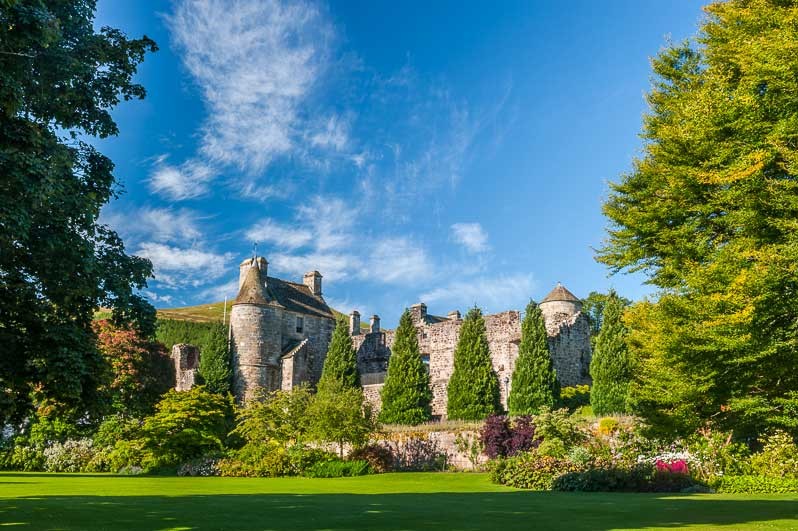
Snap some photos of the picturesque Royal Burgh of Culross, stop to smell the flowers at Falkland Palace & Garden, and have an ice cream like a local in the coastal town of St Andrews.
Total drive time: 1 hr 55 min, not including the stops.
Beginning in the Cairngorms National Park, this route will take you on a tour of The Highlands with a total drive time of under four hours.
Follow in Queen Victoria’s footsteps and picnic at the Linn of Dee, take in the stunning vistas as you drive through the Cairngorms, and experience the powerfully moving Culloden Moor where the ’45 rising came to its tragic end.
Total drive time: 3 hours and 45 mins, not including the stops.
The Falkland Bed, as it’s known today, is the central piece of the Keeper’s Bedroom and one of the first things visitors get to see when visiting the palace.
Over the past 12 months the Project Reveal teams have photographed, catalogued and digitized over 40,000 objects in 19 properties around Scotland. In the image gallery below, we’ve chosen a few items ranging from the wonderfully bizarre Gin Pig jugs to delicate porcelain tea sets found in Pitmedden House.
At the beginning of March, the North West team travelled to the picturesque town of Cromarty, to inventory the collection at Hugh Miller’s Birthplace Cottage and Museum. Little did they know they would be taken on a journey far back in time.
Hugh Miller was a very important figure in Victorian Scotland. Although he had not particularly enjoyed formal schooling, he was an avid reader and later became a great writer. His early vocation was stonemasonry, and you can see the mallet he used in the Museum. This, combined with his love of walking on the fossil-strewn beaches at Cromarty and nearby Eathie, led to him to become an early palaeontologist.
Hugh was also a folklorist, social justice campaigner and a strong advocate for the reform of the Church of Scotland. His writing attracted the attention of Robert Candlish, who was instrumental in setting him up as editor of The Witness, an evangelical newspaper that Hugh continued to write for and edit up until his death. Hugh very much saw himself as a common man; whether he was out searching for fossils or attending gatherings in Edinburgh, he would wear his plaid (also displayed in the Museum) to mark him out as such. His love for the people was reciprocated, and upon his death thousands lined the streets of Edinburgh for his funeral.
To begin our mission we travelled back to 1802, the year of Hugh Miller’s birth. Fortunately the fabulous Alix Powers-Jones, Property Manager, was on hand to make sure we were properly attired!
The birthplace cottage was built in the early 18th century by Hugh Miller’s great-grandfather John Geddes, said by some to have been a pirate who paid for the construction of the house with Spanish silver and gold. The neat little cottage has a thatched roof, a hanging lum that would once have been used to smoke and preserve fish, and a beautiful garden, where a sundial intricately carved and installed by Hugh Miller himself still stands. Although much of the original furniture was sold by Hugh’s family after his death, the cottage has been furnished by the Trust with items faithful to that period. Some objects, such as a sampler stitched by Anne Geddes, are original to the family.
A sampler was produced by Georgian ladies as a demonstration of their skill in needlework. If you look closely you can see the date 1789, when this piece was stitched.
Next door to the cottage is Miller House. Built by Hugh’s father in 1797, it is a fine example of a Georgian townhouse and is now home to the Hugh Miller Museum. Here, we were transported even further back in time, millions of years in fact, by the fossil collections on display. Many of these fossils were collected by Hugh along the shores of the Black Isle. An early fossil hunter, Hugh did not have the resources we do now to draw on, but he was a firm believer in making ‘a right use of your eyes’ and he carefully examined all of his finds. He used different techniques to understand the fossils, including comparing them to similar modern species, and he published his findings in several books. One in particular, The Old Red Sandstone, went on to become one of the most popular texts on geology in the 19th century. Although the field of geology has now moved beyond what Hugh and his contemporaries understood to be true, Hugh’s work provided an important foundation from which the then-new science could grow. As well as uncovering several new species, Hugh Miller’s writings helped to inspire people to examine the natural world, and popularised the study of geology.
An insect trapped in amber: could it be the start of your own Jurassic adventure?
We very much enjoyed our travels through history, learning about this fascinating man and enjoying all the town of Cromarty has to offer. Hugh Miller’s Birthplace Cottage and Museum has just reopened for the new season, so why not head off on a little adventure of your own?
Project Reveal
This article is by Robyn Braham, North West Inventory Photographer. Project Reveal is a multi-site digitization project of unprecedented scale. It will result in an updated database with high quality images and unique object numbers for every item in the Trust material culture collections. With your support, we can help the Trust manage its collections more effectively. Most important, we can help the Trust discover, better understand, and share its treasures with the world.
Please help us to secure this major investment in preserving Scotland’s heritage with a tax-deductible donation in support of Project Reveal.
Project Reveal Team West has recently started the inventory of the Tenement House, the former home of Miss Agnes Toward and her mother, Mrs Agnes Toward.
The Tenement House, at 145 Buccleuch Street, was purchased by the National Trust for Scotland in 1982. With the exclusion of a few objects, the entire collection contains the personal items of Miss Toward, who lived here between 1911 and 1965. Miss Toward liked to keep everyday objects and was reluctant to throw anything away. She has left behind a remarkable personal archive, which provides a window into the life of an independent Glaswegian working woman in the first half of the 20th century.
Miss Toward’s father, William Toward, had built up a successful metal merchant business in Glasgow and was financially comfortable. However, his death in 1889, when Agnes was just three, meant that the family lost their home. State pensions for widows were not available until 1925, and as there was no scheme for social care Mrs Toward needed to rely on her own income to provide for the household.
In 1911, Mrs Toward and her daughter moved into 145 Buccleuch Street, having lived at various addresses in the Garnethill area. Built in 1892, this middle-class two room and kitchen tenement was comfortable, with an indoor bathroom, running water and gas lighting.
1860s Wheeler & Wilson double-thread lock-stitch sewing machine that probably belonged to Mrs Toward
The sewing machine cabint
Mrs Toward was a dressmaker with shops on Allison Street and Sauchiehall Street, as well as working from home for private clients. From time to time she took in a lodger to supplement her income, and this person occupied the bedroom while Mrs Toward and Agnes would have shared the recess bed in the kitchen. Occasionally Mrs Toward also accepted help from the Glasgow Benevolent Society and Hutchesons’ Hospital.
To help with the family finances after leaving school, Miss Toward took a shorthand typing course at the Glasgow Athenaeum Commercial College, probably because it was relatively affordable. In 1907, she took a shorthand typist role with shipping firm Miller & Richards, before moving to Prentice, Service & Henderson in 1914, where she remained for almost 50 years. Most of her colleagues would have stopped working after they were married, but Miss Toward never married and continued to work until the age of 73.
Typewriter ribbons from the collection in the Tenement House
While working full-time, Miss Toward also had domestic responsibilities, including cooking, general housekeeping and daily cleaning of the kitchen range. She did her own cooking and baking, and the collection in the Tenement House holds an assortment of recipes and a jar of plum jam from 1929!
Living in a tenement came with a communal responsibility of cleaning the close and stairs of the building. They needed to be swept every morning and washed at least twice a week, and each tenant was responsible for a designated area. The shared garden also had a wash-house, sadly now demolished, and Miss Toward had access to this once a month to use the sink, boiler and mangle. She nursed and cared for her mother during her later years, and after her mother’s death in 1939 Miss Toward continued to live in the house alone.
The kitchen range
Although her income as a shorthand typist was modest, Miss Toward and her mother enjoyed summer holidays at Clyde coastal resorts, arriving there by paddle steamer. In later years, Miss Toward would travel by train to west coast resorts such as Largs, and during the war years she took holidays in Kent. Miss Toward had an active social life, attending Wellington Church in the west end of Glasgow, going to the theatre and writing to pen pals. She also attended the 1938 Glasgow Empire Exhibition in Bellahouston Park.
Miss Toward’s suitcase – the handwritten label shows her holiday address in Largs
Miss Toward’s suitcase – the handwritten label shows her holiday address in
Project Reveal
This article is by Demi Boyd, Inventory Officer Team West of Project Reveal. Project Reveal is a multi-site digitization project of unprecedented scale. It will result in an updated database with high quality images and unique object numbers for every item in the Trust material culture collections. With your support, we can help the Trust manage its collections more effectively. Most important, we can help the Trust discover, better understand, and share its treasures with the world.
Please help us to secure this major investment in preserving Scotland’s heritage with a tax-deductible donation in support of Project Reveal.
Along with more than 1,000 tartan samples, we found an intriguing 19th-century papier-mâché and wooden doll when cataloguing the collection at Weaver’s Cottage in Kilbarchan.
Kilbarchan was at the heart of the traditional handloom weaving industry during the 18th and 19th centuries. The majority of the objects in the collection were donated by people from the community after the NTS bought the property in the mid-1950s and they truly reflect the daily life and soul of the village.
Dolls, and toys in general, are everyday objects that can help us understand the social life and behaviour of people who lived centuries ago. Dolls have existed for thousands of years, from papyrus-stuffed ragdolls found in ancient Egypt to mass-produced 1950s Barbie dolls. The earliest dolls were made of simple materials such as clay, bone and wood, and it’s only from the Middle Ages that dolls began to be widely produced in Europe and carefully crafted to look as real as possible.
In the Victorian era dolls often had an instructional function, and girls would play with their dolls and imitate the adults around them. It was only in the early 20th century that ‘baby’ dolls started to appear. The doll from Weaver’s Cottage has a papier-mâché head and torso with hand-painted details, and wooden legs and arms. Papier-mâché is a composition of pieces of paper or pulp and bound with some sort of adhesive, which can be moulded into various shapes when wet and becomes very hard once dry.
Detail of the doll’s head Detail of the doll’s head
The Weaver’s Cottage doll
Dolls like this were often sold undressed. Sewing and knitting clothes for them would have been a fun way for young girls to practise these key skills for 19th-century women. Our doll is fully clothed in handmade garments from different scraps of fabric, possibly sewn by its young owner. As well as a very neat camisole, a cotton shirt and a blue skirt, the doll has a cream cotton underskirt and even a woollen petticoat (it can get cold in Kilbarchan!), hand-knitted brown woollen stockings and handmade leather shoes.
To reinforce the value of the doll as a ‘living’ example, it appears to be holding a little wicker basket and is knitting wool, or perhaps creating a thread that could have been used in one of the many looms that were in Kilbarchan at the time.
Detail of the basket and spinning tools
Detail of shoes and woollen stockings
Project Reveal
Project Reveal is a multi-site digitization project of unprecedented scale. It will result in an updated database with high quality images and unique object numbers for every item in the Trust material culture collections. With your support, we can help the Trust manage its collections more effectively. Most important, we can help the Trust discover, better understand, and share its treasures with the world. Please help us to secure this major investment in preserving Scotland’s heritage with a tax-deductible donation in support of Project Reveal.
Visitors to Culzean Castle will be very familiar with the two cannons that sit in front of the south side of the castle, overlooking the Fountain Court.
‘Polished as a sonnet’, Holmwood is one of the few surviving buildings designed by an iconic exponent of the Greek Revival style.
Holmwood is a Victorian villa in the Southside of Glasgow. It was built at a cost of £3,600 in 1857 for James Couper, a paper manufacturer who owned the Millholm paper mill in the valley immediately below the villa. After the death of Couper’s second wife in 1908, the house passed through several owners until 1958, when it was sold to the Sisters of our Lady of the Missions. They established a convent and primary school, which ran until 1992. In 1994 the National Trust for Scotland saved Holmwood from demolition and redevelopment plans.
The architect of this building was Alexander ‘Greek’ Thomson, who had studied the principle of Classical architecture during his formal training. His belief that the style of Ancient Greece could be the basis of modern architecture earned him the nickname ‘Greek’ despite the fact that he never travelled abroad! Neoclassicism and a renewed enthusiasm for the Neo-Greek style in architecture were widespread in Victorian society, particularly in Glasgow as it became an industrial giant and the self-proclaimed ‘second city of the Empire’. What separates Holmwood from other villas of the period is that Thomson took the principles of Greek architecture and created a modern and asymmetrical version. Thomas Gildard, a fellow architect and fervent admirer of Thomson’s work, wrote about Holmwood in 1888:
‘Is an architect an artist? If architecture be poetry in stone and lime […] this exquisite little gem, at once classic and picturesque, is as complete, self-contained and polished as a sonnet.’
An early print of Holmwood
Thomson also designed much of Holmwood’s interior. Unfortunately, as the house has had so many owners and been used for different purposes, the furniture, carpets and original furnishings are no longer in the property. However, most of the brightly coloured stencil decoration on the walls has survived under layers of paint and wallpaper and is gradually being uncovered by our conservators and curators. In many places it is being conserved, protected and re-created by modern-day master craftsmen for the enjoyment of our visitors. The use of primary colours like blue and red as well as buff shows Thomson’s ability to take inspiration from the big archaeological discoveries of the time in Greece, Italy and Egypt. The furniture currently in Holmwood was chosen to be authentic to the period and style of the villa, and blends in perfectly with the surroundings.
Although all the rooms are richly decorated, the dining room is without doubt the most striking. The spectacular frieze that covers the four walls of this big room consists of 21 panels based on John Flaxman’s illustrations to Homer’s Iliad, published in 1805. When walking into this room, the frieze, beautifully carved doors and the majestic mirrors give the impression of entering a temple.
One of the few original items in Holmwood is the amazing omega-shaped Italian marble chimneypiece in the hall. It’s topped with a barometer that features an engraving of the zodiac and a three-dimensional pensive cherub. We think this interesting work of art was made by the Glasgow sculptor George Mossman.
Detail of the dining room, door and frieze
Chimneypiece in the hall
One of my favourite pieces is the painting On the Terrace by John William Godward (1861–1922). It’s in the bedroom and depicts a girl daydreaming on a marble bench surrounded by pink flowers – a very relaxing scene. Can you imagine anything better? Godward was known as a ‘High Victorian Dreamer’ and produced beautiful images of female figures in a romanticised world.
‘On the Terrace’ by John William Godward
Another intriguing object is the French alabaster mantel clock with a female figure on a swing as a pendulum. Now in the parlour, it would have kept time during long summer afternoons like the ones we spent cataloguing this fantastic place.
Project Reveal
This article is by Silvia Scopa. Project Reveal is a multi-site digitization project of unprecedented scale. It will result in an updated database with high quality images and unique object numbers for every item in the Trust material culture collections. With your support, we can help the Trust manage its collections more effectively. Most important, we can help the Trust discover, better understand, and share its treasures with the world.
Please help us to secure this major investment in preserving Scotland’s heritage with a tax-deductible donation in support of Project Reveal.
The whisky stills of the Angus Folk Museum collection tell us much about the history of Scotland’s most famous export.
Still from ‘Cortachy Airlie’
After several months cataloguing the collection of the Angus Folk Museum, we have been impressed by the sheer variety of objects that the collection boasts – so much so that it’s been difficult to pick just one object or theme for this article. But holed up in our bothy in the cold winter months, one discovery warmed me enough to make me temporarily forget about the cold, much like the effect of the spirit it formerly produced. I came across a whisky still.
It appears to be a copper still pot with a cylindrical body, a double-handled rim in the middle, and a bulbous section at the top leading to a curved tapered cylindrical spout. It is 47cm tall and 45cm wide and with it is a metal spiral cylindrical tube, known as a worm. The process of making the whisky involved malting the barley by soaking it in water and heating it to create a ‘mash’. The mash was then put in the copper pot and heated until it was boiling, when it would release alcohol vapour. The vapour would enter the attached worm, which was submerged in water, where it would cool and turn into liquid.
According to the original museum description, the still came from ‘Cortachy Airlie’. Cortachy is a small settlement at the mouth of Glen Clova in the Angus glens and Cortachy Castle is the seat of the Earl of Airlie. The collection also contains the upper section of another still which came from Little Forter, a small settlement in Glen Isla. Their origin suggests that they were possibly a part of the illicit whisky trade that flourished in the late 18th and early 19th century in the southern and north-east Highlands.
The worm
Whisky had become more popular across society by the second half of the 18th century – industrialisation had led to wage increases and spirits were relatively cheap. To try and regulate the growing market, the government introduced Acts in the 1780s to encourage licensing of distilleries. Unlicensed private distillation in small stills, which had existed in Scotland for centuries, was effectively declared illegal.
The income Highland tenants generated from their unlicensed stills was essential to paying their rent. Many landlords and local judges were in receipt of their whisky and the illicit trade flourished in secluded parts of Highland glens. The north-east counties were particularly prominent in the trade due to the proximity of fertile grain-producing farmland. In these remote areas, crofters were more likely to evade the excisemen tasked to enforce the law. Derek Alexander, Head of Archaeological Services at the Trust, has written an article on one such site at Ben Lomond.
Part of a still from Little Forter
To tackle the problem of illicit distillation, the 1823 Excise Act reduced duty by over 50%, effectively ending the advantage of illicit distillers over their licensed rivals. The 1845 Statistical Account of Scotland for Glenisla explains: ‘The reduction of the duty of ardent spirits, whatever bad consequences may have resulted from it elsewhere, has been productive of the best effects here, both in respect of the morals and industry of the population. By putting an end to illicit distillation, it has been the means of directing the efforts of the people towards extensive agricultural improvements.’
Up until the 20th century there were five licensed distilleries in Angus: Glencoull near Tannadice, Lochside and Hillside/Glenesk in Montrose, and North Port and Glencadam in Brechin. Only Glencadam has survived.
These important objects show that the spirit runs deep in the history of Angus.
Project Reveal
This article is by Ross MacLennan of Project Reveal Team North East. Project Reveal is a multi-site digitization project of unprecedented scale. It will result in an updated database with high quality images and unique object numbers for every item in the Trust material culture collections. With your support, we can help the Trust manage its collections more effectively. Most important, we can help the Trust discover, better understand, and share its treasures with the world.
Please help us to secure this major investment in preserving Scotland’s heritage with a tax-deductible donation in support of Project Reveal.
Many legends surround the House of the Binns and its most notorious resident, General Tam Dalyell. The table upon which the Devil and Tam supposedly played cards is from one of the many tales of his fascinating life.
Portrait of General ‘Bluidy Tam’ Dalyell
This month, Project Reveal Team East moved to the House of the Binns, ancestral home of the Dalyell family. One of its most infamous inhabitants was Thomas Dalyell (1615–85), General and Commander-in-Chief of the king’s forces in Scotland. Dalyell first entered military service as a teenager, when he went to France in support of the Huguenot cause, before serving in Ulster where he reached the rank of colonel. He was imprisoned in the Tower of London after the Battle of Worcester in 1651, but managed to escape. He later fled to Russia, where he served Tsar Alexis I, father of Peter the Great, in the Russo-Polish War and in other conflicts against the Turks and the Tartars. Credited with bringing the thumbscrew over to Britain, his time in the Russian military also earned him the nickname the ‘Muscovite De’il’. It was after the suppression of the Pentland Rising at Rullion Green, at which over 1,200 captured Covenanters were tortured and imprisoned in Greyfriar’s Kirkyard, that he gained his more common epithet, ‘Bluidy Tam’.
Objects that belonged to General Tam Dalyell
It was after Dalyell’s death in 1685 that the legends surrounding ‘Bluidy Tam’ really began to develop. They include accounts of the General’s cavalry boots marching round the house on their own at night and of a ghostly rider on a white stallion galloping along the road towards The Binns. The most famous tale concerns a marble-topped table in the entrance hall. Dalyell allegedly used this table when he played cards with the Devil. During one game, in order to finally beat his fiendish opponent, Dalyell placed a mirror behind the table so that he could read the Devil’s cards. Angered by the cheating, Auld Nick threw the table at the General, which narrowly missed him and ended up in a pond outside. The table was assumed missing and its exact whereabouts were soon lost in the mists of time. However, almost two centuries later, during a drought in the summer of 1878, the table was rediscovered at the bottom of the dried-up Sergeant’s Pond and restored to its rightful place inside the house.
The Sergeant’s Pond where the table was rediscovered
The General’s table
It is an interesting object beyond the legend. Crafted from white marble, the top is carved with a floral design where semi-precious or precious stones were once inlaid. The stones are now missing, but we can imagine how luxurious it must have once looked. It is attributed to be a piece of Mughal furniture, brought back to Scotland from India by Dalyell during his travels abroad. The Indian technique for inlaying stones in this way is called parchin kari, adapted in the early 17th century from the Italian technique pietre dure, which had spread by trade to reach the Mughal court. One distinctive feature of this table could be ‘proof’ of the legend of Dalyell and the Devil, which describes a satanic hoof mark seared into the table. Indeed, the back corner of the table has a distinctive semi-circular stain. Is this the mark of the Devil? We’ll let you decide.
‘The Devil is in the detail’ – could this be the Devil’s hoof print?
Project Reveal
This article is by Michelle Atherton, Alexandra Hill and Kevin MacLean of Project Reveal Team East. Project Reveal is a multi-site digitization project of unprecedented scale. It will result in an updated database with high quality images and unique object numbers for every item in the Trust material culture collections. With your support, we can help the Trust manage its collections more effectively. Most important, we can help the Trust discover, better understand, and share its treasures with the world.
Please help us to secure this major investment in preserving Scotland’s heritage with a tax-deductible donation in support of Project Reveal.
The Project Reveal South-West team inventoried the house and workshop of a shoemaker immortalized in a poem by Robert Burns, unveiling his everyday life and the timeless skills of his trade.
And at his elbow, Souter Johnie, His ancient, trusty, drouthy crony; Tam lo’ed him like a very brither, They had been fou for weeks thegither.
The character of Souter Johnnie became famous worldwide thanks to his appearance in a few lines of one of Robert Burns’s greatest narrative poems, Tam o’ Shanter. Burns describes him as an old friend of the protagonist, Tam, with whom he spends his time drinking in Ayr’s public houses on market days, often returning home late. Even though the story was based on an old legend, Burns’s characters were inspired by real people that he met over the years. John Davidson was the man behind Souter Johnnie, a shoemaker who lived in the small village of Kirkoswald, in Ayrshire. His cottage is now in the care of the National Trust for Scotland.
Souter Johnnie’s Cottage
The cottage was built in 1785 by John Davidson himself and he lived there, with his wife Anne and their children, until his death in 1806. Souter Johnnie’s Cottage stayed in the Davidson family until 1920, when it was handed over to a committee which oversaw its restoration. It was then passed to the National Trust for Scotland in 1932. The building, a lime-washed single-story thatched cottage, is considered to be a fine example of a traditional form of Scottish vernacular domestic architecture – very few examples are still in existence today. The cottage features two large front rooms and, above them, a large loft. The living room was where all the domestic tasks took place as well as where some of the family slept. The attic, originally accessible by wooden stairs and which still has a fireplace at each end, was another space where visitors, or even the children, may have slept. The front room was mainly a reception room where friends were entertained and where, most importantly, customers were served and tried on their new shoes or boots.
The most unusual room, John Davidson’s workshop, is an extension at the back of the cottage. In the 18th century most shoemakers had workshops in their homes, making it easier for their wives and children to help with the business. This was a time when every step of the shoe-making process had to be carried out by hand. Different tasks were often performed by different people, using diverse tools. Customized wooden and cast-iron lasts of various shapes and sizes were used as molds around which the shoemaker fashioned the shoe. After measuring the customer’s foot, the cobbler translated those calculations onto a pattern and then cut out – or clicked – the leather using a skiving knife. The hide then went through a series of processes that made it easier to shape. A marking wheel was used to mark the spots where holes would be poked in the leather with various types of awl. A waxed linen thread was used to ‘close’ the shoe together and attach the sole, after which the shoemaker would create a heel by nailing several pieces of thick leather to the sole. The final steps were to seal the edge of the sole and the heel with a burnishing iron, and to polish the leather with a glazing iron and sleeking tools.
Souter Johnnie’s Tools
Souter Johnnie carried out all these tasks in his small workshop, working by the light of a candle and the warmth of the fire, with a bird keeping him company as had been customary since the Middle Ages. A well-trained shoemaker like Souter Johnnie could complete a pair of shoes in 8–10 hours, producing his wares mostly for local men. However, this level of output soon proved inefficient and by the end of the 19th century shoemaking factories started to replace small family businesses.
The interior of Souter Johnnie’s Cottage was converted into an art gallery in 2014. However, in the atmospheric surroundings, and with the help of displays of shoemaking tools, it is still possible to admire the skillful art of the souter.
Project Reveal
This article is by Alice Maraner of Project Reveal Team South-West. Project Reveal is a multi-site digitization project of unprecedented scale. It will result in an updated database with high quality images and unique object numbers for every item in the Trust material culture collections. With your support, we can help the Trust manage its collections more effectively. Most important, we can help the Trust discover, better understand, and share its treasures with the world.
Please help us to secure this major investment in preserving Scotland’s heritage with a tax-deductible donation in support of Project Reveal.
This educational musical game from 1801 was the first of its kind, and is one of very few known to still be in existence.
In 1801, Ann Young of Edinburgh obtained a patent from George III for an educational children’s musical game. She was the only woman to receive a patent in 1801, and one of just 40 women to obtain a patent in the 200 years between 1617 and 1816. Here we see the label, attached to the game, which confirms Ann Young’s patent.
Ann was a performer and teacher during Scotland’s Enlightenment. Alongside teaching ladies the clavier, harpsichord and pianoforte, she produced musical instruction manuals, such as Elements of Music and of Fingering the Harpsichord (c1790) and An Introduction to Music (1803). At the time Ann patented her game, she lived in St James Square in Edinburgh. As well as being home to Robert Burns at one time, St James Square was at the opposite end of George Street to Charlotte Square, where the Lamont family lived at No. 7 – now the National Trust for Scotland’s Georgian House. The Lamonts were the first owners of the house and the Trust has restored it to this period.
In 1801–03, Ann invented an ‘amusing and interesting’ game to teach and test musical theory. It was designed to teach children as young as eight, and the players could choose one of several versions to play, depending on their ability. It was a family-friendly game, and certainly something the Lamont family might have owned.
Musical instruction was very popular among the wealthy elite in Great Britain during the 18th and 19th centuries. For ladies especially, it was a necessary accomplishment. The performance, appreciation and knowledge of music were part of the education of both girls and boys, and were an indicator of social status. The complexity of this game demonstrates the high level of tuition in music received by children, and that proficiency in it was a prized skill.
Her musical game was actually six games in one, described as an:
‘improving exercise … in the fundamental principles of the science of Music, particularly all the keys or modulations, major and minor, common and uncommon signatures, musical intervals, chords, discords with their resolutions, and the most useful rules of thorough bass’
From a 21st-century perspective, this game is not for the faint-hearted! It requires a strong understanding of keyboard anatomy before play even commences. The instructions refer to players as ‘performers’ and require a keyboard to be nearby.
One of the drawers of Ann’s game open, showing some of the pieces
The game itself is presented in a mahogany, satinwood-banded and ebony-lined box, which when opened reveals a playing board. The board is comprised of two inserts with keyboards, staves and leger lines printed on one side, and a magnified stave on the other. Both inserts have small holes in which turned bone and ebony pins are placed. There are drawers on either side of the box containing the finely made pins, dice and counters used to play the game.
The dice are particularly intricately decorated with musical symbols, including key signatures, clefs and single letters. These could be used interchangeably depending on which version of the game was being played.
Very few of these games have survived – one is on display at the National Museum of Ireland in Dublin, one is at the Victoria and Albert Museum in London and one is held by the Winterthur Museum in Delaware. We can now add this example to the list, and be proud it has a home in the city in which it was designed and made.
Project Reveal
This article is by Rachael Bowen, Christophe Brogliolo, and Ben Reiss of Project Reveal Team East. Project Reveal is a multi-site digitization project of unprecedented scale. With your support, we can help the Trust manage its collections more effectively. Most important, we can help the Trust discover, better understand, and share its treasures with the world.
Please help us to secure this major investment in preserving Scotland’s heritage with a tax-deductible donation in support of Project Reveal.
Watch (and listen!) as Brodie’s Stollewerck ormolu clock comes to life …
Hanging on the wall of the Red Drawing Room at Brodie Castle, just beside the spiral staircase, is a spectacular example of a Louis XV wall-mounted cartel clock. A cartel clock is a clock in a cartouche (an ornate frame) – and this clock certainly has that! The face of the clock is actually quite simple, with an inner circle of Roman numerals marking the hours and an outer circle of Arabic numerals marking the five-minute intervals. However, this plain face sits in a flamboyant confection of ormolu (gilded metal work) that reaches a metre in height. The frame just begs to come alive in candle light!
Working beside it, you cannot miss the clock’s musical quality. It marks every half hour with a ‘bing’, and the hours are marked with one of 13 tunes played from the base of the mechanism. The craftsmanship in the working of the music box must be outstanding to achieve such purity of sound. It is commented on by everyone who hears it play.
The clock was made in the mid-18th century, which we know from the maker’s name ‘STOLLEWERCK A PARIS’ inscribed on the face. But hidden away is another, rather haphazard, scratched inscription on the clock mechanism. This is my favourite part of the clock. It is not possible to read it in full, but it looks like a name followed by a date: ‘[?] aoust 1771’. Who made this inscription all those years ago – another maker or a mender? I suspect that the clock on the wall would have some stories to tell.
Project Reveal
This article is written by Liz Holden, Project Reveal Inventory Officer, North West. Video by Robyn Braham, Project Reveal Photographer, North West. Project Reveal is a multi-site digitization project of unprecedented scale. With your support, we can help the Trust manage its collections more effectively. Most important, we can help the Trust discover, better understand, and share its treasures with the world.
Please help us to secure this major investment in preserving Scotland’s heritage with a tax-deductible donation in support of Project Reveal.
Six months of progress – cataloguing the NTS Collections
Wendy Turner, Project Reveal Manager, reviews progress from the first six months, drawing together all the work at properties and the magical discoveries we have made.
In July 2017, 25 Project Reveal team members came together at Hermiston Quay in Edinburgh to meet, discuss and learn the skills involved in Project Reveal. The task ahead: to catalogue, label and photograph the 100,000 objects in the care of the NTS.
Over the past six months we have blogged and tweeted about our work and our discoveries, and have catalogued and digitised over 20,000 objects, creating content for our collections management system. This will enable us to answer enquiries from the public and support curatorial and conservation staff in, amongst other things, creating exhibitions, undertaking research, creating stable environments in which to display and store the collections and managing remedial conservation.
Project Reveal at work at The Georgian House
We have worked at two castles, one palace, a Georgian town house, a Palladian house, a weaver’s cottage, a Highland longhouse, two museum stores and an agricultural museum.
We’ve also worked across Scotland in Maybole, Edinburgh, Musselburgh, Kilbarchan, Killin, Brechin, Pitmedden, Glenfinnan, Culross and Forres.
We’ve encountered ghostly happenings at Newhailes House, worked with Ben the cat at Pitmedden House and Garden, helped children and adults to find our Lego people (hidden within our properties), answered questions from visitors and given talks.
Ben the cat at Pitmedden Garden became a fourth team member
We’ve discovered interesting and unusual objects such as Grace ‘the unloved doll’ and a game to teach children how to read music. The key to a locked cabinet at Culross was opened for the first time in many years and another key opened a box revealing a golden telescope. We also found a fan that teaches us etiquette, the Christmas decorations belonging to the family at Newhailes and the wedding teapots for the women of Kilbarchan at Weaver’s Cottage. We’ve worked with property staff and volunteers and we’ve been supported by our curatorial, conservation and collections management colleagues.
Grace ‘the unloved doll’ was discovered in one of the museum storage areas.
We’ve documented and photographed all categories of collection that the Trust cares for and handled many different types of material including furniture, clocks, paintings, ceramics, decorative arts, agricultural implements and much, much more.
We’ve worked in a variety of settings – some cold and cramped, some huge and spectacular.
We’ve been featured in newspapers and magazines, and on TV and radio.
We’ve been fueled by cake, biscuits, tea and coffee – made by us, made by volunteers and bought from the amazing cafés at our Trust properties.
Broughton House
Project Reveal
This article is by Wendy Turner, Project Reveal Manager. Project Reveal is a multi-site digitization project of unprecedented scale. With your support, we can help the Trust manage its collections more effectively. Most important, we can help the Trust discover, better understand, and share its treasures with the world.
Please help us to secure this major investment in preserving Scotland’s heritage with a tax-deductible donation in support of Project Reveal.
Beautiful silk fans like this were used by women to communicate with men. In an age where a woman’s behavior was highly scrutinized, a fan was a discreet means of communicating her feelings.
Throughout the Victorian era, well-to-do society adhered to a strict set of rules and etiquette that governed all aspects of everyday life. The day-to-day life of the average middle-class or upper-class lady was directed by rule after rule, from the time she rose in the morning until the time she went to bed at night. One of the only means of freedom of expression was through coded messages using the lost art of ‘fan language’.
A ball outfit was not complete without a fan that could be used to send messages to friends or admirers. This white silk fan with an ivory handle, with hand-embroidered and painted flowers on one side and birds on the reverse, is a classic example of mid-19th-century design. It was found in a wooden box in a bookcase at Culzean Castle, alongside a mother-of-pearl aide-memoire or notebook that belonged to Julia, Marchioness of Ailsa, in the 1850s. We have been unable to establish if this fan actually belonged to Julia but it is probably safe to surmise that she would have owned similar fans during this period. Just imagine the number of dazzling balls and dances that were held in the Victorian era, with ladies dressed in all their splendor.
Mid-Victorian lady’s silk fan with hand-embroidered and hand-painted floral and bird detail, ivory handle
Where you placed or how you carried the fan signaled a variety of different messages. Carrying your fan in your left hand, for example, meant that you wished to make the acquaintance of the person at whom you waved the fan, but drawing the fan across your forehead meant that you and your admirer were being watched by someone! Other messages included drawing the fan through your hand, indicating that you hated the person with whom you were conversing, whereas sliding or pressing the fan against your cheek signaled that you loved them.
Victorian fan etiquette from Cassell’s Magazine, 1866
In an age where we can freely communicate how we feel on many different platforms, the dichotomies and paradigms of Victorian etiquette are somewhat obscure to our 21st-century social norms. We may think that fan language is quaint or strange but it offered a Victorian lady a rare outlet to express herself and voice her feelings, a practice we can mostly take for granted today.
Project Reveal
This article is by Rachel Sayers, Lead Inventory Officer, Project Reveal Team South West. Project Reveal is a multi-site digitization project of unprecedented scale. With your support, we can help the Trust manage its collections more effectively. Most important, we can help the Trust discover, better understand, and share its treasures with the world.
Please help us to secure this major investment in preserving Scotland’s heritage with a tax-deductible donation in support of Project Reveal.
The Hill House has long suffered from water penetration. Despite conservation work by the Trust, our partners and previous owners, the house still shows signs of damage. Without urgent intervention, we could lose this beautiful building forever.
The living room at the Hill House
Sunlight streams into the room, illuminating the Glasgow rose stencils and beautiful flower motifs.
Water damage in the ceiling of the living room
Sustained water penetration has scarred the ceiling and sadly, water now drips from the ceiling of the living room, tarnishing the floor beneath.
The portrait of Walter Blackie in the dining room
Painted in 1920, this portrait accompanies one of Walter’s wife Anna, also in the dining room.
Looking into the dining room toward Mackintosh designed fireplace and light fixture.
Mackintosh designed the steel fireplace and incredible pendant light fixture in the dining room. This south-facing wall and chimney take the brunt of the wind and rain, and water has seeped through the facade around the chimney and into the sandstone walls.
Visible damage on the fireplace
Master Bedroom, the Hill House
The master bedroom of the Hill House is one of the most spectacular rooms in the home and includes original artwork and designs by Charles Rennie Mackintosh and his wife, Margaret Macdonald Mackintosh.
Master bedroom detail with fireplace and reading nook
This is the reading nook that Anna Blackie often used as a morning room.
Damage visible above the nook in the bedroom
In the top left-hand corner you can see the water damage in the ceiling above the nook.
Help us to save one of Scotland’s architectural treasures by making a donation to the Campaign for Hill House today.
‘So you work at Culzean Castle – have you ever seen a ghost?’
Working for the National Trust for Scotland has afforded me some unique opportunities, most notably being able to access the parts of properties that visitors are unable to visit – the doors marked ‘No Entry’ or ‘Staff Only’. Immersing myself on a daily basis in so much history is an absolute joy, although my experiences are perhaps not always fully appreciated by my friends and acquaintances. During conversations the subject of work invariably comes up. When I say I work in a castle there will always be one or two inevitable follow-up questions …
‘Have you ever broken anything?’ Or the most popular: ‘Have you ever seen a ghost?’ So with this article, in a way I’m hoping to answer those questions as succinctly as possible – ‘Not yet’ to the former and ‘I’m not sure’ to the latter.
Culzean Castle is steeped in some wonderful and occasionally bloody history, and there are bound to be a few stories of paranormal goings-on. As it happens, Culzean has its fair share of ghost stories. Depending on who you ask, some will say there are five ghosts, although the general consensus (and by that I mean Wikipedia) is that there are seven. Some naysayers claim that the whole thing is a load of hokum and people are just feeding into their own fears of the unknown. They’ve read stories about the ghosts, so they’re more likely to convince themselves they’ve seen or heard something that wasn’t there to begin with – but it’s not really my place to say.
One of the most famous ghost stories connected to Culzean is that of the piper who, together with his dog, was sent into the caves below the castle. He was to work his way from the entrance below the castle to an exit on a hill some distance away to prove to local residents that the caves weren’t haunted. The story goes that the piper started skirling at the foot of the cliffs and entered the caves, followed by his loyal companion. The howling of the pipes could be heard from inside the castle, high above on top of the cliffs. As the howl started to fade, people assumed the piper was making his path through the caves, but then the piping stopped, the occasional barks from the piper’s dog stopped and no-one emerged from the cave’s exit. Assuming he might have got stuck, a party went to search for the piper, but to no avail. The piper and his dog were never seen or heard from again. Or were they? Local legend says that on the eve of a Kennedy family wedding, the sound of pipes can be heard emanating from the caves below the castle and a lone figure can be seen standing on Piper’s Brae.
There are apparitions that supposedly wander through the castle. Sadly, there are fewer details as to who these spirits might be, although a young girl is said to run along the corridors close to the kitchen. If you have been on the guided tour of the castle, you will pass through allegedly the most haunted room of the castle, the State Bedroom on the first floor. There are also stories of guests seeing a black or grey apparition ascending the stairs from the ground floor to the first. These stories have been taken so seriously that when the Most Haunted team visited the castle to film an episode, those were the two areas they chose to concentrate on. Should you be so inclined, this episode is available to watch on YouTube.
My personal favourite ghost story from the castle concerns one of the paintings at the top of the Oval Staircase, a portrait of Margaret Erskine of Dun, the wife of the 12th Earl of Cassillis, later the 1st Marquess of Ailsa. A number of stories surround this painting – look at Margaret’s foot as you walk past and watch how it follows you. I would also recommend looking at her eyes and see what happens. One of the guides told me that, on occasion, when the castle is quiet a strange mist can be seen moving from one side of the stairs to the other; its path always starts in front of the portrait of Margaret.
Margaret Erskine of Dun?
Which brings me back to my opening paragraph, how working for the Trust has afforded me some unique opportunities – getting to go through the marked doors, getting to handle some of the nation’s historical artefacts and also getting to spend time in Trust properties when the doors are closed to the public. At Culzean Castle, where I’m currently spending a great deal of time as part of Project Reveal photographing the property’s objects, the property itself is also yielding interesting results.
I will leave it up to readers to make their own minds up as to the veracity of the stories, but personally I’d like to draw on another quote from a very well-known film … I ain’t afraid of no ghost.
Project Reveal
This article is by Alistair Fenn, Photographer for the Project Reveal South West Team. Project Reveal is a multi-site digitization project of unprecedented scale. With your support, we can help the Trust manage its collections more effectively. Most important, we can help the Trust discover, better understand, and share its treasures with the world.
Please help us to secure this major investment in preserving Scotland’s heritage with a tax-deductible donation in support of Project Reveal.
The Trust’s collections are very diverse, so we need to use various marking and labeling techniques for identifying collection items.
Every item in our collections has to be marked or labelled with a unique identity number so it can be linked with the information we hold about it in our registry files and on the collections management database (Adlib). Through the work of Project Reveal and the conservation-friendly methods we have been using to label objects, we are creating and re-establishing these links between the Adlib record and the object.
Many objects in our collections already have numbers marked on them, which makes our job a lot easier, but where objects don’t have a number this is where the Project Reveal teams come in.
A common method for applying the number to an object is to use Paraloid B72 varnish and black or white permanent ink – known as a ‘Paraloid sandwich’. The varnish creates a barrier between the object and the permanent ink, which also means the number and varnish can be removed, if necessary, by using acetone. We have been trying out a new, removable method to apply the numbers by using acid-free paper and pre-cooked starch paste. The starch paste acts as an adhesive for the acid-free paper, which has the number either pre-printed or written onto it. This is our preferred method to number items as it is efficient, environmentally friendly and can be used on most objects. Another labelling method, specifically for textile items, is to sew a length of cotton tape, which has the unique object number written on it, into an existing seam so as not to cause more damage.
Project Reveal North East team using the Paraloid B72 method to apply the identification method to a picture frame.
Objects on loan are given an acid-free tie-on label, on which we write the number using a suitable ink pen. This label can then be easily removed if the object leaves the collection or enters the collection on a permanent basis.
We always try to put the number in the most inconspicuous place on the object, such as the left-hand edge of the frame for a painting, the underside of a plate or underneath the seat of a chair. For items like glass and cutlery we may use the Paraloid B72 method so the numbers aren’t so visible that they detract from the object. For bigger objects such as farming machinery we may use the same method but on a much larger scale, using paint brushes and acrylic paint to apply the number over the varnish.
Carefully inspecting a collection object for its object number.
Project Reveal are a safety-conscious group and we take every precaution to ensure the collections are properly handled during the marking and labelling process. This includes wearing cotton or nitrile gloves, laying Tyvek or Plastazote on tables to protect and cushion surfaces, as well as using tissue paper to provide support to the objects. Any objects we come across without a number will be marked using NTS-preferred techniques and will always be removable.
With the Project Reveal inventory we’ll never be lost!
Project Reveal
Gabriella Mann, Project Reveal Administrative Assistant. Project Reveal is a multi-site digitization project of unprecedented scale. With your support, we can help the Trust manage its collections more effectively. Most important, we can help the Trust discover, better understand, and share its treasures with the world.
Please help us to secure this major investment in preserving Scotland’s heritage with a tax-deductible donation in support of Project Reveal.
Since 1986, a team of dedicated volunteers has been producing beautiful tapestries and needlework to enhance Culross Palace, drawing on 16th- and 17th-century patterns for their inspiration.
Visitors to Culross Palace are often fascinated by the vividly embroidered seat cushions that adorn most of the chairs. The palace is also full of intricate crewelwork curtains and bed hangings, delicate pieces of embroidery and carefully stitched items of clothing. All of these textiles are the product of many hours of hard work by the Culross Needlework Group, stretching back over the last 30 years.
Culross Town House, where the Culross Needlework Group meet
The group was formed in 1986 by Sheila McKay, initially to undertake some casual conservation work for the National Trust for Scotland. However, over the years the role of the group has changed, and now the ten members produce needlework of all colours, shapes and sizes for Culross Palace. The results add splashes of colour and softness to the dark, wooden interiors.
The work of the Needlework Group does more than just brighten up the place. By using contemporary techniques and taking inspiration from contemporary patterns and wall paintings, their textiles help to recreate a sense of the original 16th- and 17th-century spaces. Read on to see more of what we found.
The intricately embroidered cushion from the North Wing
This cushion was inspired by a 17th-century original found in the Embroiderers’ Guild Collection. This collection is a vast and varied record of embroidery from the 16th century onwards, highlighting how pieces were made and used in the past. The cushion is stitched in a formal floral design using orange, blue, green and gold threads, with a central oval vine motif atop a white satin base fabric. It is a beautiful example of the kind of fine embroidery that would have been worked by the women of Culross Palace.
An example of fine goldwork embroidery from the North Wing
Culross Palace is home to some even more intricate pieces by the Needlework Group, known as goldwork. This usually consisted of silver or gold metal threads and spangles embroidered loosely onto a canvas and fabric background to create a raised 3-D effect. Goldwork was favoured by the wealthy, not only as a means of displaying their wealth, but also as an expression of skill. Many of the materials were imported from Europe, further indicating prosperity and prestige. Although goldwork was around long before the 16th and 17th centuries, by the 17th century it had become a fashionable way to embellish personal costume, and for the decoration of trinkets such as bags and books. Designs would have been sketched or traced onto a base fabric, and the embroiderer would have stitched over the top.
The bed hangings in the Garden Room
Crewelwork was another technique that became very popular during the 17th century. Often worked on a large scale, it was used mainly for furnishings and was created with naturally strong linen twill and 2-ply worsted crewel wool. Soft earth tones such as green and blue were predominant and worked into flower, tree and bird motifs in a variety of stitches. The Needlework Group have created these bed hangings using 17th-century designs; they are colourful, but also heavy, reflecting the practical need for warmth as well as the desire to show off.
Embroidered bed spread
It is pieces like this that helped the Culross Needlework Group win the NTS Volunteer Group of the Year Award in 2015, and they are by no means done yet. At the moment, they are working on a jacket inspired by an early 17th-century example in the Burrell Collection in Glasgow. Once the painstaking work is finished, it promises to be a stunning addition to the beautiful needlework collection at Culross Palace.
Project Reveal
This article is byRachael Bowen, Christophe Brogliolo, and Ben Reiss of Project Reveal Team East. Project Reveal is a multi-site digitization project of unprecedented scale. With your support, we can help the Trust manage its collections more effectively. Most important, we can help the Trust discover, better understand, and share its treasures with the world.
Please help us to secure this major investment in preserving Scotland’s heritage with a tax-deductible donation in support of Project Reveal.
There are many chairs in the National Trust for Scotland’s collections, but some of them are more puzzling than others and one particular set at Mar Lodge had us on the edge of our seats…
All NTS collection objects are marked with a number, and typically sets of objects all have the same number prefix. However, we found something odd in the gorgeous surroundings of Mar Lodge’s dining room: half of a set of dining chairs was marked with one number, and half with another, suggesting that the two halves weren’t related. To understand why, we had to delve into Mar Lodge’s rich history.
A chair from the set
The building that guests admire today dates from 1895, when it was built for Alexander Duff, 1st Duke of Fife, and his wife, Princess Louise, granddaughter of Queen Victoria and eldest daughter of Edward VII. The Duffs already had a family seat in Banff, and Mar Lodge was designed as a house for leisure. It was also conveniently close to Balmoral Castle, allowing Princess Louise to be near the rest of the royal family.
The result was an impressive two-storey house, built by Alexander Marshall Mackenzie of Aberdeen, in a mock Tudor style. The interiors were furnished by a fashionable London firm of cabinetmakers called Maples, but nevertheless have a strong Royal Deeside character. This is especially true of the dining room, where the table and the chairs are made of Scots pine, possibly from the estate, and the room is watched over by the silent gaze of mounted stags’ heads, shot by guests over the years.
Detail of the chair back
At first sight, the dining room chairs might seem quite simple for a ducal household, but the carvings are expertly done, with motifs in a classical vocabulary of shells, rosettes and geometrical shapes. To make the curved back requires skill, giving an elegant, unique look to the chairs. They were clearly to Princess Louise’s liking, and she is pictured seated on one of them in her sister’s photograph album in the Royal Collection (the second photograph from the left, on the second line).
So how did the chairs come to have two different object numbers? The set stayed together in the dining room for many years, but when one of the later owners decided to build cottages on the estate, he moved some of the chairs to one of them. When he sold Mar Lodge Estate to the National Trust for Scotland in 1995, he sold these cottages separately, furnishings included. Although only a few miles apart, the two parts of the set now had different owners.
The first inventory of the Lodge was made when the NTS acquired the estate, and the chairs in situ were given a number. In 2006, with the help of donations, the Trust was able to buy back the remainder of the set. They technically entered the collection for the first time and were given a new number, thus puzzling a clueless inventory officer ten years later!
Guests at Mar Lodge can now see the full set together in the dining room, much as it would have been in Princess Louise’s time, looking as if nothing had ever changed.
Project Reveal
This article is by Marianne Fossaluzza, Project Reveal Inventory Officer, North East. Project Reveal is a multi-site digitization project of unprecedented scale. With your support, we can help the Trust manage its collections more effectively. Most important, we can help the Trust discover, better understand, and share its treasures with the world.
Please help us to secure this major investment in preserving Scotland’s heritage with a tax-deductible donation in support of Project Reveal.
25 team members, 25 favourite objects from the project: this is the Project Reveal Advent, Part 2.
As we continue our Christmas countdown of our 25 favourite objects from the Project Reveal inventory, we’ll pick up where we left off: with the team in the West.
15) Brian: For me, Christmas 2017 will always be the Weaver’s Cottage. This watercolour (dated 1899) by Hannah Clarke Preston MacGoun, a painter and children’s book illustrator from Edinburgh, is a perfect reminder. The weaver even bears a striking resemblance to Santa.
16) Demi: The hat pins at Weaver’s Cottage are my favourite objects because they are so small but very decorative and ornate. I also like that women used them to defend themselves from unwanted attention!
17) Silvia: I love this Victorian silver matchbox from Weaver’s Cottage because it is both glamorous and useful; I like to imagine it in someone’s pocket, ready to shine.
Keeping the West guys on track, the resident Project Reveal team tea drinker is Sarah, who has aptly chosen this traditional wedding gift.
18) Sarah: These teapots are a particular favourite of mine from Weaver’s Cottage. When a woman from Kilbarchan married a local man, she was presented with a teapot with her name and marriage year on it.
Last, but by no means least, we come to the team based in the South West, who continue to work at Culzean Castle and Broughton House.
19) Billy: The Douglas Heart Cabinet in Lady Ailsa’s Wardrobe Room is my favourite piece of furniture. It is believed that this cabinet pre-dates the Robert Adam remodelling of Culzean and was in the original tower house used by the Kennedys from the 1500s.
20) Alice: My favourite object is the mid-18th-century Dutch armoire in Lady Ailsa’s Dressing Room at Culzean because of its beautiful marquetry work. In particular, I love the little birds with their glass eyes and black pupils that look at the visitors.
21) Rachel: The dressing case in Lady Evelyn Kennedy’s room has 61 items, and is my favourite object from Culzean. Each item reveals how a lady would take hours to get dressed, several times a day. The case evokes an era of splendour in fashion unknown by us in the 21st century.
22) Alistair: My favourite objects are two wooden sticks, one in the Library and one in Lady Ailsa’s Boudoir, mainly for the mystery of their original purpose.
Navigating the team through the collections in the South West, John has picked an object which speaks of the Kennedy family history at Culzean Castle.
23) John: The boat-shaped wooden cradle in the Family Bedroom at Culzean has to be my favourite item. An appealing little object that marks the Kennedy family’s shipbuilding heritage, it also stands out as being built by my namesake John McKenzie.
Having visited all the properties the Project Reveal teams have been working in, it was hard for Gabriella to pick just one object.
24) Gabriella: This oak armchair caught my eye when I was looking through the beautiful images our photographers have taken for our social media posts. The chair comes from Culross and I love the drawer space underneath to store items … or even extra little nibbles for when you’re watching TV over Christmas.
The final word from Project Reveal before we break for Christmas has to come from Wendy. As Project Manager, her job is almost as complex as that of Father Christmas!
25) Wendy: This portrait of Elizabeth Fullerton of Carberry hangs in the Georgian House and is one of my favourites. I love the painting of the silk of her dress, which reminds me of my favourite childhood book – the Ladybird version of Cinderella – and the fact that she has her dog in the portrait too!
We have uncovered some fascinating items in 2017. We will now take a short break to discover our own items under the Christmas tree, but we are excited to return in the new year – who knows what rediscoveries 2018 will bring from the Reveal team for the National Trust for Scotland?
Project Reveal
Project Reveal is a multi-site digitization project of unprecedented scale. With your support, we can help the Trust manage its collections more effectively. Most important, we can help the Trust discover, better understand, and share its treasures with the world.
Please help us to secure this major investment in preserving Scotland’s heritage with a tax-deductible donation in support of Project Reveal.
25 team members, 25 favorite objects from the project: this is the Project Reveal Advent, Part 1.
Since beginning our inventory of the Trust’s collections, the project has illuminated some wonderful discoveries. It’s hard to know what to choose or where to start, but one thing is for sure: the selection of objects we’ve eventually chosen is very revealing of the breadth of the collections in the care of the National Trust for Scotland.
So, let’s start in the north and work our way through Scotland.
The first three objects come from our northernmost team in the North West, currently working at Brodie Castle.
1) Oliver: This book is possibly a captivating read, and it certainly appears to look the part; however, one would have to be a Borrower to enjoy reading its tiny print!
2) Liz: A ceramic lizard sits on the edge of a small white ashtray. Clear blues and greens with the black marks of a wall lizard: happy holiday memories in a storm swept castle!
3) Robyn: This 19th-century apothecary box is an unusual survivor of bygone times – definitely something that wouldn’t be used today! It contains an array of bottles but, rather tantalizingly, its small drawer is stuck shut.
Heading south a little, our next three collection items come from the team in the North East.
4) Bill: Found in Fyvie Castle’s Preston Tower, this metal charger with decoration in relief depicting various hunting scenes was a welcome sight to weary eyes, having spent most of the day photographing beds and wardrobes.
5) Ross: This model threshing machine from the Museum of Farming Life collection at Pitmedden Garden displays some fantastic craftsmanship. The fact that it appears to be steam powered makes it that little bit more interesting.
6) Marianne: This Royal Crown Derby porcelain tea service from the late 19th century, kept in Pitmedden House, is the first set I updated and marked entirely on my own, so it’s special for me!
Indigo manages the teams in the north and she’s sniffed out a rather unusual object.
7) Indigo: I love this portrait of a nose, at Brodie Castle, believed to be a caricature of a well-loved feature of Brodie family physiognomy. I think a beautifully painted picture of your finely proportioned nose would be a fabulous Christmas present!
Our Project Reveal Team East have uncovered some unique objects while working at Culross, Newhailes and the Georgian House.
8) Alex: Not only is this doorstop from Newhailes shaped like a cat but its tail can also be unhooked for use as a draught excluder. It has the best expression I have ever seen on an object.
9) Michelle: ‘Striptease’ is a 1930s whist-style card game that I discovered in one of the drawers at Newhailes. The images and characters are a fascinating insight into the moral values and social culture of the period.
10) Kevin: I was drawn to this inkwell as it seems to capture Newhailes’ scholarly past perfectly. The verdigris on the rim, the air cast into the glass: Newhailes is caught like a fly in amber.
11) Rachael: This japanned Pontypool tin plate warmer in the Georgian House is a rich red colour and is decorated with beautiful Japanese-inspired artwork. It is both a decorative and useful piece that would have helped go some way towards getting a hot meal.
12) Ben: The trolls adorning this bridal cupboard at Culross are probably symbolic of happy marriage. Trolls have long been significant in Scandinavian folklore, and are apparently partial to turning up at the odd wedding …
13) Christophe: This beautiful walnut escritoire was locked when we came across it at Culross. Fortunately, we managed to find the key inside a nearby teapot, and uncovered all sorts of hiding places behind its façade.
Team Manager (or should that be Games Master?) Rohan has picked something musical, perfect for Christmas.
14) Rohan: This musical board game, designed by Anne Young and made in Edinburgh in 1803, was rediscovered in a cupboard at the Georgian House. It was intended to be an ‘Introduction to Music’ and came with instructions for playing several games.
That’s two teams done, and we’re 14 objects into our 25 discoveries.
Come back for part 2, when we will reveal more of our favourite objects.
Project Reveal
Project Reveal is a multi-site digitization project of unprecedented scale. With your support, we can help the Trust manage its collections more effectively. Most important, we can help the Trust discover, better understand, and share its treasures with the world.
Please help us to secure this major investment in preserving Scotland’s heritage with a tax-deductible donation in support of Project Reveal.
As a remedy to the increasing cold and dark of a Scottish December, Project Reveal Team East went on a hunt to find the festive side of Newhailes.
It’s that time of year when the days are short, the nights are frosty and the Christmas lights start twinkling. One of the first things we noticed when we started working at Newhailes was a catalogue record entitled ‘Christmas Decorations, box of’. When Newhailes became part of the National Trust for Scotland, all the contents of the house came as well. This included items used by the family in the celebration of Christmas. This week we decided it was the perfect time to go and search out the hidden Christmas spirit of Newhailes.
Carefully packed in a plain brown box and hidden in a desk drawer we discovered a delightful collection of Father Christmas figurines, all dressed in his distinctive red coat and sporting a snow-white beard. The figurines are clearly from different time periods and manufacturers, yet they all fit the uniform image of Santa.
The Father Christmas army
But where did our modern idea of Father Christmas originate? The earliest Christian stories of St Nicholas describe his good deeds and miracles, including one in which he resurrected three murdered boys had been put in a pickle barrel by a wicked shopkeeper. An early 16th-century triptych in the collections of the National Galleries of Scotland depicts some of these legends, including the pickle barrel miracle. In it, St Nicholas is shown as a bishop in dress contemporary to the time. It was not until the 19th century that Santa had a more consistent appearance; before this he wore anything from a blue hat to yellow stockings.
Three Legends of Saint Nicholas, Gerard David, c1500–20 (image courtesy of National Galleries of Scotland)
Although his image was already being used in commercial advertisements and Christmas decorations, a cartoon published in Harper’s Weekly in 1881 is the earliest visual reference for our modern notion of Santa Claus: a jolly, portly man with a white beard, wearing a red coat. This cartoon by Thomas Nast was based on a poem by Clement Clarke Moore titled ‘A Visit from St Nicholas’ (now more commonly known as ‘The Night Before Christmas’). Coca Cola later appropriated the image in the 1930s for an advertising campaign that has further cemented our modern image of Santa Claus.
Thomas Nast Father Christmas
As if this jolly selection of Christmas figurines wasn’t enough, we received a tip-off from Anne, a volunteer at the house, of another collection of Christmas items in one of the upstairs rooms. This time we came across two old Christmas cracker boxes labelled ‘Caley’s Tea-Time Crackers’ and ‘Mead & Field’s Fancy Dress Crackers’.
The cracker boxes
The creation of the first Christmas cracker is attributed to confectioner’s apprentice Tom Smith in the 1840s, who was inspired by the way Parisians wrapped up bon-bons in tissue paper and twisted the ends. Over the decades, crackers have come in many different themes and with a variety of contents. The boxes found at Newhailes proclaimed to be ‘filled with musical toys’ and ‘an attractive assortment of carnival hats and caps with jokes and conundrums’. Sadly, there were no crackers left inside but, like so many old seasonal-themed boxes, they had been used to store gold tinsel and multi-coloured paper streamers.
So, as you put up your decorations this year, think about what your collection of Christmas items says about you and your family’s history.
Project Reveal
This article is by Michelle Atherton, Alexandra Hill, and Kevin MacLean of Project Reveal Team East. Project Reveal is a multi-site digitization project of unprecedented scale. With your support, we can help the Trust manage its collections more effectively. Most important, we can help the Trust discover, better understand, and share its treasures with the world.
Please help us to secure this major investment in preserving Scotland’s heritage with a tax-deductible donation in support of Project Reveal.
An intriguing key with a fairy tale-like inscription – ‘mahogany box, golden telescope’ – was recently discovered at Brodie Castle. The Project Reveal North West team hurried to investigate.
One of the team recalled a rumour that at the back of a store room lay an unassuming mahogany box, which no one had ever seen open. The box had been largely forgotten and pushed to the back of the shelf. This was just the key that might yield a result.
The key neatly fitted inside the lock and inside, to our delight, we re-discovered the ‘golden telescope’ … although ‘golden’ proved to be a little misleading!
The ‘golden telescope’ in its mahogany box
The telescope is actually made of polished brass; however, it has been beautifully constructed. The telescope has four separate detachable lenses, numbered 1, 2, 3 and 4, and sits on a foldaway tripod stand, still in its original mahogany box. It was constructed by Cary, London in the early 19th century. William Cary (1759–1825) was a nautical instrument maker, optician and telescope maker. In the Age of Enlightenment men such as William Cary catered for aspiring intellectuals who wished to discover the wonders of space. In 1781 Uranus was the first planet to be discovered by telescope, and now you too could discover the wonders of space. New technologies were opening up a world of exciting scientific discoveries.
James Brodie’s telescope
It should come as no surprise that Brodie Castle would be home to our elegant telescope. With the two impressive towers to gaze from, this would have been an ideal spot to investigate the night sky. The likelihood is that the telescope once belonged to James Brodie, 21st Brodie of Brodie (1744–1824), who was a very busy individual. He was educated at Elgin Academy and then studied at the University of St Andrews,before he unexpectedly inherited the Brodie estate. He was an amateur scientist and has been credited with the discovery of new plant species on his estate – he even had a species named in his honour, Brodiaea. James went on to become the Member of Parliament for his local constituency, as well as becoming a fellow of the Royal Society. He was in regular correspondence with many eminent scientists of his day, and it was perhaps one of these scientists that inspired him to buy his own telescope during one of his stays in London.
According to an inventory of his estate made after his death, James was in possession of ‘a cabinet of minerals, a collection of botany, valued together at four pounds’, and had a personal library valued at £350, the equivalent of some £30,000 today.
From the top of one of his towers, who knows what he may have seen for the first time through this telescope?
This article is by Oliver Taylor, Inventory Officer, Project Reveal North West. Project Reveal is a multi-site digitization project of unprecedented scale. With your support, we can help the Trust manage its collections more effectively. Most important, we can help the Trust discover, better understand, and share its treasures with the world.
Please help us to secure this major investment in preserving Scotland’s heritage with a tax-deductible donation in support of Project Reveal.
A century of driving wind and rain on the west coast of Scotland has saturated the walls of the Hill House and threatens the building’s long-term survival, including the bespoke interior finishes on which Mackintosh and his wife, artist Margaret Macdonald, collaborated.
Conservation solutions have been attempted over many years, but none have solved the problem. The National Trust for Scotland is now taking bold action to ensure that one of architecture’s greatest buildings will remain as a beacon of one of Scotland’s greatest sons.
The Trust plans to erect an enormous temporary enclosure (designed by London-based architects Carmody Groarke) over Mackintosh’s renowned building, protecting it by keeping the elements out. This will give skilled conservation teams the time needed to find long-term solutions that will ensure the building’s structural and design integrity, preserving it for future generations. The Getty Conservation Institute has provided seed funding for these conservation efforts.
Simon Skinner, chief executive of the National Trust for Scotland said:
“As our president Neil Oliver put it, the Hill House is in danger of ‘dissolving like an aspirin in a glass of water.’ We are building what amounts to a shield around and above the Hill House to keep wind and rain out and give the building a chance to dry.
“The structure is effectively a porous cage, albeit a beautifully designed one, that still allows some air and a degree of moisture penetration – this is essential to ensure the walls do not dry out too quickly and crumble as a result.
“While the Hill House is protected from the elements, our conservation and architectural heritage team cans start work to find solutions that will respect the historic and design integrity of the building, meet the standards and obligations required by its listed status, and ensure that this precious place will survive to inspire future generations.”
Kirstin Bridier, executive director of The National Trust for Scotland Foundation USA, the Trust’s American friends group, added:
“This is a conservation project of international importance. The challenges faced by the Trust are shared with caretakers of early modern buildings worldwide. This has been recognized by the Getty Conservation Institute, which has made a grant to The Hill House through their Keeping It Modern program with the hope that lessons learned can be helpful to preservationists across the globe.
“NTSUSA is delighted to support the Trust as it works with experts to find a long-term solution. With our colleagues in Scotland, we will be launching the biggest fundraising drive in our history early in the new year. We hope that all Americans who have a love of Mackintosh’s work and appreciation of his place in architectural history will make a contribution to this innovative project.”
The Hill House was built as a family home for Scottish publisher Walter Blackie between 1902 and 1904. Mackintosh was determined to give his client a “home for the future,” dispensing with fussy Victorian-style detailing in favor of a shockingly abstract exterior.
Mackintosh made use of a new material – Portland cement – to produce a smooth layer of render on the exterior of the building. While this achieved the abstract visual effect he desired, the experimental finish has allowed extensive moisture ingress since the day it was first applied.
The structure would allow visitors to get a whole new perspective of the Hill House.
The protective enclosure, which is likely to be in place for six years, will cost in the region of $6 million. Skinner added:
“The beauty of the protective structure’s design is that it will allow us to keep the Hill House open to the public while our conservation teams are at work restoring the building to its original condition, and, in fact, it will become accessible to them like never before.
“Within the enclosure, visitors will be able to climb stairs and gangways for a bird’s eye view of Mackintosh’s masterpiece and get up close and personal to the genius of his design.
“As a bonus, visitors can watch the restoration work as it progresses and then turn around to enjoy stunning views out over the Firth of Clyde.”
Charles Rennie Mackintosh, the son of a police superintendent, was born in Glasgow on June 7, 1868. He enrolled at Glasgow School of Art in 1884. After completing his apprenticeship in 1890, he met his future wife Margaret Macdonald, her sister Frances and, together with his friend, Herbert McNair, they became known as “The Four” who created the “Glasgow Style” of architecture and interior design.
In 1902, the publisher Walter Blackie purchased a plot of land at the top of a hill in Helensburgh for which he planned a new home with views over the Gareloch and the Firth of Clyde. Blackie already had an interest in the Glasgow Style and Mackintosh was recommended to him. Mackintosh was heavily influenced by the traditional plain style of historic Scottish towns and villages and disliked the then current vogue in architecture which copied Tudor, Gothic and Classical detailing. It was a meeting of minds with Blackie. At a cost of £5,000 ($6,700), Mackintosh, along with his wife Margaret Macdonald, oversaw the design and construction of every detail of the Hill House, which was completed in 1904.
The Hill House proved to be incredibly influential in Europe, inspiring Le Corbusier and the German Bauhaus movement, which in turn inspired much mid-late 20th century architecture. A contemporary of Frank Lloyd Wright, Mackintosh shared that architect’s commitment to unifying interior and exterior as a total work of art. Both architects worked in industrial cities (Glasgow and Chicago) that allowed them to experiment with materials like concrete and steel.
The National Trust for Scotland Foundation USA
The National Trust for Scotland Foundation USA is a community of like-minded Americans committed to protecting the rich cultural heritage and unspoiled natural beauty of Scotland. Since 2000, the Foundation has provided more than $8.5 million in funding to preserve the irreplaceable treasures under the Trust’s care for the benefit of future generations. Donations to The National Trust for Scotland Foundation USA, a registered 501(c)(3) non-profit organization, are tax-deductible to the fullest extent allowed by law.
National Trust for Scotland
The National Trust for Scotland was founded in 1931 to harness the energies of the people of Scotland in helping to conserve the country’s history and its natural, built, and cultural heritage. It has since grown to be Scotland’s largest conservation movement and membership organization, with more than 350,000 members. On behalf of the nation, the
Trust now owns and manages 129 visitor properties on 200,000 acres, including coastlines, islands, wildlife, cottages, mountains, woodlands, battlefields, castles, and country houses.
Carmody Groarke
Carmody Groarke is a London-based architectural studio of 40 staff established by Kevin Carmody and Andy Groarke in 2006. Since its formation the practice has gained a strong reputation for working internationally on a wide range of arts, cultural, heritage and residential projects, both new build and within the context of historic buildings. Completed projects include the new Architecture Gallery at the Grade II* listed RIBA headquarters, the permanent memorial to the 7 July London bombings in Hyde Park, Frieze (London) Art Fair 2011-2013, Maggie’s Cancer Care Centre, Clatterbridge, Merseyside, a workshop for sculptor Antony Gormley and a contemporary gallery for White Cube at Glyndebourne. Current projects include a new build Museum on the shores of Lake Windermere in the Lake District National Park, major renovations for of the Dorset County Museum in Dorchester, and a 19-storey hotel tower in Westminster.
This rare example of a hanging lum dominates the kitchen in Moirlanich Longhouse, a traditional cruck-framed cottage and byre based in the remote Glen Lochay.
Travel through the village of Killin in Stirlingshire, passing the Falls of Dochart and the Victorian ‘tin tabernacle’ church, and you will find a minor road on the left which takes you into Glen Lochay. There you will discover Moirlanich Longhouse, a rare survival of its type. The house is thought to date from the late 18th to mid-19th century and, according to the tenant records of the Boreland Estate, was occupied by the Gaelic-speaking Robertson family from 1809 to 1968, when the last family member died. It was purchased by the National Trust for Scotland in 1992.
Moirlanich Longhouse today
A longhouse, or byre dwelling, was a linear house that provided accommodation for both the family and animals (mainly cattle) under one roof and on the same level. Like the blackhouses that preceded it, the main source of heat was the hearth on the floor in the middle of the main room, where the smoke would rise to the ceiling and escape through a hole in the roof. The hearth was the focus of Highland hospitality and was used to warm the home, cook food, burn rubbish and dry clothing, while the ashes provided manure for the fields and gardens. It was kept alight at all times and the main fuel would have been wood, coal, turf or peat, with the latter being the preferred choice as it did not spark as much as the other materials. It was often said that in a house like this, if the fire was permanently extinguished the building would fall apart quickly. This appears to be true as the building required extensive repairs when it was taken over by the Trust.
The hanging lum in the kitchen of the home
The kitchen in Moirlanich has direct access to the byre and is dominated by a hingin’ lum, Scots for hanging chimney, which would have ‘reeked’ (smoked) all day long. Although hanging chimneys were used in buildings during the medieval period, the hingin’ lum design we see in 18th–20th-century dwellings originated in the Lothian area of Scotland – the earliest name given to this structure was the ‘Lodian Brace’. This type of lum spread across Scotland and had reached Perthshire by 1771, when a ‘Lothian Brase’ was fitted to a new farmhouse kitchen. Made of wood and paper, this rare example at Moirlanich has a more ballooned shape than the traditional rectangular frame and the flue is tapered, which is common in houses with thatched roofs. Some of the original thatch can still be seen inside the dwelling and it was likely kept for insulation purposes when the roof and chimney stack were replaced with corrugated iron in the 1940s.
Looking up at the hanging lum
Moirlanich’s kitchen fireplace is fondly remembered by the residents of Killin. There was always a black kettle, pot or frying pan hanging above it – these were moved along the horizontal bar inside the overhanging canopy to warmer or cooler parts of the fire when required. The hearth was continually kept burning and would have provided great warmth to those who used the box beds in the kitchen and the little back room behind the lum. With the faint smoky scent still in the air, it is easy to imagine the various creepies (small wooden stools) in the property scattered around the fire and being used by friends, family and workers in the evenings to discuss their daily work and to swap stories and songs.
Mrs Cairns, a visitor, by the fire in the kitchen in the early 1940s
A Valentine & Sons postcard of Moirlanich Longhouse, 1922
Project Reveal
This article is by Sarah Heaton, Project Reveal West Team Manager. Project Reveal is a multi-site digitization project of unprecedented scale. With your support, we can help the Trust manage its collections more effectively. Most important, we can help the Trust discover, better understand, and share its treasures with the world.
Please help us to secure this major investment in preserving Scotland’s heritage with a tax-deductible donation in support of Project Reveal.
The North East team have been busy inventorying the North Wing of Pitmedden House at Pitmedden Garden, and have come across a clock with strong links to the region.
Pitmedden House was once the home of Major James Keith, an innovative farmer of the 20th century, who inherited Pitmedden in 1903 and donated it to the National Trust for Scotland in 1952. This year marks the centenary of Major Keith’s return home from the Great War, after he was wounded in France whilst serving in the Royal Field Artillery. We have been acquainting ourselves with many of the original household objects in Major Keith’s home, one of which is a longcase clock made by George Morison of Aberdeen.*
This beautiful Georgian Scottish longcase clock is enclosed in a carved mahogany case, with a clock face consisting of a main chapter ring (the band that depicts the numerals) surrounded by finely decorated cast brass. It also includes a subsidiary seconds dial, calendar aperture and strike/silent roundel. Two small windows at either side allow you to peer into the intricate clock mechanism.
One of the earliest mentions of clocks, the ‘Common Knok’ (public clock), was recorded in the burgh records of Aberdeen in 1453. The ‘knoksmith’ trade became part of the Incorporation of Hammermen, one of the ancient trade incorporations in Scotland. Although a locksmith by trade, John Smith was the earliest practicing knoksmith admitted into the incorporation in Edinburgh, in the early 17th century. In 1647, his two sons were the first to be formally classified as knoksmiths in the Hammermen.
The clock’s face, engraved with the maker’s name
By the 1660s the longcase clock had developed as a particularly British style. Since clocks were highly fashionable at the time, demand was high in the domestic market and, to a lesser degree, in the European and North American export markets. The late Georgian period was a golden age in Scottish clockmaking, producing many excellent clockmakers. It saw the culmination of skills developed in Scotland from the late medieval period. Close collaboration with European clockmakers, particularly from England and France, led to a higher standard of craftsmanship in Scotland than in many other countries. The man responsible for the beautiful piece at Pitmedden was George Morison, a clockmaker active in Aberdeen between 1772 and 1792. For a time, he partnered John Bonnar, another Aberdeen clockmaker. He also worked alongside his son John, whom he trained as an apprentice. His son later became a partner, continuing the family trade.
A weekly column in the Aberdeen Daily Journal, ‘Notes on the Old Clockmakers’, written by R Murdoch Lawrence in 1921, listed the clockmakers based in north-east Scotland during the Georgian period – this indicates the popularity of locally made Georgian longcase clocks in the early 20th century. The column contained anecdotes regarding the trade’s history and included correspondence with interested readers. From the articles we discover that George Morison was one of many clockmakers active in the area, along with George Hardy of Fraserburgh and James Duncan of Oldmeldrum, maker of the old steeple clock in Stonehaven in the 1790s, to name just a couple.
Looking at the mechanism
We are unsure of exactly how the George Morison longcase clock came into possession of the house; however we can but speculate that Major Keith was an interested reader of the Aberdeen Daily Journal in 1921 and shared in the delights of these magnificent examples of Georgian Scottish craftsmanship.
*The North Wing of Pitmedden House is not currently open to the public, and so the clock is not on public view at this time. Subject to a redisplay, it may become available to view at a later date.
Project Reveal
This article is by Ross MacLennan, Inventory Officer, Project Reveal Team North East . Project Reveal is a multi-site digitization project of unprecedented scale. With your support, we can help the Trust manage its collections more effectively. Most important, we can help the Trust discover, better understand, and share its treasures with the world.
Please help us to secure this major investment in preserving Scotland’s heritage with a tax-deductible donation in support of Project Reveal.
Among the gravy boats and coffee pots in the service quarters at the Hill House, a fantastic art deco Hoover from 1934 caught the attention of the Project Reveal West Team.
When well-known Glasgow publisher Walter Blackie and his family moved into the Hill House in 1904, they employed several staff including a cook, three maids, a nanny and a gardener. The servants carried out a variety of tasks in the household and probably worked long days. Before the introduction of electricity and vacuum cleaners, carpets, curtains and sofas had to be taken outdoors to be beaten and shaken, and even relatively ordinary families would have had domestic staff to help keep their homes clean. Electrical appliances made housekeeping tasks much easier, and this coincided with a decline in the number of people entering domestic service during the first half of the 20th century. Although we are not sure when the wall sockets were installed at the Hill House, we know that the gas lighting was converted to electricity in 1927 and it is probable that these were included at the same time. Today, the Hill House is still cared for by housekeepers who will most certainly be grateful for modern appliances, especially vacuum cleaners!
The Hoover Building, London (Courtesy of Ewan Munro, via Wikimedia Commons)
The first upright vacuum cleaner was invented in June 1908 in Canton, Ohio, by James Murray Spangler. After he refined his design and patented the Electric Suction Sweeper, Spangler sold the patent to his cousin-in-law, William Hoover, whose wife had been so impressed by the machine. The Electric Suction Sweeper Company changed its name in 1915 to the Hoover Suction Sweeper Company. It then expanded to the UK and established an art deco style factory in London.
For most of the early to mid-20th century the Hoover Company dominated vacuum cleaner sales in the UK, to the point that ‘hoover’ became the generic name for a vacuum cleaner and the action of vacuuming became ‘to hoover’. Just think, it could have been a ‘spangler’ or ‘to spangle’ instead! The beater bars in the early Hoover vacuum cleaners made the carpets vibrate while sucking and gave a distinct ‘tap’ sound that was marketed as ‘Positive Agitation’. As it says on the triangular metal plaque screwed on the top of the casing, ‘It BEATS – as it Sweeps – as it Cleans’!
“It BEATS as it Sweeps as it Cleans” – the Hoover trademark logo on the casing of the Hoover
What is striking about this object is the simple and elegant art deco decoration. Art deco design originated in Europe in the 1920s and became a major style during the 1930s. The main distinguishing features are simple, clean shapes, often with a ‘streamlined’ look. By the 1930s general mass production meant that even objects used daily such as vacuum cleaners could be made in the art deco style. The geometrical shape and sunrise-like decoration on the body conceals the bulky and clumsy design of earlier cleaning appliances, while the pattern printed in white on the black dust bag reminds us of a city skyline.
Although this object is not part of the original Hill House collection, it is a good representative of what may have been used in the early to mid-20th century within the property. The Hoover is still sought after today among collectors, with many machines still in working order.
Project Reveal
This article is by Project Reveal Team West. Project Reveal is a multi-site digitization project of unprecedented scale. With your support, we can help the Trust manage its collections more effectively. Most important, we can help the Trust discover, better understand, and share its treasures with the world.
Please help us to secure this major investment in preserving Scotland’s heritage with a tax-deductible donation in support of Project Reveal.
Donald Watson (1918-2005) was a well-respected Scottish ornithologist, author and painter. A collection of his works were catalogued by Project Reveal, exposing the story of a mysterious disappearance.
Bullfinch and Goldfinch Artist Proof
This week, Project Reveal Team East started work at the off-site storage facility for the Trust, taking inventory of the painting store. Of particular interest was a collection of 17 original paintings by Donald Watson (1918-2005), a pioneer of Scottish ornithology and illustrator of over 30 books including The Oxford Book of Birds. Born in Surrey, Watson moved to Edinburgh and subsequently became a founding member of the Scottish Ornithologists’ Club in 1936. He then attended Oxford University before serving in the army in India and Burma (now Myanmar). Returning to Edinburgh, he held his first solo exhibition in 1949 before moving to Galloway, where he was a bird recorder for 30 years. After his death in 2005, the Scottish Ornithologists’ Club opened the Donald Watson Art Gallery in Aberlady, an exhibition space for wildlife art.
Watercolor of Robin on Garage Roof, Dalry
The collection of Watson’s artworks at the Trust includes original watercolours and pen and wash drawings, as well as a few plates from his illustrations for books like Birds of Moor and Mountain (1972). One artwork is a signed proof of his painting of a bullfinch and goldfinch reproduced on page 183 of The Oxford Book of Birds in 1964. Another work is of a robin sitting on the garage roof of Watson’s home in Dalry.
Watercolour of the Southern Uplands hill, Cairnsmore of Carsphairn from Mackilston Hill
One of the more intriguing aspects of Project Reveal is discovering the stories behind the objects, sometimes literally. For example, one of the paintings we inventoried was an alternative cover image for Watson’s book A Bird Artist in Scotland (1988).
Even though this plate was not used for the final cover, a label on the back of the frame provides an interesting insight into what happened to the original image chosen. According to this label, the first painting planned for use on the book jacket went missing in 1988 after the launch of Watson’s book at an exhibition of his work in Dumfries. The writer of the label speculated that the work was ‘stolen without a trace’ and that it ‘has not been seen since.’
Detail of label describing the story of the lost cover image for A Bird Artist in Scotland (1988)
Project Reveal
This article is by Project Reveal Team East. Project Reveal is a multi-site digitization project of unprecendented scale. With your support, we can help the Trust manage its collections more effectively. Most important, we can help the Trust discover, better understand, and share its treasures with the world.
Please help us to secure this major investment in preserving Scotland’s heritage with a tax-deductible donation in support of Project Reveal.
The top floor of Culross Palace has a sumptuous Renaissance ceiling complete with Scottish words of wisdom, but is everything as it seems?
Culross Palace was built between 1597 and 1611 for George Bruce, a merchant and engineer. Among other achievements, he came up with a revolutionary technique of mining coal from under the River Forth and extracting it via a mineshaft in the middle of the river, directly onto boats. He became a very wealthy man and his mansion reflected that: Culross Palace is a beautiful example of late 16th- and early 17th-century design.
The Painted Chamber on the second floor of the main building features 16 allegorical paintings on its wood-lined ceiling. The paintings were produced sometime between the construction of the main house in 1597 and the building of the North Block in 1611 (the year after George Bruce received his knighthood).
The painted ceiling at Culross
The paintings are of equal size and each consists of a scene painted in tempera (a kind of paint in which the colour is mixed with water and egg), with a Latin maxim above and a rhyming couplet written in Scots below. This gives these paintings a particularly Scottish flavour. Some of the paintings are badly faded, but with a little patience they offer up some interesting talking points.
The identity of the artist or artists working at Culross is unknown, but it is highly likely they used Choice of Emblemes as inspiration for the paintings. This book, written by Geffrey Whitney in 1586, is an emblem book and was the first book of this kind written in English. These books were popular throughout continental Europe in the 16th and 17th centuries and comprised allegorical illustrations with accompanying explanatory text. While some of the Culross paintings are almost direct copies, others are variations on a theme and provide a fun collection of visual stories with moralistic undertones.
The painting titled ‘Omnis caro foenum’ (All flesh is grass) is a good example of how the artist adapted Whitney’s work – and how later restorers may have misinterpreted the original. The goddess Flora is shown seated, holding a vase with a bouquet of flowers inside. On her left is another vase with flowers; to her right is a healthy palm tree with a single withered bough. Underneath, the couplet reads:
All flesche is grasse and withereth lyk the haye,
And warneth us how weill to live but not how long to waye.
These words have been crafted from the first and last lines of Whitney’s verse, and translated into Scots. Whitney’s verse also contains a reference to Flora, which explains her presence in the Culross painting.
‘Omnis caro foenum’ (All flesh is grass), with the goddess Flora in the foreground
However, what should we make of the mysterious palm tree in the background, for which there is no reference in Whitney’s woodcut or verse? Whitney’s parallel representation for this maxim is a bundle of hay hanging from a staff, which is nowhere to be seen. In all the other Culross paintings, Whitney’s original image is repeated somewhere, so this is a little odd.
Left: The contentious palm tree; Right: Geffrey Whitney’s illustration for ‘Omnis caro foenum’
It is likely that the artist at Culross did put the bundle of hay in the background, where the tree is now. Presumably, by the time a later restorer came to work on the paintings, they could make no sense of the faded bundle of hay on a staff, and so put a flourishing palm tree in its place instead. Similar misunderstandings appear to have occurred throughout the Culross painted ceiling, and it would be fascinating to explore them further, possibly using scientific photographic techniques such as infra-red cameras or ultra-violet light.
Hay or palm tree, Culross Palace houses a remarkable selection of paintings designed to offer pieces of Scottish wisdom as well as perhaps brighten up the home.
This article is greatly indebted to the work of Michael Bath in his book Renaissance Decorative Painting in Scotland.
Project Reveal
This article is by Rachael Bowen, Christophe Brogliolo and Ben Reiss of Project Reveal Team East. Project Reveal is a multi-site digitization project of unprecendented scale. With your support, we can help the Trust manage its collections more effectively. Most important, we can help the Trust discover, better understand, and share its treasures with the world.
Please help us to secure this major investment in preserving Scotland’s heritage with a tax-deductible donation in support of Project Reveal.
With no photos and only a single record for a ‘box containing a selection of rolled prints’, the Project Reveal team at Newhailes had no idea what was in store.
If you’ve been to Newhailes of late, you may have caught a glimpse of members of Project Reveal Team East rummaging around in the basement. Containing over three centuries of history, the house at Newhailes has been home to Enlightenment thinkers, members of Parliament and art students. As a result, the house contains a wide variety of objects hidden away in a number of different rooms, cupboards and drawers not seen on the public tours.
Recently, the team unearthed what appeared to be a rather plain plastic box containing a group of wrapped prints labelled with intriguing titles. But to what exactly did the handwritten labels ‘Peasants Praying’, ‘The Flood’ or ‘Old Man with Beard (Rembrandt)’ refer? What we found was a collection of over 30 prints, dating from the 17th, 18th and 19th centuries. The collection, including a view of Glasgow from 1693 and a portrait of Christopher Columbus from 1750, has no overarching theme but does contain works by a few recurring artists. In this piece we have decided to focus on three of our favourites.
The funeral procession for the Duke of Rothes
One of the most unusual prints in the box comprises several pages rolled together, depicting the funeral procession for John Leslie, Duke of Rothes and Lord Chancellor of Scotland. Each page features three rows of figures – all numbered and named in captions. The Duke’s state funeral in 1681 is regarded as the most elaborate funeral procession to have taken place in Scotland, longer than both Wellington’s and Churchill’s. It stretched for 17 miles, transporting the Duke’s body from the Palace of Holyroodhouse in Edinburgh to his home in Fife. The cost of the procession was so enormous that it left his family in financial ruin. This print allows us a rare glimpse into an extraordinary event in Scottish history, not only describing the procession but also depicting each figure who participated, down to every last flagbearer.
The print of William Hogarth’s Beer Street
Near the bottom of the box we found a set of William Hogarth prints. One of the prints, Gin Lane, was mentioned in a previous Project Reveal blog post about the gin pigs at Brodie Castle. The Beer Street print was meant to be seen side by side with Gin Lane to promote the virtues of beer against the vices of gin. Rather than an image of debauchery and death, Beer Street is instead an image of health and industry. Although the prints were first published in 1751, these prints from the box appear to be from a later version that was first printed in 1759. In the 1759 version, the figures of a Frenchman and a blacksmith have been replaced by a cavorting couple. Hogarth’s prints provide an intriguing social commentary of an important moment of cultural change in Britain.
An advertisement for Picturesque Sketches by George Harley
One printed item in the box was slightly different from all the others – we found an advertisement and price list for items for sale at Rowney and Forster’s Lithographic Press in London in 1822. The price list includes the company’s prices for their ‘watercolours prepared in cakes’ including ‘King’s Yellow’, ‘Dragon’s Blood’ and ‘Orange Orpiment’. The sheet was rolled up with two lithographs by George Harley, sold at the establishment for 1 shilling each. Advertisements and price lists provide valuable evidence for the way printers ran their businesses and on the commercial value of prints and materials at the time. Unfortunately, these advertisements rarely survive, so we were especially excited to discover this one.
The prints in this box represent only a fraction of what will be found at Newhailes. Who knows what other treasures lie in store for us in the coming months?
Project Reveal
This article is by Project Reveal Team East. Project Reveal is a multi-site digitization project of unprecedented scale. With your support, we can help the Trust manage its collections more effectively. Most important, we can help the Trust discover, better understand, and share its treasures with the world.
Please help us to secure this major investment in preserving Scotland’s heritage with a tax-deductible donation in support of Project Reveal.
From the ceiling of the Armory at Culzean Castle hangs a propeller which helped the Royal Flying Corps achieve a fundamental victory during the First World War.
During their many years at Culzean Castle, the Kennedy family acquired an extensive assortment of memorabilia from all over the world which has embellished the interior – and exterior – of the property ever since. Among the many exotic artifacts and luxurious décor hangs what might seem like an ordinary aircraft propeller. The propeller, however, played a central role during a notable event in modern history.
The aerial bombing of cities was begun by Germany during the First World War; from 1915 bombing raids became an everyday – or every night – concern in Britain. The initial incursions in England were carried out by the German Empire’s fleet of airships, the only aircrafts capable at the time of such extended campaigns. Soon the fear of the Zeppelin grew across the country – the previously inconceivable idea of a foreign invasion had become more likely.
It was in this climate of terror that Lieutenant William Leefe Robinson (1895–1918) joined 39 Squadron, Royal Flying Corps, created in 1916 as a defensive response to German dirigible raids. Robinson had served previously as an observer with the Worcestershire Regiment in France. After he was wounded in Lille, he underwent pilot training in Britain and joined the fight against the enemy airships. In April 1916 Robinson had his first chance of shooting down one of the Zeppelins but did not succeed. However, a second opportunity presented itself later that year, in the early hours of Sunday 3 September. After taking off from Sutton’s Farm in Essex, he sighted a German airship, the wooden-framed Schütte-Lanz SL 11, and attacked it at an altitude of 11,500 ft. Having been hit by rounds of machine-gun fire, the seemingly impregnable airship burst into flames – watched by thousands of cheering Londoners. On landing, Robinson was given a hero’s welcome and the night was dubbed ‘Zepp Sunday’ after his exploits. This was the first German Zeppelin to be destroyed over Britain, and the fear of an indestructible enemy slowly began to fade.
In April 1917, Robinson’s Bristol F2a fighter plane was shot down over France and he was captured by the Germans. On account of his famous identity he suffered brutal conditions in the prison camp until his release after the Armistice was declared. However, he had been severely weakened by his time spent in captivity and he did not have the strength to fight off the ferocious influenza epidemic of 1918. At the age of 23 William Leefe Robinson died on New Year’s Eve. One of the nation’s most recognised heroes in the First World War is buried in All Saints’ Churchyard in Harrow Weald, Middlesex.
The brass-mounted teak propeller hanging in the Armoury of Culzean Castle is from the converted B.E.2c night fighter in which Robinson flew on 3 September 1916 and struck the decisive blow. The biplane outlived that memorable night but, as happened to several other B.E.2c which all suffered from lack of manoeuvrability, it eventually crashed later that year. Luckily the propeller survived. In 1919 it was presented to Archibald Kennedy, 3rd Marquess of Ailsa, by the No.1 Fighting School as a gesture of gratitude – the Turnberry-based airstrip used by the Fighting School during the war was part of the Kennedys’ landholdings. Since then, the propeller has been adapted to adorn the ceiling at Culzean, an enduring memento of the Great War and the role played by William Leefe Robinson.
Project Reveal
This article is by Alice Maraner, Inventory Officer, Project Reveal South West. Project Reveal is a multi-site digitization project of unprecedented scale. With your support, we can help the Trust manage its collections more effectively. Most important, we can help the Trust discover, better understand, and share its treasures with the world.
Please help us to secure this major investment in preserving Scotland’s heritage with a tax-deductible donation in support of Project Reveal.
Hidden away in the linen cupboards at the Hill House, Team West discovered these beautiful finger bowl mats. The intricate drawings were created by Walter Blackie’s daughter, Alison.
The Hill House was designed by Charles Rennie Mackintosh for the Glasgow book publisher Walter Blackie. Widely considered to be his finest domestic work, Mackintosh was given a free reign with the design to meet the unconventional tastes of his client.
Walter Blackie and his family moved to the Hill House from their home in Dunblane in 1904. The Blackies chose Helensburgh as there were good transport links to Glasgow, and also because his children could enjoy growing up surrounded by countryside and nature. Alison Blackie was the second of four daughters and was 10 years old when they took up residency. She had a keen interest in art, which was no doubt nourished by her environment, and she later became a gifted amateur artist.
House Sparrow Finger Mat
These intricate finger bowl mats were created by Alison, who used black ink to hand draw directly on to fine silk. This was then stitched to machine-embroidered lace to form a border around the drawing. The birds featured on the mats include stilts, a kingfisher, a wren and a house sparrow. Some of these birds are not found in the Helensburgh area so it’s possible that Alison saw the pictures in an illustrated book, perhaps from the family’s vast library.
While these mats are beautiful, they also served a practical function. The mats were used under finger bowls when using the fruit service plates at the Hill House. Although not common now, finger bowls were once widely popular and considered an essential part of any formal dinner. Finger bowls are slightly smaller and shallower than an average soup bowl, and were usually half-filled with water which was often scented with citrus or flower petals. Their purpose was to cleanse fingers between courses, in this instance between dessert and coffee. Finger bowls declined in popularity during the 20th century as dining became less formal and table settings simplified.
Project Reveal
This article is by Demi Boyd, Inventory Officer, Project Reveal West. Project Reveal is a multi-site digitization project of unprecedented scale. With your support, we can help the Trust manage its collections more effectively. Most important, we can help the Trust discover, better understand, and share its treasures with the world.
Please help us to secure this major investment in preserving Scotland’s heritage with a tax-deductible donation in support of Project Reveal.
From the nickname ‘mother’s ruin’ to William Hogarth’s famous 18th-century print Gin Lane, the classic British tipple of gin hasn’t always enjoyed the reputation that it has today.
Gin first appeared in Britain in the early 17th century. It was produced on a large scale by Dutch and Flemish distillers in the mid-17th century, and was initially sold in pharmacies as a treatment for a wide range of medical ailments – anything from stomach problems to gout! However, it was the ‘Glorious Revolution’ of 1688, when William of Orange took the British throne, that catapulted gin into the popular culture.
Its initial popularity grew into what contemporaries called the ‘Gin Craze’ of the early 18th century. During this period the production of gin in Britain was unlicensed and it was often of a low quality, being flavoured with turpentine rather than the traditional juniper. Other spirits, such as imported brandy, were subject to heavy duty charges, which made them too expensive for many people. Gin quickly outstripped all other alcohol as the drink of choice and soon more than half of the 15,000 drinking establishments in London were gin bars.
However, before long gin developed a reputation as the root of society’s evils, with one magistrate complaining that it was ‘the principal cause of all the vice & debauchery committed among the inferior sort of people’. Contemporary cartoons, like William Hogarth’s Gin Lane, showed a dissolute society obsessed with the drink.
William Hogarth’s Gin Lane (1750–1) depicts the disastrous effects of gin drinking on the population. (British Museum Collection)
In an effort to rectify this, Parliament passed no fewer than five Acts in the 18th century that were designed to control the consumption of gin. These regulations, which required producers of gin to purchase licences and taxed the sale of the spirit, resulted in the gradual decline of gin consumption in the second half of the 18th century. However, this dip in popularity didn’t last long, and when gin came back into fashion it did so in style, with the creation of grand ‘gin palaces’ in the Victorian era.
In addition, specially made jugs were used to showcase gin in wealthy households. Having a separate decanter for each type of alcohol was common in high society in the 19th century, with houses often having wine ewers, claret jugs and whisky decanters. But something a little more unusual was created for gin – pig-shaped jugs, also known as ‘gin pigs’. Brodie Castle is home to two such creatures, made entirely from blown glass.
Like this example at Brodie Castle, gin pigs were made from blown glass and had silver stoppers.
One of the jugs has retained its silver stopper, which doubles as the pig’s nose. The hallmarks on this give us a few precious clues regarding its history, telling us that it was made in London in 1903 by makers with the mark ‘PLB&Co’.
However, there is a twist in this piggy’s tail, as it turns out our gin ‘pigs’ may have been misnamed! This style of jug was also common in Denmark at the end of the 19th century and in Danish they are sometimes known as fyldehund (‘fill the dog’). Gin pigs or gin dogs? We’ll let you decide!
A gin ‘pig’ or is it actually a Danish fyldehund?
Project Reveal
This article is by Project Reveal Team North-West. Project Reveal is a multi-site digitization project of unprecendented scale. With your support, we can help the Trust manage its collections more effectively. Most important, we can help the Trust discover, better understand, and share its treasures with the world.
Please help us to secure this major investment in preserving Scotland’s heritage with a tax-deductible donation in support of Project Reveal.
These small glass bowls have long been on display in the State Dining Room at Culzean Castle, but most visitors probably don’t know what they were used for.
Are they for washing your fingers? Are they ice buckets? Do you drink from them?
During the late 18th and early 19th centuries, dinner parties were often very extravagant, involving six or seven courses, with as many as 40 different plates of food served throughout the evening. Guests would be offered several different drinks during their meal, such as an aperitif to start, wines to go with the main course and dessert wines, as well as port, Madeira and brandy. Guests would not always, as you might expect, be given a separate glass for every drink but would be provided with a glass rinser filled with cold water or water and ice. The purpose of these little bowls was to clean the glass between different drinks.
Rinser with wine glass
They could also be used as to cool the glass before pouring white wine. These glass rinsers were often decorated in a comb-cut style, with the sides cut in vertical lines and a fluted base. The two lips enabled the stem of the wine glass to rest on the edge and be immersed in the water to clean it and also to rest while cooling.
One of the reasons for not giving guests a different glass for each drink may be attributed to the Glass Tax, which was introduced in 1745. Wine glasses were expensive and glass rinsers were a way of being more economical in the face of this tax. The use of glass rinsers remained common, particularly amongst the middle classes, until the Glass Tax was repealed in 1845, after which they fell out of fashion.
The State Dining Room has a set of ten cut-glass wine glass rinsers, eight of which are on display. Next time you visit the castle, you can impress the guide by pointing out the purpose of these curious objects!
Project Reveal
This article is by Billy Young, Inventory Officer, Project Reveal South West. Project Reveal is a multi-site digitization project of unprecendented scale. With your support, we can help the Trust manage its collections more effectively. Most important, we can help the Trust discover, better understand, and share its treasures with the world.
Please help us to secure this major investment in preserving Scotland’s heritage with a tax-deductible donation in support of Project Reveal.
We spoke to Charles Randak of Toshie Mackintosh, a group of Glasgow School of Art graduates, about Mackintosh, The Hill House and the inspiration behind their latest collection.
NSTUSA – During your time at the Glasgow School of Art, how were you inspired by the works of Charles Rennie Mackintosh?
Charles Randak – To be honest, I did not know anything about Charles Rennie Mackintosh when I arrived at the Glasgow School of Art, which is quite strange as I had just come from a secondary school not far away from the GSA which was Martyr’s School (a Mackintosh building – no less!) However I was aware that when I was at Martyrs School that the building was different. So even then, the detail in the building left a subconscious impression, so Mackintosh has always featured strangely in my life for some reason.
However, you cannot spend four years in the Mackintosh Building without it getting into your bloodstream , you become very familiar with the corridors, the spaces, the light and the details. This is one of the reasons why I say that we did not just suddenly design the Toshie Mackintosh Collection – it was many years in the making.
Toshie Mackintosh’s collection will soon feature rugs like this one.
NTSUSA – On your website you mention that in most countries, it is possible to buy classic pieces based on distinguished designs from that country’s artists and designers. Are there examples from a particular country that inspired you to do this with Mackintosh’s designs?
CR – It was really my wife who kicked the whole thing off by saying why was it that we couldn’t buy a quality product based on Mackintosh when, for instance, in Spain you could buy a wonderful range of items based on Joan Miro’s work. In Scotland, we had only had what we call ‘Mockintosh’ – usually cheap copies of some Mackintosh detail or pattern. We set out to produce the first quality up market products and worked with Johnstones of Elgin in taking our designs into merino wraps and scarves and worked with the Glasgow School of Art in printing silks and vioiles which formed our first ‘capsule’ range which also included deerskin satchels using our Toshie Mackintosh Tartan.
NTSUSA – How do you strike the balance between representing Mackintosh’s style while still creating something that is original and unique?
CR – This was for us a really key issue. We knew we would not want to just ‘lift’ a Mackintosh design and do something with it. We knew that we had to find an inspirational starting point which was capable of being grown into a creative approach that was contemporary but clearly had its roots in the man’s work.
NTSUSA – As you know, Hill House is one of our current priority projects. What do you think makes Hill House so special?
CR – When anyone abroad asks what is the most important building in Scotland – I always say that it has to be the Mackintosh Building – for reasons I am sure that you are aware of. If that’s the case then for me Hill House has to be the second most important building in the whole of Scotland. The design and the location make it unrivaled.
NTSUSA – Have any of Mackintosh’s designs from the Hill House directly inspired your work?
CR – Yes, throughout the House you can see Mackintosh’s use of ‘squares’ – the basis of our designs. Currently we are producing text and a short video based on ‘why squares?’ looking at how and why they feature in Mackintosh’s work. Roger Bilciiffe, the acknowledged Charles Rennie Mackintosh expert is helping us with this.
NTSUSA – You have worked in partnership with Harris Tweed to create a handwoven ‘Mackintosh Tartan.’ Are there any other Scottish designers or producers that you would like to collaborate with in the future? Why?
CR – We have just had our first Toshie Mackintosh carpet delivered, a 2 metre square based on our motif, and it is fabulous. Its very much an ‘artwork’ piece and we will be launching it shortly. Bute Fabrics are very much a manufacturer we would like to work with in taking the designs into carpets as we would like to keep the Toshie Mackintosh range ‘made in Scotland’ – already we have a wonderful lace making company in Ayrshire who have the only French lace making looms left in the world making sheers for us to coordinate with our fabrics and wallpapers.
NTSUSA – Designers, as with architects, must collaborate with craftsmen across many disciplines to see their creative vision come to life. Some may see this as a limitation while others as a an opportunity for growth. Where do you stand, and where do you think Mackintosh stood on this issue?
CR – I think Mackintosh would have been very willing to collaborate with various trades in implementing many of his deigns as he was primarily the creative visionary and would have relied on their expert knowledge of what could be made in wood or metal and how to achieve what he wanted – I am sure that he would have had to compromise and listen to them on many occasions.
NTSUSA – What is on the horizon for Toshie Mackintosh?
CR – Hard work is the simple answer. The creative process of getting to where we are is the small part of the exercise – we have to get the Collection to the architects and specifiers so that they will use it and people will see it and hear the story behind our designs and discover their origins. I am writing this in the heat of a New York afternoon – I am here to see what I can do to help get Toshie Mackintosh into the firms who design the interiors for the offices, hotels and wherever our Collection might find a home.
We want to see the designs taken in home furnishings in the future and perhaps even into fashion (we did a photoshoot in New York last year and everyone loves the dress) so we will see what comes down the line. Already a retail product range of stationery and gift items are in design for the UK market, and there is talk of bringing a major Charles Rennie Mackintosh exhibition over to New York next year, so I guess the product range would come with it.
NTSUSA – Are there specific things you hope an American would gain from enjoying your designs?
CR – We always say that you don’t have know anything about Mackintosh to like the designs – the provence is the extra dimension which adds so much and takes you into the story of the man and his works. We actually sent Brad Pitt a scarf and a wrap after hearing he had visited Hill House last year – we don’t know if he ever got them!
Epecially for the USA market we introduced a very top range Silk Slub Wallpaper after discussions with New York distributors, so we will see how these are received in due course.
But I guess the key is that in buying any of the designs, there is this wonderful story of Scotland’s most creative genius who is now beginning to be recognised on a world scale for what he achieved – with his 150th Anniverary next year, I am sure that this will also help in this recognition.
Toshie Mackintosh is offering NTSUSA members an exclusive wallpaper and cushion cover “launch offer” with a discount of up to 50%!
Frederick Sharp purchased Hill of Tarvit in 1904, however he considered the 17th century Wemyss Hall on the estate to be totally unsuitable as a family home and for showing off his large collection of Flemish tapestries, Chinese porcelain and bronzes, French and English Furniture and European paintings. So he commissioned Robert Lorimer (who had worked on the restoration of Kellie Castle ten miles away). Lorimer’s design largely demolished the original structure to create a new building, which was given the the name of Hill of Tarvit Mansionhouse.
When the Sharp family eventually moved into Hill of Tarvit, they had electricity, telephones connecting each room and central heating. There was even a warming cupboard outside the dining room. The house is a fascinating example of how comfortably titans of business could live at the start of the 20th century.
The interiors are pure Edwardian theatre, with beautiful furniture and elegant rooms made to show off the Sharp family’s best pieces of art and furniture. There are paintings galore, French and Chippendale style furniture, and fine porcelain throughout. The best pieces of French furniture are in the Drawing Room, where you can see pieces made by Adam Weisweiler for the court of Louis XVI. There is Georgian plasterwork in the Dining Room, with English furniture, and a large Flemish tapestry hangs in the Main Hall. You can also get a glimpse of life ‘below stairs’ in the restored servant’s areas.
Lorimer also designed the landscaped gardens, with formal lawns, yew hedging, flowering borders and a sunken rose garden.
NTSUSA is currently raising funds for collections care at Hill of Tarvit. There are three large paintings from Sharp’s collection that are in poor condition and in urgent need of conservation treatment. The installation of eyemats is also required in order to protect the historic floor surfaces in the home. Learn more about these projects and make a contribution to the care of Hill of Tarvit today!
If long road trips aren’t for you, or perhaps you are only planning on spending a few days in Scotland before continuing your travels elsewhere, we recommend that you do not miss visiting the Isle of Arran.
The Isle of Arran is commonly referred to as ‘Scotland in miniature’, as Arran seems to embody the nation’s wide variety of landscapes from rugged peaks, to gentle rolling hills, to craggy island coastlines.
Famous for its single malt whisky, the Isle of Arran Distillery, the only working distillery on the island, offers visitors the chance to tour the distillery and learn about the art of whisky making.
Arran is also known as a golfers’ paradise with seven courses within easy reach, including a stunning 12-hole course at Blackwaterfoot.
With everything from history, to varied landscapes, and of course its single malt whisky, here are some reasons why the Isle of Arran is the perfect destination for those who want to experience Scotland in less than 24 hours.
Stunning Surroundings
A less vigorous way to enjoy the scenery is to take the low-level walk up Glen Rosa, just outside Brodick, which leads behind Goat Fell and into the interior of Arran.
The island is rich with spectacular scenery; visitors can trek through the vast greenery or the many coastal walks dotted across the island to soak in the valleys, rock pools and buildings.
Or, better yet, spend the afternoon scaling the trails to watch the sunset from the top of Arran’s highest mountain, Goatfell.
At 2,800ft, Goatfell is Arran’s highest peak with a spectacular view awaiting you at the top. The mountain stands sentinel above Brodick Castle and reaching the summit takes between 2 and 5 hours, so pack plenty of supplies and make sure you are properly equipped. But we think the views of Jura and Ben Lomond are worth it – on a clear day you can even see as far as Ireland.
The Goatfell property also includes 5,930 acres of mountains and moorland including Glen Rosa, a spectacular example of a landscape shaped by glaciers.
Historic Caves and Castles
Interiors at Brodick Castle, including the grand staircase, which is lined with stag heads. Photos courtesy of John Sinclair.
One of Arran’s best known historical tales is that of Robert the Bruce and the spider; which is said to have taken place towards the west of the island in King’s Caves. Bruce spent three months living a solitary existence in this tiny cave and during this time, it is here that legend tells of Bruce, watching a spider toiling to build it’s web.
Robert the Bruce took inspiration from this little spider, encouraging him to try again. He raised an army and went on to win the famous battle of Bannockburn in 1314, after which, he finally established his claim to the Scottish throne and thus the beginning of freedom from English rule. This event has given rise to the saying; ‘If at first you don’t succeed try, try and try again.’
Part of the new play park at Brodick.
Another not-to-be-missed site is Brodick Castle and Country Park. Teeming with history and surrounded by mountains, Brodick is every inch the quintessential island castle. The present building was fashioned in 1844, but the seat dates back centuries to when its strategic position across the water made a Brodick a fortress to be reckoned with.
While the Castle itself is currently closed for important fireproofing work, it will reopen to visitors next summer. However, the gardens and country park remain open. From landscaped gardens to the woodland trails, wildlife ponds and waterfalls, there’s plenty to explore outdoors in Britain’s only island country park. There’s also a brand new treetop play park, ‘Isle be Wild’.
Members gain access to 129 NTS properties for free, including the NTS sites in this article.
This summer, we asked our members to post pictures to social media of their travels at NTS properties using #WeAreScotland. We are excited to announce the winning photographer is Chris Derbidge for his perfectly timed capture of a Highland Cow at Leith Hall!
Located high on a slope overlooking the Firth of Clyde, The Hill House is widely acclaimed as Scottish architect Charles Rennie Mackintosh’s finest domestic creation. Built for publisher Walter Blackie and his family in 1902-3, The Hill House remains a remarkably complete example of Mackintosh’s unique vision: an arresting mix of Arts and Crafts, Art Nouveau, Scottish Baronial, and Japanese influences that anticipated the Modern movement by several decades. Mackintosh’s wife, the artist Margaret Macdonald, collaborated with him on The Hill House’s fairy tale interiors – from the enchanted woods of the entrance hall, to the elegant rose garden of a drawing room with its extraordinary “Sleeping Princess” gesso above the mantle, to the embroidered panels of dreaming women surrounding the bed.
The Foundation is currently seeking funding to support The Hill House. Learn more about how you can help.
FOR IMMEDIATE RELEASE: MARCH 15, 2017 – Documentary filmmaker Ken Burns will be honored at 10th annual A Celebration of Scotland’s Treasures gala on March 29, 2017
Evening will feature live auction by Alasdair Nichol, whisky tasting by The Macallan, and Scottish country dancing to a recently-restored 18th-century fiddle used at the famed Bachelor’s Club in Ayrshire
2017 Great Scot Award will be presented to filmmaker Ken Burns, a kinsman of Scottish poet Robert Burns
The only US event of its kind, proceeds support the work of Scotland’s largest conservation and preservation charity
Tim Llewellyn Photography
New York City – On March 29, The National Trust for Scotland Foundation USA will present its 10th annual fundraising gala, A Celebration of Scotland’s Treasures, at New York’s Metropolitan Club. Over the past decade, the festive evening has become known for its celebration of all things Scottish, from whisky and haggis to poetry and dancing. The gala is co-chaired by Paula Kirby and Peter McWhinnie, Elizabeth Owens, Michael Scott-Morton, and Naoma Tate. Jill Joyce is the evening’s honorary chair.
A highlight of the evening will be the recognition of award-winning documentary filmmaker Ken Burns as the Foundation’s 2017 Great Scot. The Great Scot Award is presented annually to a Scot or American who has contributed to the countries’ shared heritage. Past recipients include Phyllis Logan, who portrayed Mrs. Hughes on Downton Abbey; comedian Billy Connolly; actor Alan Cumming; and author Alexander McCall Smith. Mr. Burns learned recently that he is a kinsman of Robert Burns.
Previous honorees Alan Cumming and Billy Connolly
“We are simply thrilled to honor Ken Burns with the Great Scot Award,” said Helen Sayles, chairman of the Foundation’s Board of Trustees. “The ancestral and artistic connection between one of America’s most masterful historians and storytellers and Scotland’s national bard is deeply meaningful to him and to the thousands of Americans who partner with us to preserve Scotland’s cultural heritage for future generations.” “I cannot think of a higher honor than this,” said Mr. Burns. “The poetry of Robbie Burns and the fiercely independent spirit of the Scottish people have been with me since boyhood, and this honor affirms my own body of work influenced by that poetry and that spirit.”
FELLOWSHIP & FUN-DRAISING
The celebratory event also will feature tastings by The Macallan and Snow Leopard Vodka. Alasdair Nichol, Vice Chair of Freeman’s, America’s oldest auction house and frequent appraiser on PBS’ Antiques Roadshow, will recite Burns’ Ode To A Haggis before dinner and later will preside over a live auction with lots including a voyage on the Hebridian Princess, a trip to Edinburgh’s famed International Festival, and sea kayaking at Kintail.
AnnieWatt and Natalia B/AnnieWatt.com
Matt Gillis Photography
The evening ends with a full-blown cèilidh. Scottish country dancing takes place to traditional Celtic music performed by Scottish vocalist Maureen McMullan & Friends. New this year, the National Trust for Scotland has arranged for the recently restored 18th-century violin belonging to Robert Burns’ tutor William Gregg, which was used to accompany Burns’ dance lessons at the Bachelors’ Club in Ayrshire in around 1779, to travel to New York for the event. Guests will be able to dance to the fiddle that Burns himself danced to centuries ago.
Proceeds from the gala support the conservation of the irreplaceable natural, built, and cultural treasures cared for by the National Trust for Scotland, that country’s largest conservation charity. These include the Robert Burns Birthplace Museum, the remote island of St Kilda, and Charles Rennie Mackintosh’s domestic masterpiece The Hill House. Last year, the event raised more than $400,000. A Celebration of Scotland’s Treasures founding chairs are Mr. and Mrs. Thomas Hubbard and Donna Schinderman.
SIX LIVE AUCTION ITEMS
Seven-night voyage for two on the HEBRIDEAN PRINCESS Take an unforgettable seven-night cruise on board the Hebridean Princess. This five- star luxury cruise ship is renowned for its exceptional service, fine food, and wine.
Luxury Scottish Hotel Package Enjoy an eight-night vacation with two nights each at four of Scotland’s most luxurious, stylish, and romantic hotels: One Devonshire Gardens, Cameron House, Crossbasket Castle, and Kinloch House.
Edinburgh Festival in The Pavilion at Lamb’s House Experience the best of Edinburgh during the International Festival, the Fringe, and the International Book Festival while staying in the beautiful Pavilion at Lamb’s House, Leith.
Kayaking at Kintail Adventure for four on the hills and the sea awaits, with a week in the highlands at Ferry Cottage on the Balmacara Estate, only a short journey from Skye. Daily ranger led adventures in kayaking and hiking as well as a private tour and tea at Inverewe Garden.
A Week With Burns Follow in the poetical footsteps of the past and present, with a week in Ayrshire, the birthplace of Robert Burns, and receive a bespoke poem dedicated in your name, written by the Heritage Poet in Residence for NTS, Martin Cathcart Froden, winner of the 2015 Dundee International Book Prize.
Edinburgh Nirvana A day of golf for four at the Honourable Company of Edinburgh Golfers (Muirfield), including lunch in the world-famous club house, will be yours. Accommodation for two nights will be provided by Prestonfield House, the city’s most historic and sumptuous country house.
TICKETS ON SALE NOW
A Celebration of Scotland’s Treasures takes place at The Metropolitan Club with the marble stair hall as the backdrop for cocktails, whisky tastings, silent auction and the cèilidh. The awards ceremony and live auction are in the magnificent dining room.
Ken Burns has been making documentary films for almost forty years. Since the Academy Award nominated Brooklyn Bridge in 1981, Ken has gone on to direct and produce some of the most acclaimed historical documentaries ever made, including The Civil War;Baseball;Jazz; The Statue of Liberty;Huey Long;Lewis & Clark: The Journey of the Corps of Discovery;Frank Lloyd Wright;Mark Twain;Unforgivable Blackness: The Rise and Fall of Jack Johnson;The War;The National Parks: America’s Best Idea;The Roosevelts: An Intimate History; Jackie Robinson; and, most recently, Defying the Nazis: The Sharps’ War.
Future projects include films on the Vietnam War, the history of country music, Ernest Hemingway, and the history of stand-up comedy.
Ken’s films have been honored with dozens of major awards, including fifteen Emmy Awards, two Grammy Awards and two Oscar nominations; and in September of 2008, at the News & Documentary Emmy Awards, Ken was honored by the Academy of Television Arts & Sciences with a Lifetime Achievement Award.
Rabbie Warhol, Sheilagh Tennant, lithograph, 59 x 42cm
Rabbie Warhol incorporates a design created by Sheilagh Tennant for the “Inspired 2009” exhibition of contemporary visual art she curated for that year’s Scottish Government’s Homecoming Scotland event which marked with the 250th anniversary of Burns’s birth.
With generosity from the artist we were pleased to offer unframed prints for sale at $40 each with a portion of the proceeds to benefit The National Trust for Scotland Foundation USA. This offer is no longer available through the Foundation, however if you are interested we would be more than happy to connect you with the artist directly. Please email [email protected] for details.
Following on from Inspired 2009, Sheilagh was invited by the National Trust for Scotland to curate and manage a program of contemporary exhibitions offering new interpretations of Burns at The Robert Burns Birthplace Museum in Ayrshire. This was the first dedicated contemporary art program at an NTS property and was partly funded by Museums Galleries Scotland. The exhibit ran from May 2012 to October 2015. These exhibitions attracted artists of the calibre of Dalziel and Scullion, Graham Fagen, Kiki Smith, Joanna Vasconcelos and Rachel Maclean.
Currently Sheilagh is working towards the launch of Unbroke by Rules ofArt – a pilot for a small contemporary multi-arts festival, celebrating the variety of artistic and performing practices currently on offer in Scotland, and beyond, through the unique prism offered by new interpretations of the life and work of Robert Burns. This project is a partnership between Sheilagh and Summerhall, which will ambitiously develop the potential of this unique venue for a multiplicity of arts activity under one thematic banner.
The primary aims of Unbroke by Rules of Art will be to present a diverse program of creative responses to Burns from visual and performing artists in order to explore Burns’s status as a ‘Scottish icon’. By widening the response to his mythologizing in our culture, audiences will be able to experience the many ways in which artists find vitality and relevance in Burns’ life, work, and status nearly 260 years after the birth of this iconic figure.
The innovative visual arts program features over 30 visual artists, including Graham Fagen, Laura Ford, David Mach and Harland Miller. There will be newly commissioned work by Derrick Guild, Ciara Veronica Dunne, Robert Powell and Ross Fleming. In addition, the focused program of events includes an Alternative Burns Night with Neu! Reekie!, spoken word performances with Rally & Broad and music programmed by Jamie Sutherland of Summerhall’s Nothing Ever Happens Here live music initiative. Interdisciplinarity is at the heart of this project and new synergies will be offered to a diverse audience, providing a unique experience of contemporary interpretations of Scotland’s national bard.
Unbroke by Rules of Art will take place at Summerhall where the visual art will be on display in 11 galleries for six weeks, from January 25 – March 10, 2018, with the majority of performance events focused around the weekend of January 27-28.
Shakespeare’s Romeo and Juliet is known by many – the tragic tale of two star crossed lovers who fall victim to a bitter rivalry between their families. It is not the Italian town of Verona where our story of love and rivalry is set but in Alford, Aberdeenshire at the Castle of Craigievar, with the Montagues and Capulets replaced with the Clans of Forbes and Gordon.
Craigievar Castle
William Forbes of Menie, aka ‘Danzig Willie’ to his fellow clansmen (Danzig was his sea port of choice), made his living as a merchant importing wood from the Baltic region. Forbes’ fruitful career allowed him to purchase Craigievar Castle in 1606 after the Mortimer Clan went bankrupt and could not maintain the castle or estate. (The property stayed in the Forbes Clan’s possession for 350 years until it was gifted to the National Trust for Scotland in 1963.) Forbes wanted his wealth reflected in the castle and he set to work making everything much grander than ever imagined. The upper floors increased in size, being supported by carved corbels with turret tops, creating the magnificent pink turrets you can still see today.
By 1612 the exterior castle work was finished, but Forbes desired a fashionable interior as well. The ceilings were decorated in plaster, modeled from those that can be seen at Edinburgh Castle by James VI of Scotland and I of England. Expert artisans in plaster work traveled all the way from Italy to complete the work shortly before Forbes’ death. The magnificent plaster ceilings can still be seen today.
The Clan Rivalry
The rivalry between Clan Forbes and Clan Gordon was a long and endless stream of battles with records of the feud starting in the 16th century. In the 1520’s there were murders on both sides, the most significant being Seton of Meldrum who was a close comrade to the chief of Clan Gordon. Throughout the century the rivalry only heightened which led to more clans getting involved and choosing sides, strengthening each side and the rivalry.
There were two full scale battles in 1571 between the two large cohorts of clans – the Battle of Tillieangus and the Battle of Craibstone. The battles were part of the Marian civil war in which the Clan Forbes supported the King and Clan Gordon supported the Queen. The 6th Lord Forbes’s youngest son known as Black Aurther Forbes was killed at the Battle of Tillieangus and they lost 60 men in the first hour of Craibstone. It took two Acts of Parliament for the clans to put down their arms. Despite this the rivalry and fighting continued into the 17th century, setting the scene for the mythic story of Scotland’s Romeo and Juliet.
Willie Danzig’s grandson named ‘Red’ Sir John Forbes for his fiery red hair and violent ways, had a daughter who fell in love with a young member of the rival Gordon Clan, and much like Romeo and Juliet their love was forbidden. One evening the young Gordon boy, not caring for what this might mean for the feud, climbed to the ‘blue bedroom’ of the castle to see his love. To his surprise, he ran right into Red Sir John. There would be no exception to the rivalry between the clans, not even for his young daughter. Red Sir John made sure of this and lunged at the Gordon’s son with his sword (some say it went through his neck) and the young man tragically fell out the window to his death.
“Blue Bedroom” at Craigievar Castle
The Forbes family continued to live at Craigievar for many years and much like the Montagues and Capulets, unsure of how it all began, their rivalry lived on too … even possibly into the afterlife. Throughout history visitors and guides at the castle have reported supernatural experiences, including mysterious footsteps on the stairs, and feeling the presence of ghosts at Craigievar. Rumors tell that these are the lingering spirits of Clan Forbes and Clan Gordon. Perhaps it is more specifically the Gordon son, still searching for his love on the same staircase where he fell to his death nearly 400 years ago. Or, perhaps it is Red Sir John who haunts the blue bedroom, angry at the stories being told about him?
Craigievar and NTS
The castle is a fine example of Scottish Baronial architecture and paired with its beautiful surroundings Craigievar Castle looks like it should be the home of a Disney Princess. In fact, it is rumored that Walt Disney saw pictures of Craigievar and that they were part of the inspiration for his design of the iconic Disney Castle. This may be a myth in itself but it is easy to see why it might have been, with its pink walls and turrets, Cinderella would have fit in perfectly. Although, as you now know, the story of the Forbes and the Gordons holds far from a Disney fairytale ending.
At the end of the Forbes residence Craigievar Castle was in disrepair. The Trust was gifted the property in the 1960’s and tasked with the necessary restorations. Craigievar was a home and it is the special family atmosphere that endears it to so many visitors and which the Trust has worked for decades to restore and preserve. After two years of being closed for major conservation work, Craigievar Castle re-opened to the public in the spring of 2010.
Daydream of starring in a fairytale or a myth of clan rivalry on this virtual tour of Craigievar Castle.
Modern Science Paints a Clearer Picture of 17th Century Clan Life
Medieval stair at Drum Castle
Several years ago Drum Castle, another NTS property, used the science of dendrochronology – a technique of dating events, environmental change, and archaeological artifacts by using the characteristic patterns of annual growth rings in timber and tree trunks. The conservation assessment revealed that the steps within the castle dated to the medieval period – much earlier than previously thought and possibly making it the oldest existing stairs in Scotland! Funding from a generous American donor made this important archaeological discovery possible.
This year, the Trust will seek the expertise of conservators to examine a large fragment of a sturdy oak door that once formed the entrance to Craigievar and could date to the 16th or early 17th century. At the same time, the science will be used to study a rare set of six roofs at Sailor’s Walk in Kirkcaldy, Fife, that may also date to the early 17th century. The Foundation needs your help today to reveal the secrets of Craigievar’s past. Your contribution will provide critical funding to the dendrochronology study.
When you think of Glasgow many things may come to mind – rain, chips, deep fried chocolate, and of course Charles Rennie Mackintosh. His style and influence can be seen across the city, including the “Welcome to Glasgow” snapchat filter!
A photo posted by Alastair ???? (@alastairjames) on
It presents the question, however, what inspired such an influential and iconic man? Mackintosh would likely be the first to credit his wife and longtime collaborator, Margaret MacDonald Mackintosh, for her vast influence on his work.
You must remember that in all my architectural efforts you have been half if not three quarters in them.
– Letter from Charles Rennie Mackintosh to Margaret; May 16, 1927
“The Glasgow Girls”
Margaret MacDonald Mackintosh
Margaret MacDonald is recognized not only for her artistic influence on Mackintosh but the arts across turn-of-the-century Britain. She experimented with and mastered a variety of media including watercolor, metalwork, embroidery, and textiles – but probably most notable was her use of gesso. Margaret was born in 1864, and was settled in Glasgow by around 1890. Margaret and her younger sister, Frances, shared a passion and talent for art. Soon after their move to the city, both sisters enrolled at the Glasgow School of Art in the premier co-ed class for the institution at a time when female artists were flourishing. Students at GSA formed groups like the Glasgow Society of Lady Artists whose mission was to advocate for women’s suffrage and seek equal recognition as men for their artworks. “The Glasgow Girls” as they would later be known, were the most active and influential of these women which included the two MacDonald sisters, Jessie Newbery, Ann Macbeth, and Jessie M. King, to name a few. The Glasgow Girls and their peers would develop the iconic “Glasgow Style” that permeates design, fine arts, and architecture.
“The Glasgow Four”
Charles Rennie Mackintosh and his closest friend Herbert McNair, both students at the school, were introduced to Margaret and Frances MacDonald by Francis Newbery, Head of Glasgow School of Art. He anticipated a collaboration would be a successful opportunity for all parties to showcase their work which complimented one another so well. Charles, Herbert, Margaret and Frances indeed collaborated well and were quickly christened as “The Four”. The collaboration lasted several years and became a cultural driving force not only at the Glasgow School of Art but across Europe. Preceding Art Nouveau, which has its roots in turn-of-the-century Vienna, it can be argued the revolutionary Art Nouveau movement found its influence in the artistic ingenuity of the Glaswegians. Romance among “The Four” blossomed and Charles and Margaret soon became a couple, as did Frances and Herbert.
Glasgow School of Art Archives and Collections
A Marriage Literally and Figuratively of Two Artists
The success of their collaborative style lead Mackintosh and Margaret to work closely on several interiors including 120 Mains Street (1900), the couple’s first marital home, and a commission from Miss Catherine Cranston, a pioneer of the highly fashionable Glasgow tea room. In the late 19th and early 20th-century, tea rooms were the meeting place for high society. This very public commission became the first iconic example of their combined style, culminating in the Room de Luxe at Miss Cranston’s Willow Tea Rooms. Other collaborative commissions of the time were designs for the House for an Art Lover (1901) and The Rose Boudoir at the International Exhibit at Turin (1902). Margaret provided drawings and decorative gesso panels for each interior. Margaret’s influence in these early years is critical to the stunning union the couple ultimately create between architecture and design.
“Sleeping Princess” gesso at The Hill House by Margaret MacDonald
The Hill House: A Fairytale by Design
This brings us to the National Trust for Scotland property, The Hill House. In the same year as designing the Room de Luxe at the Willow Tea Rooms, the very busy pair were commissioned by Walter Blackie to design his family home in Helensburgh, just west of Glasgow, atop a hill overlooking the Firth of Clyde. Everything was to be designed by the artists, even the cutlery! For the interiors, Margaret took inspiration from the Blackie family – who had made their living from publishing fairytales. Together, Margaret and Mackintosh created a masterpiece. The entrance hall feels as if you are walking right into the enchanted woods; the drawing room takes your imagination into an elegant rose garden with its extraordinary “Sleeping Princess” gesso above the mantle; and in the bedroom, embroidered silk panels of dreaming women flank the white carved bed and rose colored glass panels. The exterior of The Hill House is striking in its unornamented simplicity. Abstract shapes and forms assemble and reassemble at different angles and points of view. Mackintosh’s approach to the exterior contrasts to the organic nature of the interior, creating a barrier from one world to another.
The Transformative Materials of The Hill House
To achieve an unornamented façade, Charles Rennie Mackintosh clad The Hill House in what was at the time considered state-of-the-art building material: Portland cement. The unfortunate result has been persistent and increasingly damaging water penetration that places the house and its artful interiors at severe risk of falling roughcast, damp, and dry rot. Remedies attempted over the past six decades have had an adverse impact on the house’s condition. Seeking a reliable solution, the National Trust for Scotland has embarked on a multi-year project that will result in a long-term maintenance and repair methodology as well as the conservation of the building’s exterior in full view of the public so that visitors can experience firsthand the painstaking, groundbreaking work that goes into preserving an irreplaceable piece of architectural history.
Learn more about the campaign to save one of the world’s most iconic and celebrated houses.
$90,000 was raised to support restoration of the Walled Garden at Culzean Castle in Ayrshire
Donors from across America contributed to challenge appeal that was completed two months ahead of deadline
Culzean Castle has special significance for Americans due to its long association with President Eisenhower
National Trust for Scotland grateful for meaningful gift to conserve “spectacularly beautiful example” of the two countries’ shared heritage
Inside the Walled Garden at Culzean
The National Trust for Scotland Foundation USA (NTSUSA) has successfully met a fundraising challenge announced in July 2016, raising $45,000 for the restoration of the Walled Garden at Culzean Castle & Country Park in Ayrshire. This amount, which was secured two months before the challenge deadline of December 2016, will be matched dollar-for-dollar by former NTSUSA Treasurer Kennedy Richardson, whose ancestors built Culzean. The funds will allow the National Trust for Scotland to move forward with its plans to restore the landscape into a fully functioning 19th-century kitchen garden.
“I am thrilled that 67 NTSUSA supporters from across the country came together to help us meet Kennedy Richardson’s challenge more quickly than we ever could have imagined,” said Kirstin Bridier, Executive Director of NTSUSA. “Thanks to their incredible generosity, the Walled Garden will be transformed into a living space where visitors of all ages can learn about gardening practices from more than a century ago.” The garden also will produce fruit, vegetables, and cut flowers for use on the estate and for sale to visitors.
“We are so grateful to our US supporters for their marvelous generosity and encouragement,” said the Chief Executive of the National Trust for Scotland, Simon Skinner. “Culzean Castle has been a potent symbol of the enduring connections between the USA and Scotland since part of the Castle was gifted to President Eisenhower in his lifetime in recognition of his wartime leadership. This makes the appeal and the donations raised especially meaningful, ensuring that we can go on conserving this spectacularly beautiful example of our shared heritage.”
“I am excited about the Trust’s plans to enliven Culzean’s beautiful grounds for visitors from all over the world,” said Mr. Richardson, “and I am delighted that so many Americans who share my love for Scotland have joined forces to make these plans a reality.”
Culzean Castle
Culzean Castle & Country Park
Culzean Castle & Country Park, located in Ayrshire, is one of the National Trust for Scotland’s most iconic and frequently visited properties and holds special significance for Americans due to its long and distinguished association with President Eisenhower, who was gifted an apartment at the top of the castle in recognition of his service in World War II. Originally the home of the Kennedys, an ancient Scottish family descended from Robert the Bruce, the elegant 18th-century design by Robert Adam is complemented inside by the art treasures it holds and outside by its dramatic clifftop setting, lush woodlands, and landscaped gardens. Culzean Castle is one of six key properties selected by the Trust for significant investment over the coming years.
The Walled Garden
The Walled Garden at Culzean Castle, South Ayrshire.
The Walled Garden, which is made up of a kitchen garden and tropical pleasure garden, lies at the heart of Culzean’s landscape. The garden was laid out between 1775 and 1786, and its features were ultra-modern for the time. Bricks were used to line the stone walls in order to retain heat, and greenhouses were built against a central hollow spine wall that was heated by flues.
The National Trust for Scotland plans to restore the landscape to its 19th-century appearance and use, planting fruit trees—espalier- and fan-trained apples propagated from historic varieties, as well as plums, pears, and blueberries—and undertaking urgent repairs to the historic greenhouse. The Walled Garden will feature year-round fruit and vegetable production and new facilities for the sale of produce and cut flowers.
In contrast, the exotic and tranquil surroundings of the adjacent Lady Ailsa’s Pleasure Garden will provide visitors with the opportunity to experience leisure in the Victorian era. Redesigned herbaceous borders and lozenge-shaped beds will enhance colorful summer displays. Interpretation will provide information about the plants within the gardens and will also tell the stories of the people who worked and played there.
NTS horticulture students
Historic bothy buildings along the spine wall will provide workshop space for a range of learning activities. The restored Walled Garden will result in a more immersive and engaging experience for visitors to Culzean, offering a chance to reconnect with nature in an inspirational and historic setting and creating a center for excellence in historic horticulture.
NTSUSA and Culzean
Culzean Castle & Country Park has been the previous beneficiary of American generosity, with projects including the restoration of the Camellia House recently supported by NTSUSA. The property’s Adventure Cove Playpark, underwritten by an American donor, was designed for families visiting the site. NTS memberships sold at the site have increased by 20%, and general admission is up 17% at Culzean, since the bespoke playground opened to the public in fall 2015.
Culzean Castle is set on the cliff side of the Ayrshire coast with stunning surroundings and views to Arran. It is truly fit for a king…or a President in fact. How did Culzean become what we see today?
Culzean Castle and Country Park
Culzean Castle has changed a lot from its original structure, a modest stone tower house built in the 16th-century. It was the home of the Culzean Kennedys, one of Scotland’s oldest families and descendants of Robert the Bruce. When Thomas Kennedy became the 9th Earl of Cassillis in 1762, he had already begun modernizing Culzean. He decided not to move to the primary Cassillis family home, but instead to stay at Culzean and continue to renovate the property. Thomas passed away in 1775, and his brother David became the 10th Earl of Cassillis. It was David that commissioned Robert Adam, the most fashionable architect of the day, to transform Culzean Castle into something much more grand and romantic.
The task of rejuvenating Culzean was no mean feat. It took 15 years of Adam’s relentless work in a four stage process. The changes included the addition of a wing to remove the previous “L” shape, resulting in the north-facing front overlooking the sea. This new wing included a brew house, milk house, and more bedrooms and living space, adding to the grandeur of the Castle. A circular drum tower was built in the middle of the Castle, providing views of the spectacular Ayrshire coast.
The Oval Staircase in Culzean Castle
This addition created a darkened hole which Adams resolved by installing an open staircase. However, the area wouldn’t support a circular staircase so he drafted an innovative design for an oval staircase. The now iconic staircase would link the old castle with the new wing. As you can imagine, all this was starting to get expensive. In 1783, Earl David entailed the Castle and title of 11th Earl of Cassillis to a distant cousin, Captain Archibald Kennedy, a wealthy naval captain from New York with the means to keep the Estate intact. The decision proved critical and it can be argued the influx of the American funds ultimately saved Culzean.
Flash forward to the 20th-century…guests enter the Castle by the circular saloon and are then led up Robert Adam’s spectacular oval staircase to the top floor, where the Eisenhower Apartment can be found. Yes, that’s Army General and President of the United States Eisenhower!
How did President Eisenhower get a room named after him at Culzean?
After much consideration and a desire to preserve the history of the Estate, the 4th Marquess of Ailsa (the 1st Marquess of Ailsa was the 12th Earl of Cassillis who was childhood friends with King William IV who made the appointment) approached the newly formed National Trust for Scotland to discuss handing over the Castle to the Nation. In 1943, before any decision was taken, the 4th Marquess died. In 1945 the 5th Marquis of Ailsa followed through on his brother’s plans and gifted the Castle to the National Trust for Scotland – though Lady Frances, the widow of the 4th Marquess, did most of the negotiating – and it became one of the many properties under the Trust’s care. In this gift, Lady Frances asked for the top floor of Culzean to be made into a self-contained apartment with the intention of it being offered to General Dwight D. Eisenhower. The gift was a gesture of gratitude from Scotland to America in recognition of Eisenhower’s role as Supreme Commander of the Allied Forces in Europe during World War II.
General Eisenhower visiting Culzean in 1946 with the 5th Marquess, who is on the left
Eisenhower visited Culzean on four occasions, one of which was when he was President. His first visit was in 1946 and his longest stay was in his retirement. The grounds of the Castle provided the perfect setting for him to paint and take walks in the gardens – which NTS are working on restoring at the moment!
Culzean Castle and Country Park is much more than a castle, the grounds and gardens have a rich history too!
Culzean is not limited to just one garden, in fact, it has several including a Walled Garden which is a current priority project here at the Foundation. Sheltered by the topography and Adam’s crenelated terrace walls, the wide terrace borders provide a mild micro-climate for fruits, tender shrubs, flowers and dwarf rhododendron. Many years ago this was used by the cooks of the Castle where they could get their herbs and produce to make the meals for the family and guests to the Castle.
Gardens at Culzean Castle
The Trust plans to restore the Walled Garden as a fully functioning 19th-century kitchen garden producing fruit, vegetables and cut flowers for use on the Estate and for sale. The total project costs for the restoration project are budgeted at $90,000. NTSUSA’s treasurer, Kennedy Richardson, has challenged the Foundation to raise half that amount by December, which he will then match dollar-for-dollar. Culzean Castle, which has special significance to American visitors due to its long and distinguished association with President Eisenhower and its ancestral connection to American Kennedys, is one of the Trust’s most visited and iconic properties.
After Eisenhower’s death, the National Trust for Scotland opened the apartment to a wider public. It is now a unique venue for corporate and private hospitality and is also one of the Trust’s flagship holiday properties.
Superbly furnished and extremely comfortable, the apartment has six double/twin bedrooms, which are available either as individual accommodation or for groups of up to twelve. Guests share an elegant drawing room and dining room, where the best of Scottish food is served.
If our blog and interview with Alan Rowan have got you motivated to explore the mountain ranges in Scotland, why not head to the Five Sisters of Kintail where you can do three Munros in one go!
Climbing the Munros may sound like a mean feat but the views alone make it worth it, regardless of the season and time of day (or night)! One option for embarking on your #MunroMission can be to take the ranger-led Five Sisters of Kintail guided walk. The views of this site here were used in a SKY HD advert so they must be good! On your walk the ranger will provide lots of stories and information about the flora and fauna you see on the way (however, our rangers haven’t caught on to the midnight expeditions just yet!).
Kintail
This walk incorporates three Munros! But if that’s too ambitious our Rangers at the Trust can offer several other guided walks including to the Falls of Glomach, a 370 ft single drop waterfall high in the mountains. Keep your eyes peeled for red deer and golden eagles during your expedition!
The rangers even run courses and trips suitable for all which provide stunning views of the coastal areas at Kintail. The ranger’s work doesn’t end at the Five Sisters, they are placed all over Scotland doing vital work toward the maintenance and conservation of the Trust’s 190,000 acres of wild land, islands, mountains, and coastline.
Falls of Glomach
Countryside Ranger Apprenticeship Program
The Trust appointed its first Countryside Ranger Apprentice in November 2015, Kirsten Dallas, and we have been lucky enough to interview her while she is currently situated on St Kilda.
Ranger Kirsten and St Kilda
NTSUSA: You are currently based on the archipelago of St Kilda, what brings you there?
KD: I am very lucky to be able to spend some time here in St Kilda. There was need for some temporary ranger cover here and we were able to fit it in as part of the apprenticeship. I meet the visitors to the island, help look after the site and ensure the important biosecurity rules are followed. I am absolutely loving my time here.
NTSUSA: One of the most recent campaigns for the Trust was the #loveourislands campaign with a particular focus on St Kilda, it was also a blog here at the Foundation, can you imagine how life would have been for the islanders all those years ago now that you are based there?
KD: It is amazing to walk through the village and wander into the houses. You really do get a strong feeling of the history here and can picture all the stories you have read about. It certainly would have been a hard life making sure there was enough food and getting through the winter storms, but you can also sense that there would have been many very happy times within the close community. With St Kilda, the more you find out the more you want to know. There are always more questions and this place certainly still holds a lot of secrets.
NTSUSA: There has been a decline in the profession and skilled personnel of Countryside Rangers, why do you think that is and what can be done to encourage future generations?
KD: I don’t think there has been any reduction in the amount of people wanting to become a ranger, if anything I suspect there are more and more people interested in the profession. I think the problem is that there just aren’t many opportunities out there to find work as a ranger. Ranger jobs seem to have been hit quite hard by the lack of funding around over the last few years. I think we just need to encourage young people who would like to be a ranger to go for it and maybe start with some volunteering. Once you have done some networking and have some work experience you will be in a good position to find the jobs.
NTSUSA: What motivated and inspired you to become a countryside ranger and how did you get involved with the program at the Trust?
KD: I grew up in the countryside and always spent my days exploring outdoors. I studied Geology and Physical Geography at university and knew by the end of my degree I would enjoy working outdoors in the Scottish countryside. I went and volunteered at the NTS Balmacara Estate to try out ranger work and loved every second of my time there, especially the variety of the work. Things have snowballed from there as I picked up a seasonal ranger job at Balmacara and the experiences I had gained through that set me up perfectly for applying to the NTS Ranger Apprenticeship.
NTSUSA: What does the training process for this program involve and what is your preferred area of focus?
KD: Over the 18 months of the apprenticeship I am working towards the Scottish Countryside Rangers Association Ranger Award. This is a continual personal development program that I collect evidence for from my work with the NTS. The award covers a huge variety of skills such as habitat management, running survey work and communicating with the public. I also get to attend training courses and work towards other qualifications, for example I recently attended a wild flower ID course and I gained my chainsaw qualification earlier in the year. I particularly enjoy working with the public and the hands on work such as building footpaths, but I love the variety that ranger work brings.
NTSUSA: Can you tell us about the program “Nature Nippers” that you are currently developing?
KD: Nature Nippers is a nature activities club for children under 5. A number of NTS Ranger Services have Nature Nippers clubs so we wanted to host a group in the North East where the apprenticeship was first based. The sessions have proven to be very popular and the first couple of events have gone really well. The children join us for an hour of outdoors nature activities where they are encouraged to get hands-on and explore the Crathes Castle wildlife garden for themselves. Our first session was all about seeds and the children planted some seeds in the garden and also took some cress seeds home to watch them grow. It is so nice to see young children getting out and about in nature and we hope that it sparks and interest they keep as they grow up.
NTSUSA: How have you found talking to the Highland Youth Parliament and are the groups you talk to aware of all the work the Trust does?
KD: I had the opportunity to speak to the Highland Youth Parliament about the Ranger Apprenticeship and the route I had taken to get it. It was great to get a chance to let young people know about the Ranger Apprenticeship as a possible option for their futures and also to tell them about the wider work the trust does. Much like most of the groups I have spoken to, they were very surprised by the extent of our work on the countryside properties.
NTSUSA: What countryside property of the Trust are you most excited about and why?
KD: St Kilda is definitely pretty exciting! There is just so much to take in here from both the historical and natural perspective. I also love the West Coast properties. Balmacara was a very special place to spend some time and its NTS neighbours at Kintail and Torridon are some of my favourite places for their spectacular mountains.
NTSUSA: How important is the work of the trust and the funding for further establishing the program?
KD: It can be very difficult to make the jump from volunteering into the ranger jobs so starting up the Ranger Apprenticeship is a really positive step from the NTS to support the next generation of countryside rangers. I understand the aim would be to have several Ranger Apprentices across the NTS so I really hope we can continue to find the funding to allow other people to have this amazing opportunity in the future.
There is no other organization offering training to aspiring young rangers, and the usual way of entering the profession–via seasonal positions–is rapidly declining. The Trust has the opportunity to fill this gap and take a leading role in developing a future generation of Countryside Rangers and their profession across Scotland. Based at Crathes Castle and Estate in Aberdeenshire, this program will provide trainees with a unique opportunity to develop the vital skills and knowledge necessary for a career as a Ranger.
How you can help
The cost of training one apprentice totals $50,000 per year, including protective clothing, equipment, and hands-on experience in the field.
From the Half-Blood Prince to Bonny Prince Charlie.
What are the most iconic moments in the Harry Potter movies to you?
Is it running through platform walls, turning invisible, knowing that it’s LeviOsa, not LevioSA? Or is it perhaps the magical scenery and surroundings that the movies are filmed in?
Jacobite Steam Train
The rail journey to Hogwarts School of Witchcraft and Wizardry is one of the most iconic and memorable moments throughout the Harry Potter movies. Perhaps because it is always an eventful journey, whether it’s nearly crashing a flying car into the train or getting attacked by dementors, it is far from your normal commute to school. Despite all this commotion taking place on the train, the eyes of the viewer are drawn to the countryside that lies beyond the windows as the Hogwarts express travels over the Glenfinnan Viaduct.
There is a chance for Muggles like you and me to experience this journey by getting on the Jacobite steam train to Loch Nevis, which is just as magical to look at as Hogwarts. Or if you want a really good view of the train you can watch it go over the viaduct from our visitor center at the Glenfinnan Monument (maybe you’ll even spot Hedwig!).
The journey to Hogwarts, more commonly known as the “West Highland Railway Line” runs for 42 miles, from Fort William to Mallaig, crossing the Glenfinnan Valley on the Glenfinnan Viaduct. In the Harry Potter movies, Ben Nevis can also be seen and the stunning area surrounding Glen Nevis. The viaduct was built between 1897 and 1901, located at the top of Loch Shiel in the West Highlands of Scotland, the viaduct overlooks the Glenfinnan Monument and the waters of Loch Shiel.
Glenfinnan
Some of the other landscape scenes of the lake in Harry Potter were shot just down the road at Loch Arkaig, Lochaber, but due to the great number of midges, the lakeside scenes involving actors were made at Virginia Water Lake in Surrey – those pesky Scottish midges! Glenfinnan is not the only area of Scotland to feature in the Harry Potter films. The scenes of Hagrid’s Hut in Harry Potter and the Prisoner of Azkaban and in The Half-Blood Prince, were set in the stunning landscape of Glencoe (also well known for a 007 movie, Skyfall) and one of our “11 Magical Places”.
The wildlife around Glenfinnan is another attraction for visitors. Red deer, golden eagles, pipistrelle bats, pine martens and osprey are all popular sightings. But unfortunately no Hippogriffs!
From the Glenfinnan viaduct, you can see NTS property and site of one of the NTSUSA’s most recent grants to Scotland, the Glenfinnan Monument, erected in 1815, to commemorate the Jacobites who fought and fell during the 1745 uprising.
Glenfinnan Monument
On August 19, 1745 Prince Charles Edward Stuart, or ‘Bonnie Prince Charlie’ as he is often known, came ashore the banks of Loch Shiel on a small rowing boat. He had come to meet his army of supporters of Highlanders having only brought 50 supporters with him. He was also in Scotland to stake the claim of his father – James Francis Edward Stuart, the ‘Old Pretender’ – to the throne of Great Britain and Ireland.
After two days, there were 1,500 men assembled for the army. Cameron of Lochiel arrived with about 600 clansmen, MacDonald of Keppoch with about 350, and MacDonald of Morar with about 150. Satisfied that he had enough support to mount his rebellion Bonnie Prince Charlie climbed the hill behind where the Monument’s visitor center now stands and raised his father’s standard. This was the moment that the final Jacobite Rising was born. However, it ended in failure eight months later at the Battle of Culloden on April 16, 1746.
The Bonnie Prince never returned to Scotland, he was smuggled aboard a French frigate in September 1746, just a few months after his crushing defeat at Culloden. Today the Prince’s Cairn at Loch nan Uamh in Lochaber marks the spot where he last set foot on Scottish shores.
The erection of the Glenfinnan Monument was made possible when Thomas Telford built the road connecting Arisaig and Fort William in 1812 and was completed three years later. It was designed by James Gillespie Graham, a Dunblane-born architect famed for designing part of Edinburgh’s New Town. It was commissioned by Alexander Macdonald of Glenaladale, who came from a family with Jacobite sympathies.
The Foundation was delighted to be able to grant the final funding needed for conservation repairs to the Glenfinnan Monument. A recent survey found erosion and decay that require an urgent and comprehensive repair program. Of major concern is the monument’s tilt, which occurred due to soil settlement and requires close monitoring. A new roof and windows are required to ensure that rain does not get in the tower, boundary walls need repointing and safety must be improved with the addition of a new handrail and lighting. Work on the Monument started in April 2016 and is now complete.
“It is great to see the Glenfinnan Monument standing tall and looking fantastic again, just as we approach its 201st birthday,” said Property Manager Kirsteen Nielsen. “Our summer visitors will be able to get some fabulous pictures of this well-preserved piece of our heritage, while learning more about the Jacobite story.”
A big thank you to those who helped us reach the goal for the Glenfinnan Monument, but there are still many more projects that need your help!
Ben Lawers is Scotland’s tenth highest Munro (the Scottish term for a mountain over 3,000 ft) and the central Highlands’ highest, stretching 1,214m (3,984ft) above Loch Tay. Walkers that make it to the summit are rewarded with magnificent views of Ben Lomond and Glencoe to the west, and the Cairngorms to the north. Ben Lawers is part of the Ben Lawers National Nature Reserve, which encompasses nine mountains within the southern slopes of the Ben Lawers and Tarmachan ranges, seven of which are also Munros.
Ben Lawers from Meall Greigh
Ben Lawers is a hugely significant place for botanists as it is renowned for its arctic-alpine flora, many of which are rare and endangered species. It is a mountain range for all seasons. Spring comes with the flowering of the purple saxifrage, frog spawn appears in slow-moving burns and pools, and skylarks burst into song. In the summer, there are colorful displays of wildflowers on the lower slopes and arctic-alpines higher on the hill, including moss campion, yellow saxifrage, globeflower and rose root.
This week we are lucky enough to get an interview with author and Munroist Alan Rowan about all things Scotland and his debut book, “Moonwalker”. Alan is a mountain fanatic and has climbed the Munros twice, the Corbetts and all the 3000-foot peaks in England, Ireland and Wales, many of them during the “wee, small” hours. He is currently closing in on a third round of Munros as well as ticking off the Grahams.
Alan Rowan has been a journalist for nearly 40 years, working in Dundee, Aberdeen and on a variety of national newspapers in Glasgow. He held executive positions for 12 years on the Daily Record, including five years as sports editor. He is now semi-retired and lectures in sports writing at the University of the West of Scotland and working on his second novel.
NTSUSA: What inspired you to start walking the Munros and motivated you to complete them more than once as you have now nearly completed your third round?
AR: I started walking Munros because I had a job on a newspaper with strange working patterns. I needed a hobby or sport I could do solo, as most friends were working normal hours and not around when I was available. I had already done some hillwalking as a teenager so it seemed the natural path to follow. I went out to Loch Lomond one lovely hot, sunny day to enjoy my lunch in the countryside and ended up walking up The Cobbler. I sat there for two hours taking in the sunshine and realised this was a great way to keep fit and the antidote to nights stuck in an office. The more I went out, the more I wanted to go out. Now the mountains are like old friends and I have to pay them a visit every so often to say hello. They also bring back memories, so it’s a constant revelation.
NTSUSA: If you had to pick a favorite Munro or favorite path which would it be and why?
AR: There are so many. The walk in to Suilven is beautiful for example, and Beinn Eighe is a favourite with the superb path round to the corrie. If I really had to pick one it would be An Teallach in the north-west Highlands, magnificent mountain, magnificent approaches. But, Buachaille Etive Mor in Glencoe runs it close. It’s the mountain that inspired me to start, and I visit it every year. A friend died there, and the mountain holds so many mixed emotions.
NTSUSA: Walking into the wee hours of the morning is not the most common time to go mountaineering, what does walking at this time bring compared to daylight hours?
AR: It’s simply the beauty of seeing the day come alive. There’s not a feeling in the world to beat rising up a mountain slope with the sun rising with you – and you usually have the mountain to yourself. Everything is different at that time of day – the sounds, the smells, the sights. For instance, there is always the sound of running water. I’m sure the senses are heightened by the lack of light – you notice the little things more.
NTSUSA: What stands out as your most memorable moment during your time mountaineering?
AR: Any time I have been sitting on a summit watching the sun burst through the horizon. I recently managed to catch a sunset on one mountain and six hours later a sunrise on another.
NTSUSA: How important do you think the work of the National Trust for Scotland is in ensuring that the Munros in our care stay sustainable and well maintained for the public?
AR: It’s vital. We need champions for our wild land to ensure it is managed properly. The proliferation of wind farms, bulldozed tracks and hyrdo schemes are a big challenge. We need to make sure our mountains are saved for future generations and the NTS can play a crucial role.
NTSUSA: This year one of our projects at the NTUSA is at Ben Lawers, have you any fond memories of this Munro?
AR: I made a lovely night ascent of Ben Lawers many years ago, and have visited all the mountains on this chain (seven Munros) many times. It was also one of the first Munros I climbed after retiring from work and the sun shone the whole day.
NTSUSA: “Moonwalker: Adventures of a Midnight Mountaineer” is your first book, did you enjoy writing it and what was the motivation to put your experiences to paper?
AR: I had kept extensive diaries of my mountain life and I wanted to write something that the friends who had often accompanied me could enjoy. It was fun to write, it brought back great memories. The whole idea caught the idea of a publisher, and since publication I have travelled to mountain festivals, book festivals and other shows and I have met many like-minded people.
NTSUSA: What can we look forward to in your next book “A Mountain Before Breakfast” that comes out in November?
AR: I always saw Moonwalker as a two-parter, and this is the concluding part of the story. It’s basically more tales of madness and mayhem on the Scottish hills. I have been encouraged by the reaction to the news that it will be coming out soon.
Ben Lawers is among the Trust’s most important natural heritage properties. The extensive mountain landscape extends over nine miles along Loch Tay in the central Highlands and is named for its highest peak, the dominant feature of the local landscape. Ben Lawers is one of the most botanically rich areas in Britain and has been renowned since the 18th century for its outstanding range and diversity of artic-alpine plants and habitats, many of them rare or scarce; the property’s cultural heritage is also highly significant, with archaeological remains dating from the Mesolithic era. The Trust’s pioneering approach to managing Ben Lawers is regarded as a standard for best practice in the field of environmental conservation.
The Trust needs to deliver a three-year program of vital habitat restoration to ensure the long-term maintenance of Ben Lawers. The ability to meet conservation objectives is constrained by heritable rights for neighboring farmers to graze sheep on the range, which restricts significant plant species to inaccessible cliffs. Populations so reduced and isolated will eventually die out. Fencing has allowed natural regeneration of some species, while others require labor-intensive active intervention to survive. The Trust’s work in tackling the restoration of sub-montane woodland and montane scrub is unique, and long-term success requires a sustained commitment. The most efficient way to ensure the success of this vital work is by employing a staff member dedicated to fence management; bracken control; seed collection, propagation, and nursery work; deer management; and volunteer supervision.
Ben Lawers from Coire Odhar.
Now, maybe walking at midnight isn’t your thing but if you do enjoy our beautiful Munros in Scotland then please contribute to the vital habitat restoration to make sure no matter what time you walk them they can still be enjoyed in their full glory!
Nearly $500,000 in Conservation Grants Were Made in Fiscal Year 2016
The National Trust for Scotland Foundation USA (NTSUSA) sent a record $495,845 to the National Trust for Scotland in fiscal year 2016, representing a 55% increase over the previous year and bringing the total amount sent by the American friends group to $7.8 million since 2000.
“We are thrilled to be able to support the important work of the National Trust for Scotland in conserving that country’s cultural and natural heritage for future generations,” said NTSUSA Chair Helen E.R. Sayles, CBE, “and we are deeply grateful to the hundreds of members and donors from across the United States who have joined with us to make that work possible.”
Falkland Palace & Garden
Glenfinnan Monument
NTSUSA supported 22 different priority projects at 15 National Trust for Scotland properties this year. Highlights include:
The restoration of the Percy Cane-designed garden at Falkland Palace (Fife), which has recently gained popular acclaim as a shooting location for the television series Outlander;
Urgent repairs to the Burns Monument (Ayr) and the Glenfinnan Monument (Glenfinnan);
Technology and training that will enable students, volunteers, and staff to survey and monitor rare and endangered Scottish wildlife, including bats, pine martens, and red squirrels, across the country;
Urgent path repairs needed to reduce erosion along Torridon’s Beinn Alligin Ridge;
Upgraded amenities for families at Crathes Castle & Garden (Aberdeen) and Culzean Castle & Country House (Ayr);
Digitization of the internationally significant sound archive amassed by John Lorne Campbell and Margaret Fay Shaw between 1936 and 1969, which captured vital elements of traditional Gaelic culture on Uist and Barra.
“This is a wonderful result and testament to the unbreakable ties of kinship and history between Scotland and the USA,” said the Chief Executive of the National Trust for Scotland, Simon Skinner. “We are incredibly grateful to Americans for their generosity in helping to preserve places that are vitally important to our shared heritage. This outstanding support will help us undertake vital conservation tasks and ensure that some of Scotland’s most magnificent places can be visited and enjoyed by current and future generations.”
The Hill House
NTSUSA raises American funds for the National Trust for Scotland via public appeals, restricted gifts, a membership program, and an annual gala. At this year’s A Celebration of Scotland’s Treasures gala, Phyllis Logan, the Scottish actress best known as Mrs. Hughes from Downton Abbey, was honored in front of an audience of more than 300.
“We have had a tremendous year,” commented Kirstin Bridier, NTSUSA Executive Director, “and our work continues. In the coming year, we will be actively fundraising for priorities including research and development of a long-term maintenance and repair plan for Charles Rennie Mackintosh’s Hill House. This project is especially exciting because it will have an impact far beyond Scotland, on the conservation of early modern buildings worldwide.”
Andy Murray, hailing from the small town of Dunblane in Scotland, was the first British male in 77 years to win Wimbledon in 2013! Having already won his first match of the 2016 championships, Wimbledon fever has hit the Foundation this week, with frantic googling of tennis terminology during live commentaries (ace is not just a synonym for super) and sudden cravings for strawberries and cream!
The hype around Wimbledon grows every year and encourages many spectators both at Wimbledon and at home to pick up a tennis racket and get involved. People of all ages and occupations enjoy tennis but, you may be surprised to hear that Mary Queen of Scots used to enjoy a game or two – in breeches no less! She played at Falkland Palace, a NTS property only 40 miles away from Andy Murray’s home town (there must be something in the waters of the Firth of Forth).
The grounds of the palace are home to the oldest Real (or Royal) tennis court in Britain, built for King James V, which was where Mary Queen of Scots would play on her visits to the Palace. It is the only ‘roofless’ real tennis court in active use in Britain and the only surviving example of the earlier jeu quarré court design (with 2 rather than 3 sloping penthouse galleries). Not quite big enough to host the 15,000 spectators at Wimbledon!
Falkland Palace Tennis Courts
Falkland Palace is set in the picturesque village of Falkland surrounded by extensive gardens. In the 12th century, the palace started as a hunting lodge, where the Stewart kings would hunt in the great forest of Falkland. It then became a MacDuff family castle and was acquired by The Scottish Crown in the 14th century. Between 1501 and 1541 James IV and James V transformed the castle into the Renaissance palace visitors see today.
James V died at Falkland in December 1542 after hearing that his wife had given birth to a daughter—Mary, Queen of Scots, who later would become very fond of the palace and its gardens. The physician’s gardens are a testimony of her time there, which can still be seen today in the grounds at Falkland. They continue to grow medicinal herbs that many years ago would have been used by the Royal Physician to cure his patients’ ailments, as well as for creating perfumes and seasoning foods.
In 1603 James VI stated his preference for London over Edinburgh, and Falkland lost its appeal. This was shortly followed by the detrimental visit from Cromwell’s troops who stayed there before they headed for Perth during his conquest of Scotland. They set fire to the palace and evidence of this can still be seen today in the east range. It wasn’t until 1887 that work on the restoration of the palace began by John Crichton-Stuart, 3rd Marquess of Bute. Falkland Palace has been in the possession of the Crichton-Stuart family since then and in 1952 the National Trust for Scotland was appointed the custodian of the Palace. Although the east range is still in ruins the original and reconstructed rooms are packed with 17th-century Flemish tapestries, elaborately painted ceilings, and antique furnishings.
The Real Tennis court still sees competitive action as the locals in the village are known to organize tournaments – original Real Tennis rules and equipment only, of course!
Falkland Palace. National Trust for Scotland.
The tennis court is just one of the impressive feature on the grounds of Falkland Palace. In 1947 Percy Cane, a celebrated artist, horticultural writer, and garden designer was invited to reinterpret the formal garden surrounding the palace, following its use for growing potatoes during the Second World War. Cane created a twentieth-century design for the garden that is widely acknowledged as outstanding for both its historic value and as a work of art. Falkland Garden is the most complete example of Cane’s work in Scotland.
Sadly, the gardens deteriorated over the years and no longer represent Cane’s famous design work. Plant species selected by Cane have disappeared from the original flowerbeds and many have overgrown with the lawns falling victim to weeds and diseases. The Foundation’s annual appeal last year was to restore Percy Cane’s masterful design to its original glory. The redesign will increase visitor enjoyment of Falkland and offer horticulture students and community members the opportunity to gain hands-on experience in the garden.
Falkland Palace Gardens
We were thrilled to meet the anonymous challenge to support the restoration of the historic Percy Cane-designed garden at Falkland Palace. The challenge matched every gift restricted to the garden’s restoration through the end of 2015, up to a total of $25,000. The $50,000 grant will allow the Trust to begin restoring Cane’s original planting design.
Helen Sayles, chairman of the board of The National Trust for Scotland Foundation USA, commented on the successful fundraising effort and the Foundation’s commitment to conserving Scotland’s designed and natural landscapes for future generations.
“The National Trust for Scotland cares for gardens that represent almost every period in Scottish history. We are delighted to support the Trust as they restore the unique and significant Percy Cane Garden at Falkland Palace, which is a work of art in its own right, and we thank our members and friends from across the United States for their generosity.”
Aerial view of Falkland Village
After the success of the Percy Cane Garden, the Trust sought to add a contemporary touch to the visitor experience at Falkland by offering a winter light show with the assistance of students from the nearby University of St. Andrews. A vibrant light display will highlight and reflect the ancient building, gardens, and trees, imaginatively enhancing them and creating an atmospheric wonderland. A test event last year sold out far in advance and proved extremely popular; this year’s presentation will be a key event for Scotland’s designated Year of Innovation, Architecture, and Design and was made possible in part with funding from a generous American donor.
The “Love Our Islands’’ campaign comes to an end this week marked by the 30th anniversary of St Kilda being a “UNESCO Dual World Heritage” site. A UNESCO site is the title given to places on Earth that have been recognized for their universal value to humanity and inscribed on the World Heritage List to be protected for future generations to appreciate and enjoy. The #loveourislands campaign highlights how important the work of the National Trust for Scotland is in maintaining our islands, their spectacular scenery, culture, archaeological importance, and wildlife. The particular focus of the campaign is the archipelago of St Kilda which has been in the care of the trust for 60 years. With recent figures of its seabird population showing a decline it emphasizes why we need to continue to care for and love our islands.
NTS conservation work starting in 1957
Image: National Trust for Scotland web page collection http://www.nts.org.uk/Site/St-kilda-photographic-collection/Photographic-Collection-Marketing/
St Kilda is made up of four islands, Hirta, Soay, Boreray, and Dun which are located 41 miles west of Benbecula in Scotland’s Outer Hebrides. It is unknown when the main island, Hirta, first became inhabited but it is thought to be thousands of years ago with the last settlers evacuating in 1930.
For thousands of years, life on St Kilda was undisturbed, the islanders led an isolated life with the population never reaching more than 200. This way of life, however, began to change in 1877 as “SS Dunara Castle” began summer cruises to St Kilda. The previously remote and inaccessible archipelago became a popular destination during the summer months. The cruises allowed an increase in communication and visitation with the mainland aiding the importing of certain goods. This led to the loss of self-sufficiency that the settlers had developed over many generations and it was still not enough to make island life sustainable.
The residents of St Kilda adapted and prepared for the tourists that came each summer, making gifts and souvenirs for their upcoming visits. Despite the imports and improvement to the economy of the island, there was an acute food shortage in 1912 followed by an outbreak of influenza in 1913. The conditions were so harsh that the younger islanders, in search of a better quality of life and job prospects, chose to emigrate from St Kilda. Many were lost at sea when they decided to make the dangerous journey to Melbourne, Australia. The early 20th-century migration led to a dwindling population on the island and in 1930 the remaining 36 islanders evacuated St Kilda.
An insight into the community who survived the inhospitable conditions of the island can be seen in the diaries that they kept click here. The diary excerpts detail the multiple uses of the seabirds at St Kilda, from using the animals to pay rent to eating them for supper.
Rent check or dinner?
While the seabird colony on the island is currently the largest in Europe the number of black-legged kittiwakes at St Kilda has decreased by 90% in the last 15 years. It is important that the birds don’t follow their predecessors and evacuate the island. The #loveourislands campaign is raising awareness for this increasing problem, emphasizing the vulnerability of the natural environment and the effect it is having on the wildlife.
Like the SS Dunara Castle cruise to St Kilda, the NTS “Colours of the Celts” cruise allows you to visit many Scottish islands including St Kilda where you can explore the remains of the village on Hirta.
The #loveourislands campaign also helps support other islands and coastal places in NTS care. Here at the Foundation loving our islands is a big focus this summer and fall especially Arran with our two projects at Coire Lan and Glen Rosa.
Glen Rosa
Unlike St Kilda, Arran is one of the most accessible islands in Scotland and is still populated today. Goatfell, at 874m (2,866ft), is the highest peak on Arran providing stunning views that stretch as far as the coast of Ireland. With its jagged summits and ridges created by glaciers during the last ice age, the Goatfell range is frequently an iconic sight incorporated into other walks on the island.
The first of the projects on Arran is Glen Rosa, a popular path with walkers starting at the Arran Brewery and making a gradual climb to the scenic views of Goatfell. A large section of the path has been completely destroyed by flash flooding which altered the course of the river. Re-aligning the footpath to avoid the flood area will require a helicopter to bring material to the site and will consist of a full build construction. The remnants of the old path will be re-landscaped to allow the vegetation to recover.
Coire Lan is another path for hillwalkers looking for a more challenging climb up the range. Like Glen Rosa, it has been affected by flash flooding and is in need of restoration work. Large surface sections have been lost and need to be replaced; at the same time, additional storm drainage will be installed to prevent flash flood erosion from happening in the future.
Hillwalking is one of the biggest attractions in Arran and with these views it is clear why. At the Foundation, we want to ensure everyone has a chance to love our islands and experience them for their full beauty. The effects of environmental change are impacting not just St Kilda and Arran but all our islands. In order to maintain their accessibility and protect their fragile ecosystems, they require constant conservation work by the trust. Show your support by donating to the projects and show our islands some love.
Our brand new Marketing Communications intern Lauren has finally arrived to join us all the way from Scotland! Lauren is a 3rd year undergraduate student at the University of Strathclyde and is part of the prestigious Saltire Scholar Internship Program – having been competitively selected from hundreds of applicants across Scotland’s universities. This exciting program is the creation of the The Saltire Foundation, an independent Scottish charity whose mission is to find, fuel, and spark the next generation of business leaders in Scotland.
Through 10-week summer placements – working in highly successful firms or high growth entrepreneurial companies at home and abroad – young people are given the essential tools, coaching, and opportunities to develop their business skills and experience in a real work life settings. Here at NTSUSA, we firmly believe in supporting Scotland’s young talent as well as its natural, built, and cultural heritage, which is why we are delighted and proud, for the fourth consecutive year, to host a Saltire Scholar. Below is Lauren’s very first blog for NTSUSA.
Hello NTSUSA blog readers, I am delighted to introduce myself as the Foundation’s newest marketing communications intern for the next ten weeks. My name is Lauren Bryce and I am from a small village on the East Coast of Scotland called Gullane. Well known in the golfing world for hosting The Open Championship at Muirfield on numerous occasions and most recently in 2014, which I was lucky enough to attend. I would love to say that being surrounded by five golf courses has led to being a good golfer myself, but despite the fact I have played from the age of seven, taking six hours instead of three to complete a game and frequent cries of “FORE!” are much too common in my attempts to play. So, for the safety of the much better golfers in Gullane, I stick to the kids course and take up my (very competitive) family on their weekend competitions.
Aside from the golf courses Gullane also has an award winning beach which stretches for miles with views of the capital city of Edinburgh. While I love living in Scotland and close to a beach the weather is far from desirable. I am thoroughly enjoying the warmer weather over here in Boston, my handbag is ten times lighter with not having to carry clothing for all four seasons as the temperamental Scottish weather normally requires. Having only visited Boston once and over 13 years ago I don’t remember much so I am very excited to be back. I love exploring new cities and my haphazard nature seems to suit Boston particularly well, no matter where you wander to there is always something going on and yet another amazing place to eat.
Boston 2003
Despite only having been in Boston for a few days my pedometer informs me that I have already walked over 50 miles since arriving! Despite the sore feet I can confidently say I am in love with this city. Every day I am stumbling upon somewhere new to explore – one nice looking park and I’m off down a street and totally lost within seconds. Maps tend to be forgotten and left in the apartment no matter how many times I leave a note by the door to remember them!
One thing I have learned from a very nice Uber driver is to always look for the skyscrapers, walk towards them for the city and away from them to get home – so far that’s all the direction I’ve needed. The other Saltire interns are often in disbelief, yet equally proud, when I make it home without having been on the T in the wrong direction at least once during the day.
While I come from a small village, I am used to city living having moved to Glasgow three years ago where I study Marketing at the University of Strathclyde. It is my favorite city in Scotland steeped in the work of one of the most significant architects and artists from Scotland, Charles Rennie Mackintosh. You can see his influence all over the city from tea rooms to art galleries and of course, The Hill House which is one of this year’s priority projects for the NTSUSA and regarded as his finest domestic commission.
Having been a member of the National Trust for Scotland from a very young age I have visited many of their sites, with a particular fascination for the castles, where my sister and I would play and explore for hours on end. Crathes Castle is one of my favorite of the sites, having visited it more times than I can count over the last 20 years. Dating back to the 16th century, the castle and its surrounding would not be able to maintain their beauty without the donations and support from members and donors from the NTS and the NTSUSA, demonstrating the influential effect an individual can have on keeping the heritage of Scotland alive.
It is thanks to The Saltire Foundation that I am here in Boston and working for the NTSUSA. The Saltire Foundation’s mission is to promote Scottish business and find and nurture the next generation of business leaders. Becoming a Saltire Scholar is a truly unique opportunity, having the responsibility of representing Scotland and highlighting its potential in the form of this internship is something I am extremely honored to do.
I am proud to be Scottish and I believe it is important that the heritage shared by Americans and Scots is protected for both current and future generations. This belief encouraged my application to the Foundation and I am excited to be able to give back to the NTS in Scotland by encouraging memberships and donations here in America. The internship will involve content creation for blogs and email newsletters, developing a strategic editorial calendar, and interpreting and presenting data analysis for all of the Foundation’s communications platforms. My love and passion for marketing will be a strong foundation for increasing visibility and awareness of the NTSUSA across the country.
Despite being over 3,000 miles away from my small village of Gullane, I feel at home in Boston. From my colleagues and flatmates to the people of Boston, everyone has been so welcoming. I can already tell leaving this city in August will be a struggle. I plan to enjoy every single minute of this amazing opportunity, and who knows maybe sometime over these next three months I will actually use a map, and see if I can stick to a path for more than five minutes before getting distracted by a food truck or a pretty fountain!
You can follow Lauren’s journey through her Saltire Foundation blog too, by clicking here. Our social media sites are the best way to receive updates about what is happening at the National Trust for Scotland and the NTSUSA, and Lauren will be posting updates to them over the course of her internship. We are on Twitter, Facebook, Instagramand Pinterest.
Rising from the east shore of Loch Lomond to a height of 974m (3,193ft), Ben Lomond offers exhilarating walking and spectacular views across Loch Lomond & the Trossachs National Park. Take a virtual trek to the summit.
Kintail & Morvich
Image: National Trust for Scotland
One of the last few areas of wild land in Scotland, this rugged, remote estate in the West Highlands offers a true wilderness experience. Take a virtual trek through the landscape.
Glencoe
Image: National Trust for Scotland
Walkers and climbers are drawn from all over the world to tackle the many mountaineering routes in Glencoe, which include 8 Munros. Enjoy a virtual trek through this dramatic landscape.
Goatfell
Image: David Ross Photography
At 874m (2,866ft), Goatfell is the highest peak on Arran. Walkers and mountaineers who venture into this dramatic and challenging landscape are rewarded with spectacular views of the island and, on a clear day, across to Ben Lomond, Jura and the coast of Ireland.
Torridon
Image: National Trust for Scotland
With some of the most spectacular mountain scenery in Scotland, Torridon is a magnet for walkers. Five of the Trust’s 46 Munros can be found at Torridon.
Falls of Glomach
Image: National Trust for Scotland
The Falls of Glomach is one of the highest waterfalls in Britain, with a drop of 113m (370ft), set in a steep narrow cleft in remote Highland country. It can be reached only on foot; or you could explore our virtual trek.
Ben Lawers
Image: National Trust for Scotland
Ben Lawers is Scotland’s tenth highest Munro and the central Highlands’ highest mountain, stretching 1,214m (3,984ft) above Loch Tay. Make it to the summit and you’ll be rewarded with magnificent views of Ben Lomond and Glencoe to the west, and the Cairngorms to the north.
Balmacara Estate
Image: Balmacara Estate Facebook Page
Covering 2,550 hectares (6,330 acres) on the Lochalsh peninsula, this traditional Highland crofting estate is a diverse mix of Scotland’s most beautiful landscapes.
Grey Mare’s Tail Nature Reserve
Image: National Trust for Scotland
Take a ten minute walk for spectacular views of the magnificent waterfall, which cascades from Loch Skeen into the Moffat Water Valley from a rocky precipice 60m (200ft) above. Or climb the steep slopes of White Coomb (821m/2,694ft, the highest hill in Dumfriesshire) for even more spectacular views.
The Trust has hundreds of experiences waiting for you to enjoy.
Image: National Trust for Scotland Mountain Path Team
The scenery of Glencoe is regarded as some of the finest ‘wild’ landscape in Scotland, with forbidding mountains, thundering waterfalls and sparkling lochs.
Culzean Castle & Country Park
Image: David Ross Photography
A dramatic clifftop setting with lush woodland, landscaped gardens and rugged coastline. It’s easy to see why Culzean Castle in Ayrshire is one of Scotland’s most popular visitor attractions.
Mingulay
Image: National Trust for Scotland
Located at the southern tip of the Western Isles, Mingulay, together with Berneray and Pabbay, has some of the finest coastal landscapes in Scotland.
Hermitage
Image: David Ross Photography
Walk in the footsteps of Wordsworth, Queen Victoria and Mendelssohn as you follow the woodland walk to Ossian’s Hall which overlooks the Black Linn waterfall in Perthshire.
Craigievar Castle
Image: David Ross Photography
This fairytale castle stands just as it did when completed in 1626. The large estate features woodland, parkland and farmland with extensive views over the surrounding Aberdeenshire countryside.
Iona
Image: National Trust for Scotland
The Hebridean island of Iona has a significant history and a special, spiritual atmosphere that continues to attract and inspire thousands of visitors each year.
Culloden
Image: National Trust for Scotland
The course of British, European and world history was changed here at Culloden on April 16, 1746. It was here that the Jacobite army fought to reclaim the throne of Britain from the Hanoverians for a Stuart king, dividing families and setting clan against clan.
Glenfinnan Monument
Image: National Trust for Scotland
This monument to the final Jacobite Rising stands amid spectacular Highland scenery at the head of Loch Shiel. You should also be able to spot the equally impressive Glenfinnan Viaduct, made famous for its starring role in the Harry Potter films.
St Kilda World Heritage Site
Image: National Trust for Scotland
Sometimes described as ‘the islands at the edge of the world’, the archipelago of St Kilda is the remotest part of the British Isles. It was home to a community for thousands of years before the final 36 people were evacuated in 1930.
The Pineapple
Image: National Trust for Scotland
This bizarre structure, in the shape of a pineapple, was built in 1761 as a folly to enjoy the fantastic views. Extensive glasshouses and pineapple pits once grew a variety of exotic fruit and vegetables.
Staffa
Image: David Ross Photography
Staffa is the stuff of legend. It’s best known for its magnificent basalt columns and spectacular sea caves. The most famous of these is Fingal’s Cave, with hexagonal columns similar to those of the Giant’s Causeway in Ireland.
The Trust has hundreds of experiences waiting for you to enjoy.
From toddler swings to an adventure trail and aerial runway, there is something for children of all ages at Brodie Castle’s state of the art play area.
Culzean Castle and Country Park
Image: National Trust for Scotland
Unleash your inner explorer at Adventure Cove, inspired by the architecture and legends of Culzean Castle in Ayrshire. Get lost in Archibald the Wicked’s Dungeon; explore the hidden smugglers’ caves and climb up the Eisentower. The playground was funded in part by support from American donors.
Drum Castle, Garden and Estate
Image: National Trust for Scotland
Hidden in a wooden wonderland in Aberdeenshire, kids can explore the willow tunnel, hop along the Snakes and Ladders Trail and even bash out a tune on the wooden drum kit.
Geilston Garden
Image: National Trust for Scotland
This delightful garden features a burn winding through the wooded glen and now has a brand new playpark for 2016!
The Trust has hundreds of experiences waiting for you, and your family, to enjoy.
Successful Campaign to Restore Historic Garden at Falkland Palace
We are thrilled to announce that we have met an anonymous challenge to support the restoration of the historic Percy Cane-designed garden at Falkland Palace, located in the village of Falkland, Fife. The challenge matched every gift restricted to the garden’s restoration through December 31, 2015, up to a total of $25,000. Later this month, the U.S. foundation will send $50,000 to the National Trust for Scotland, which will allow the Trust to begin restoring Cane’s original planting design.
Falkland Palace and Garden
Helen Sayles, chairman of the board of The National Trust for Scotland Foundation USA, commented on the successful fundraising effort and the Foundation’s commitment to conserving Scotland’s designed and natural landscapes for future generations.
“The National Trust for Scotland cares for gardens that represent almost every period in Scottish history. We are delighted to support the Trust as they restore the unique and significant Percy Cane Garden at Falkland Palace, which is a work of art in its own right, and we thank our members and friends from across the United States for their generosity. However, with this sum representing just one-third of the total project costs, our work is just beginning.”
The U.S. foundation hopes to build on the momentum of this $50,000 donation, as well as its major gift of $150,000 recently committed to the much needed restoration of the Robert Burns Memorial in Alloway, Ayrshire, and will continue to fundraise for Falkland Garden through June 30, 2016.
Built in 1501 by King James IV, Falkland Palace is one of only two Renaissance palaces extent in Scotland. A favorite place of leisure for the royal Stewarts, Mary, Queen of Scots, often played tennis at Falkland on what is today considered the oldest real (royal) tennis court in Britain, dating to 1539.
In 1947, the celebrated artist, horticultural writer, and garden designer Percy Cane was invited to reinterpret the formal garden surrounding the palace, following its use for growing potatoes during the Second World War. With little surviving historic evidence to work from, Cane created a twentieth-century design that is widely acknowledged as outstanding for both its historic value and as a work of art. Falkland Garden is the most complete example of Cane’s work in Scotland and, indeed, one of the few remaining examples of his landscape designs in Britain.
Sign up to receive occasional updates from The National Trust for Scotland Foundation USA
By submitting this form, you are consenting to receive marketing emails from: The National Trust for Scotland Foundation USA, PO Box 9207, 25 New Chardon Street Lobby, Boston, MA, 02114, https://www.ntsusa.org. You can revoke your consent to receive emails at any time by using the SafeUnsubscribe® link, found at the bottom of every email. Emails are serviced by Constant Contact

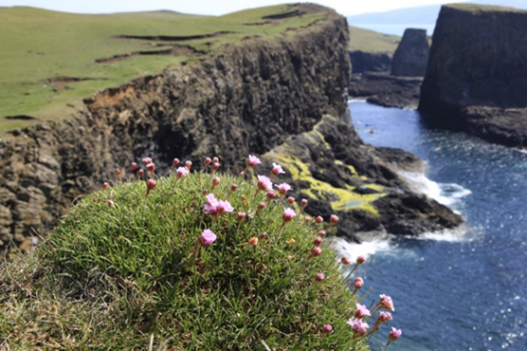
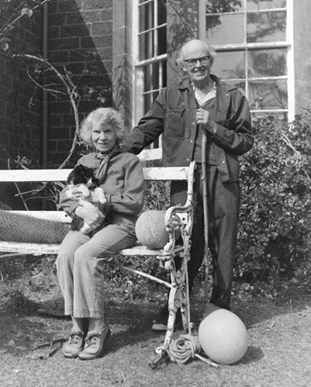
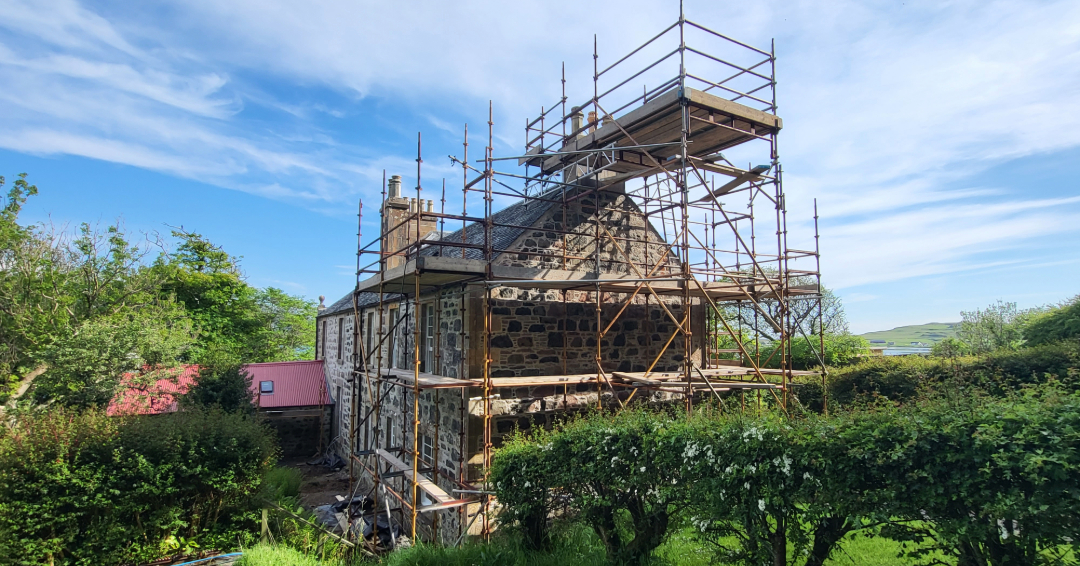
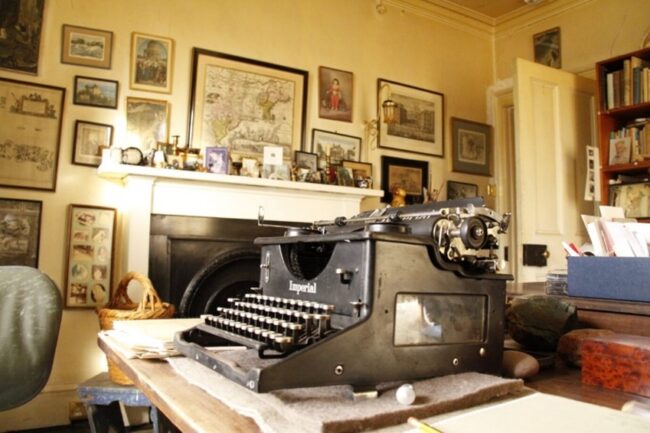
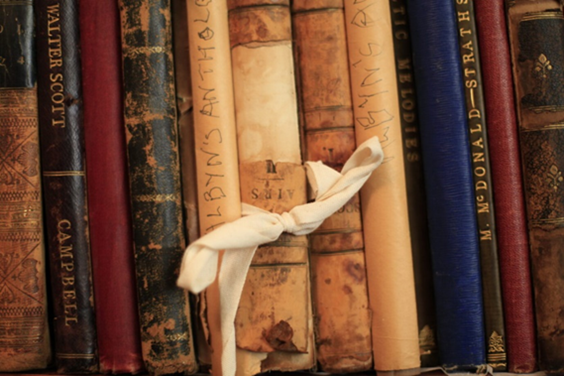
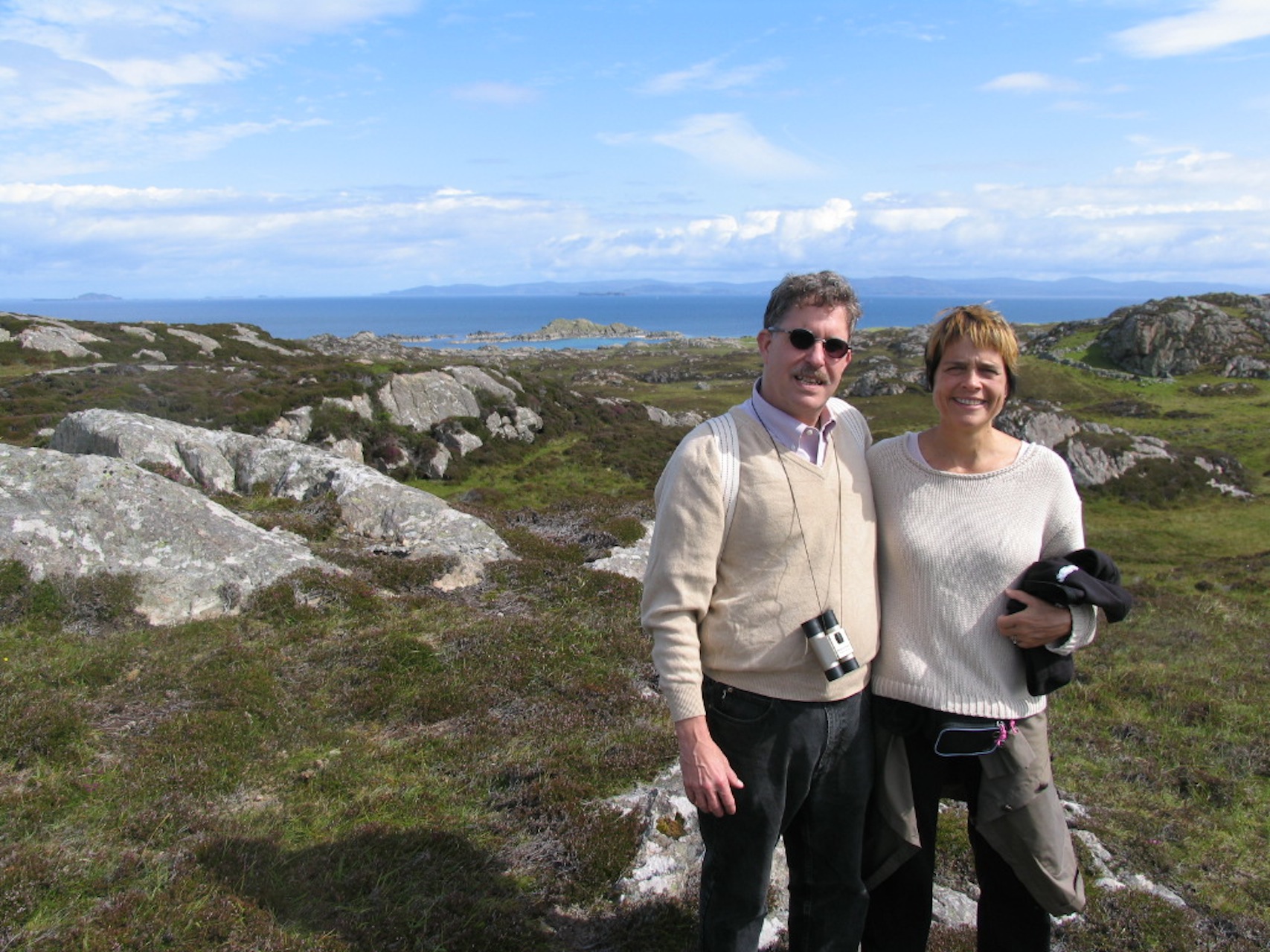
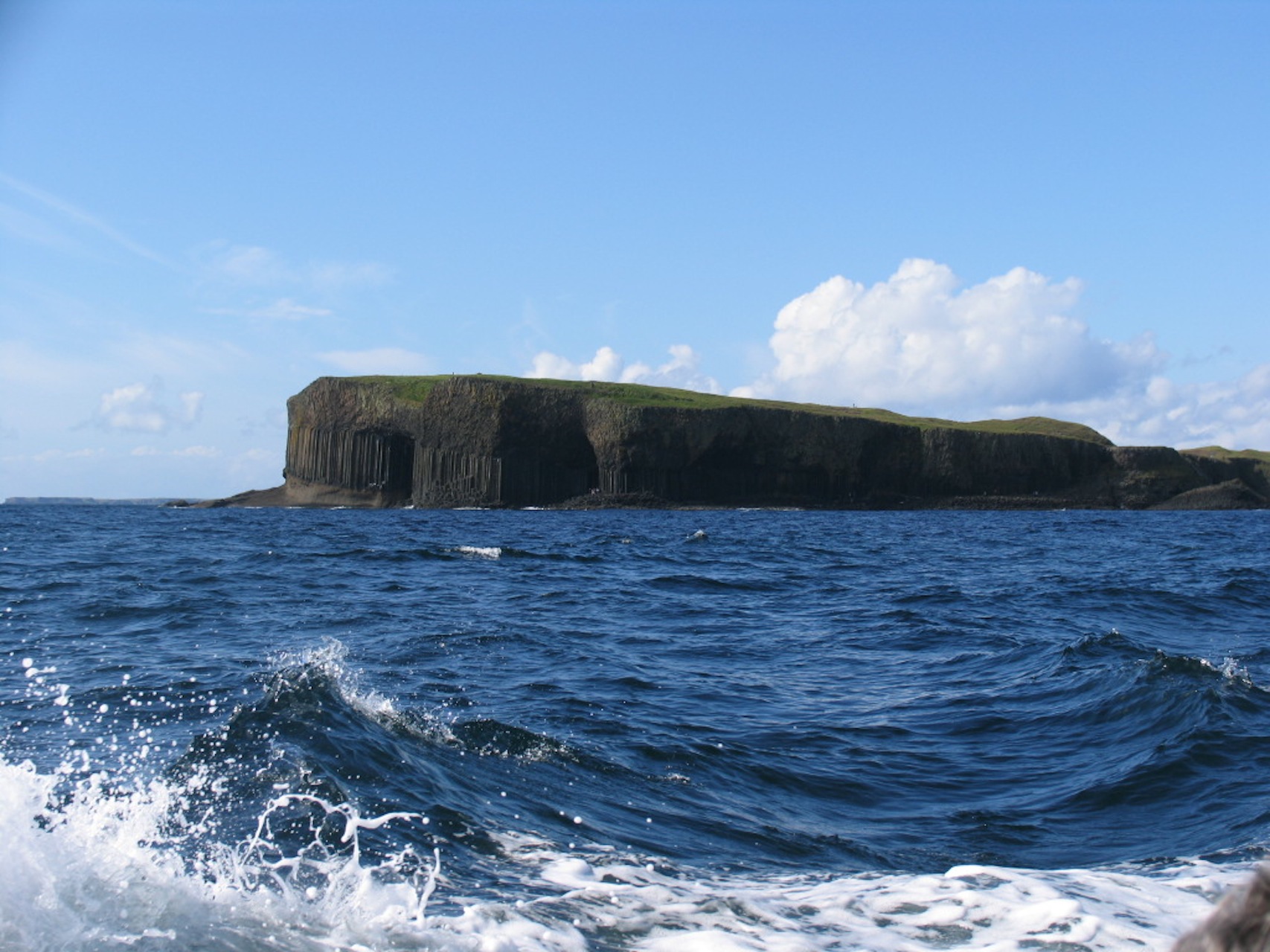
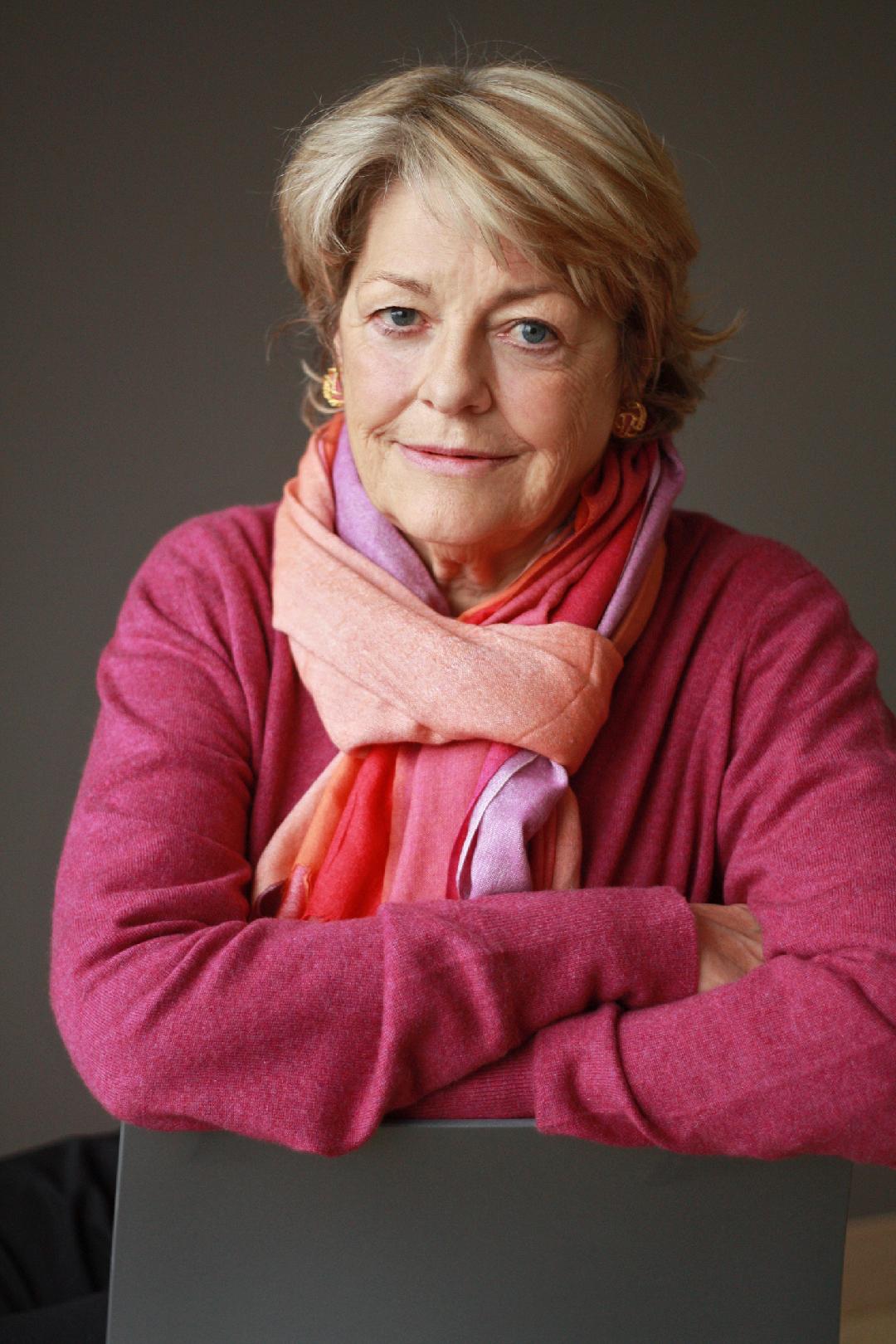
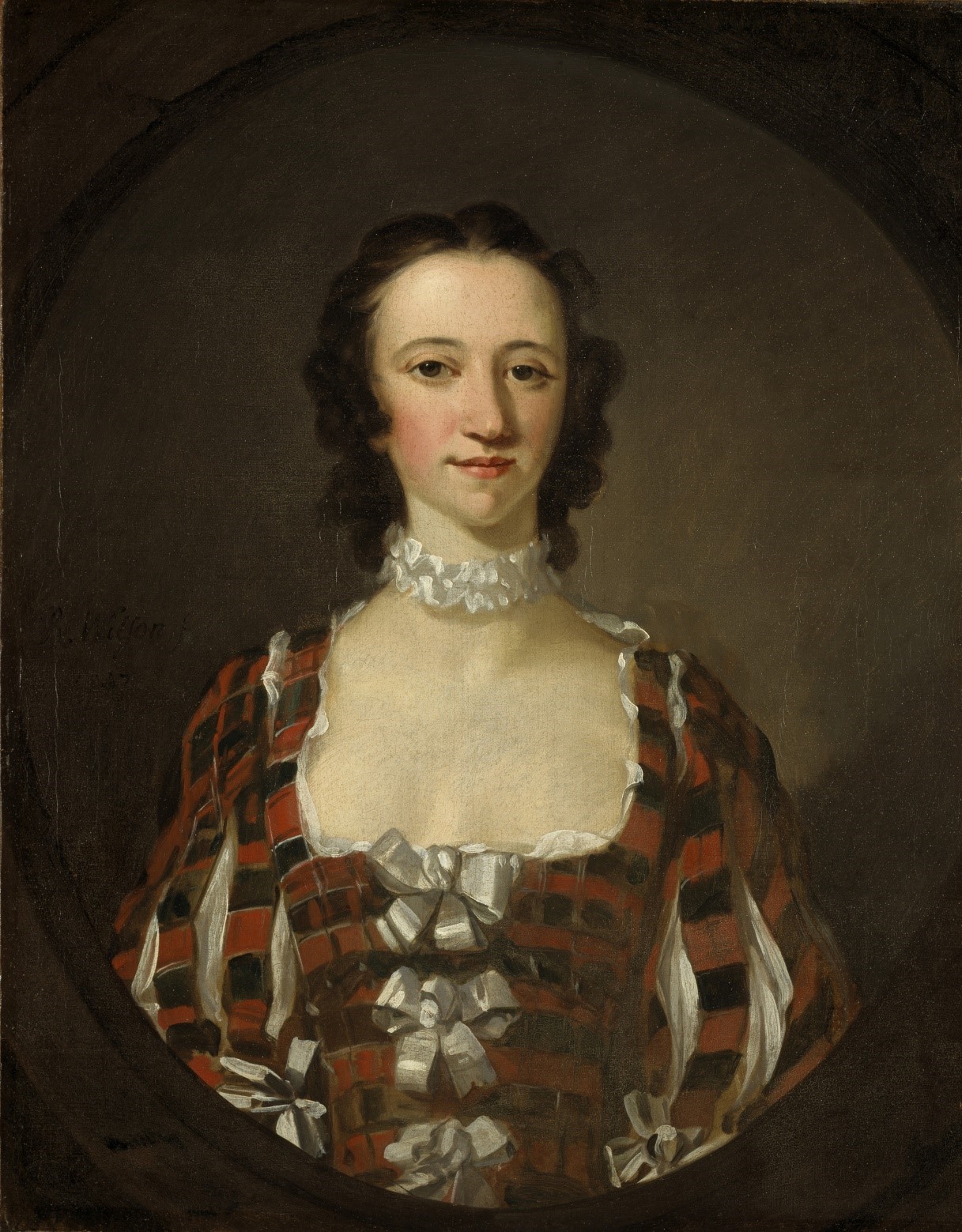
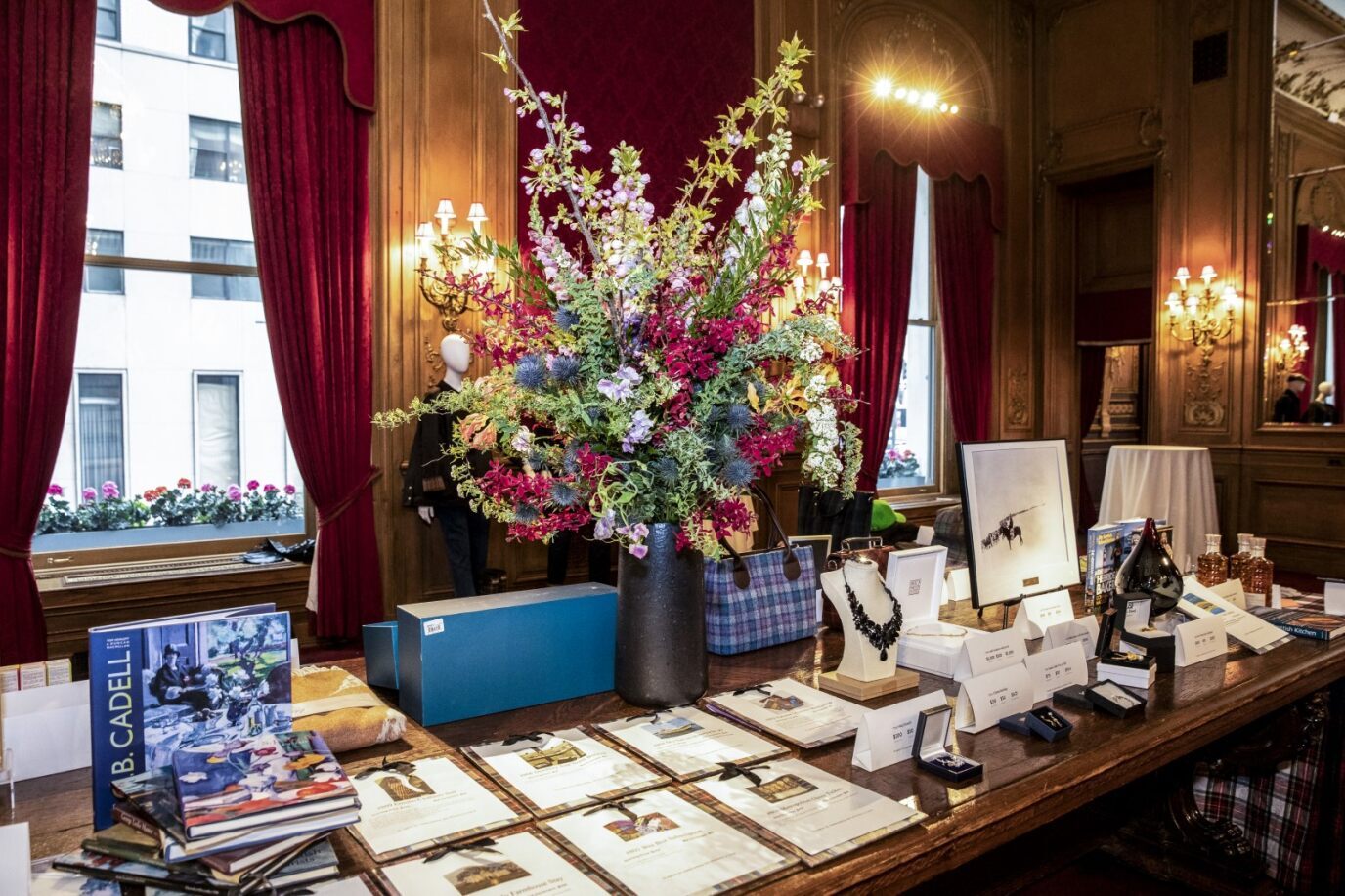
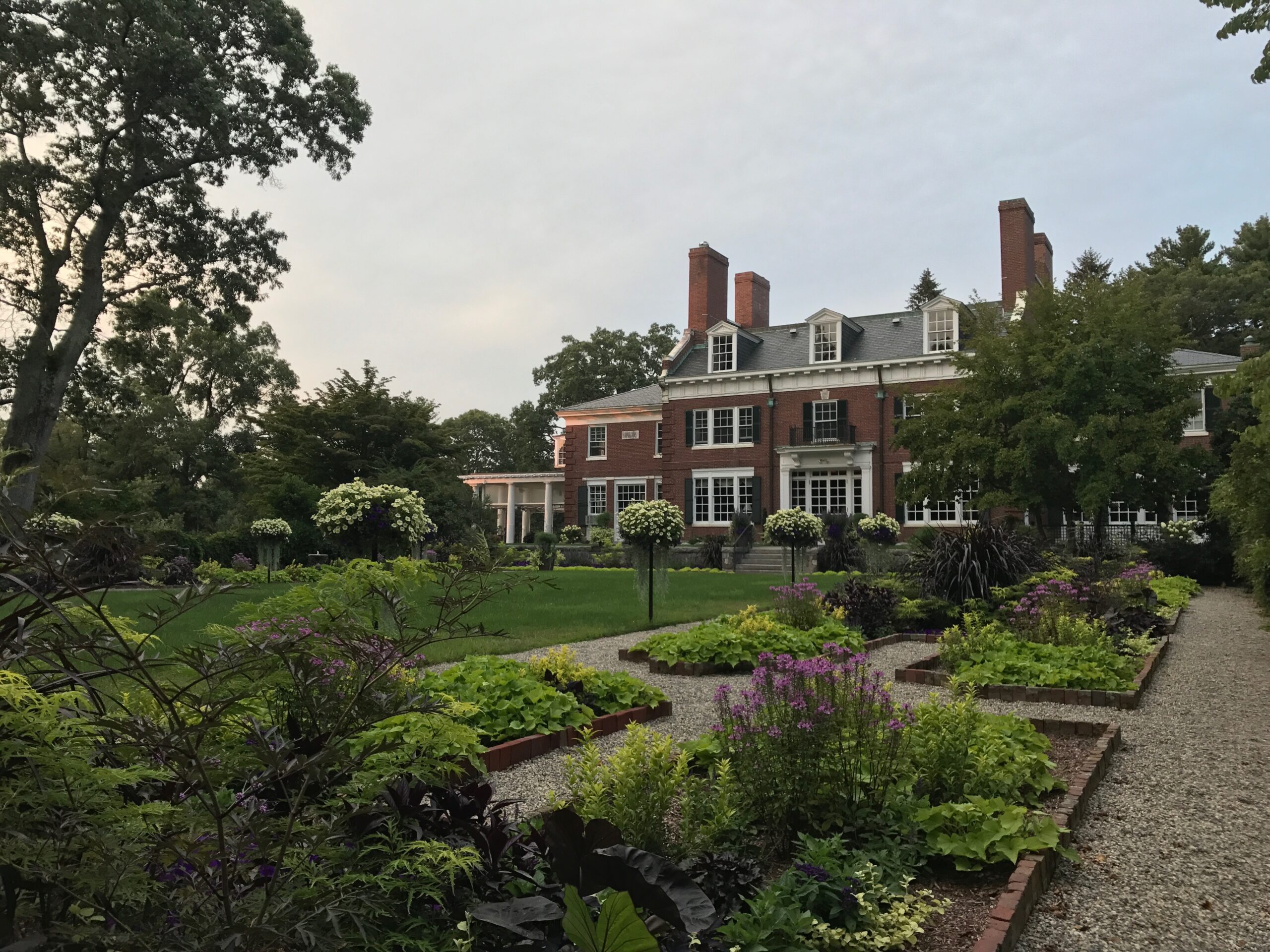
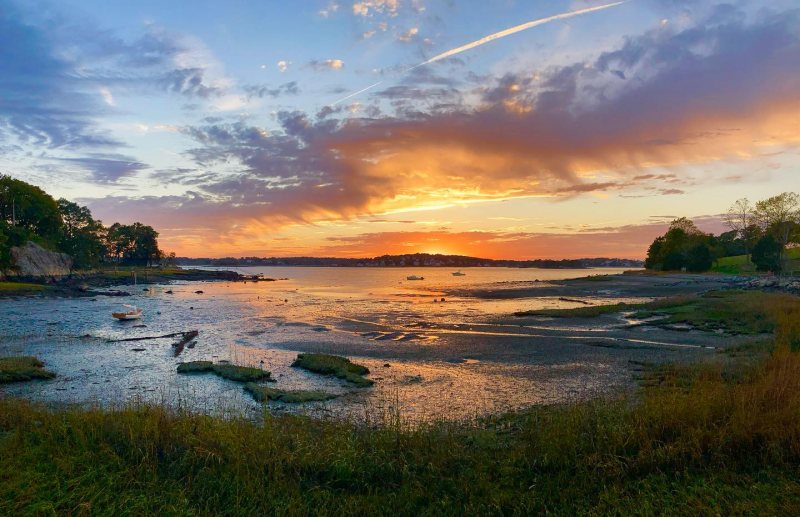
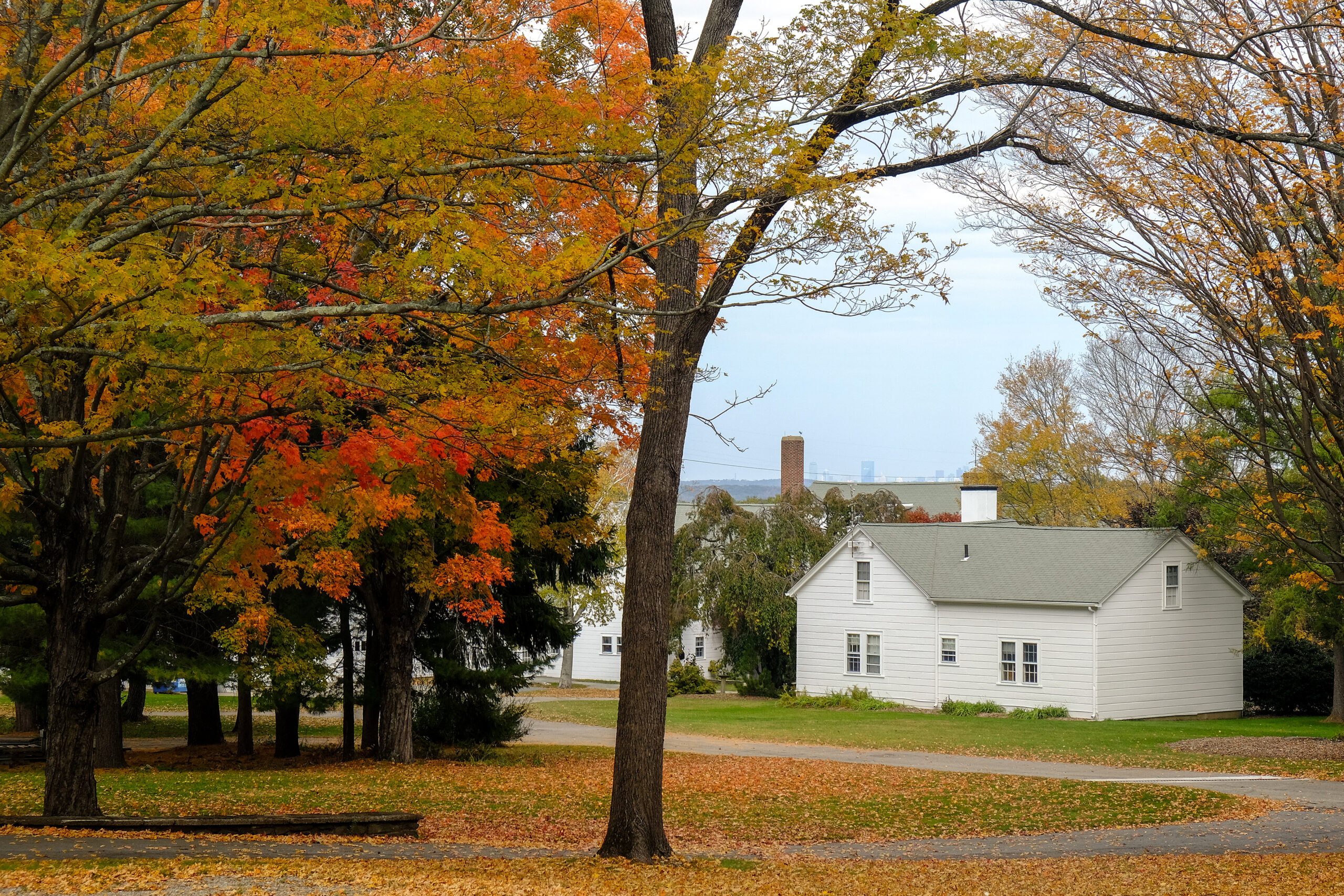
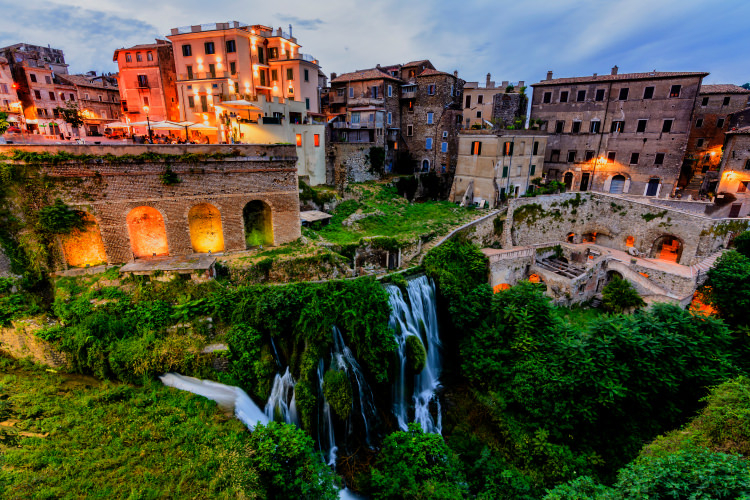
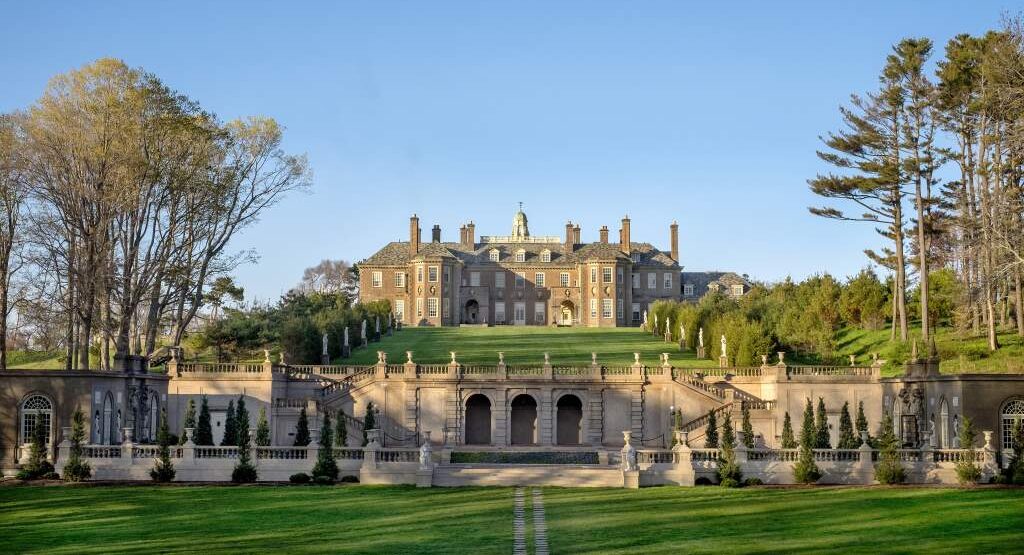
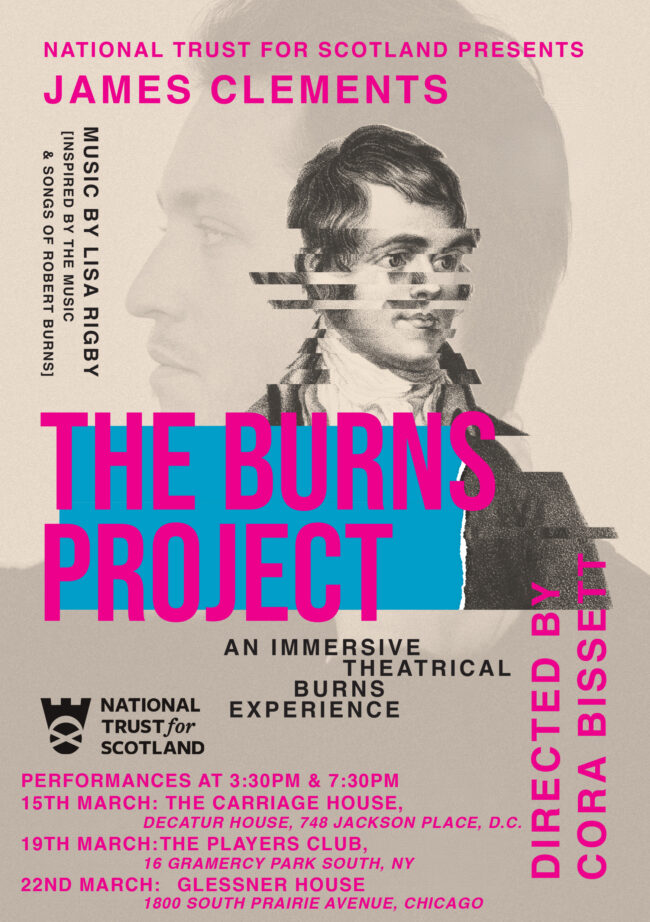
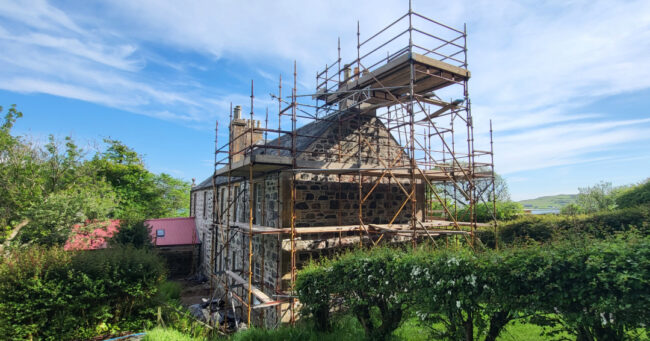
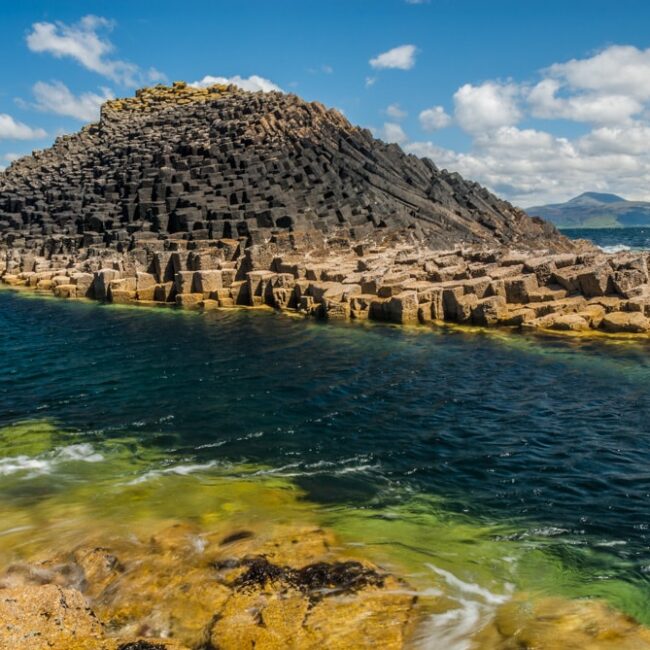
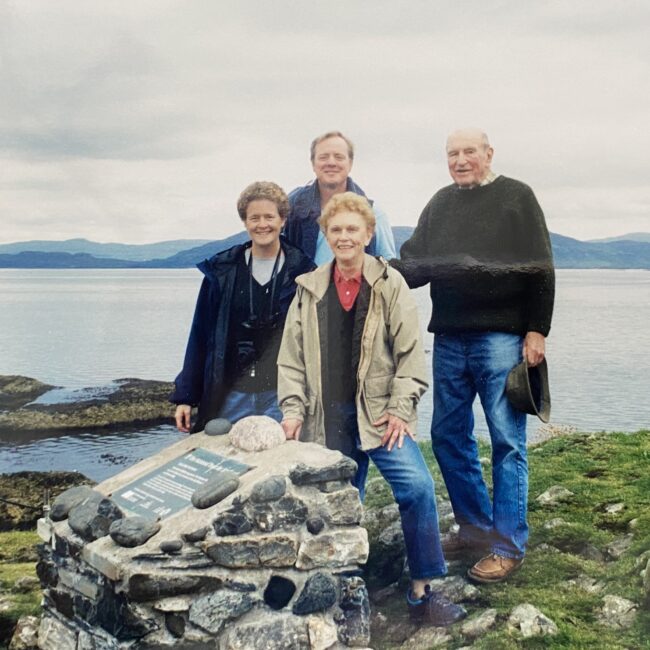
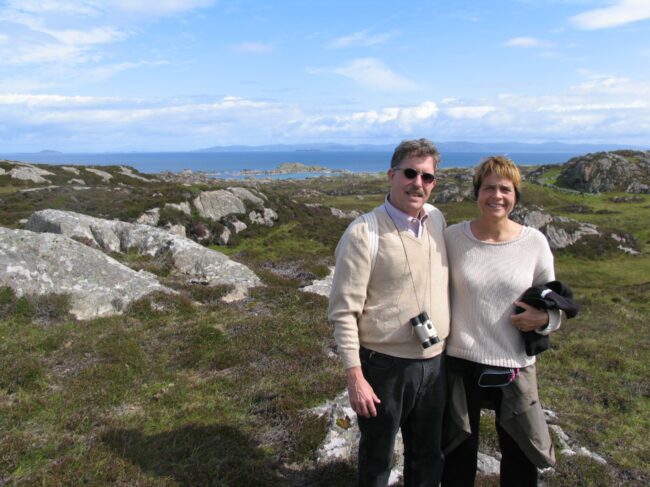
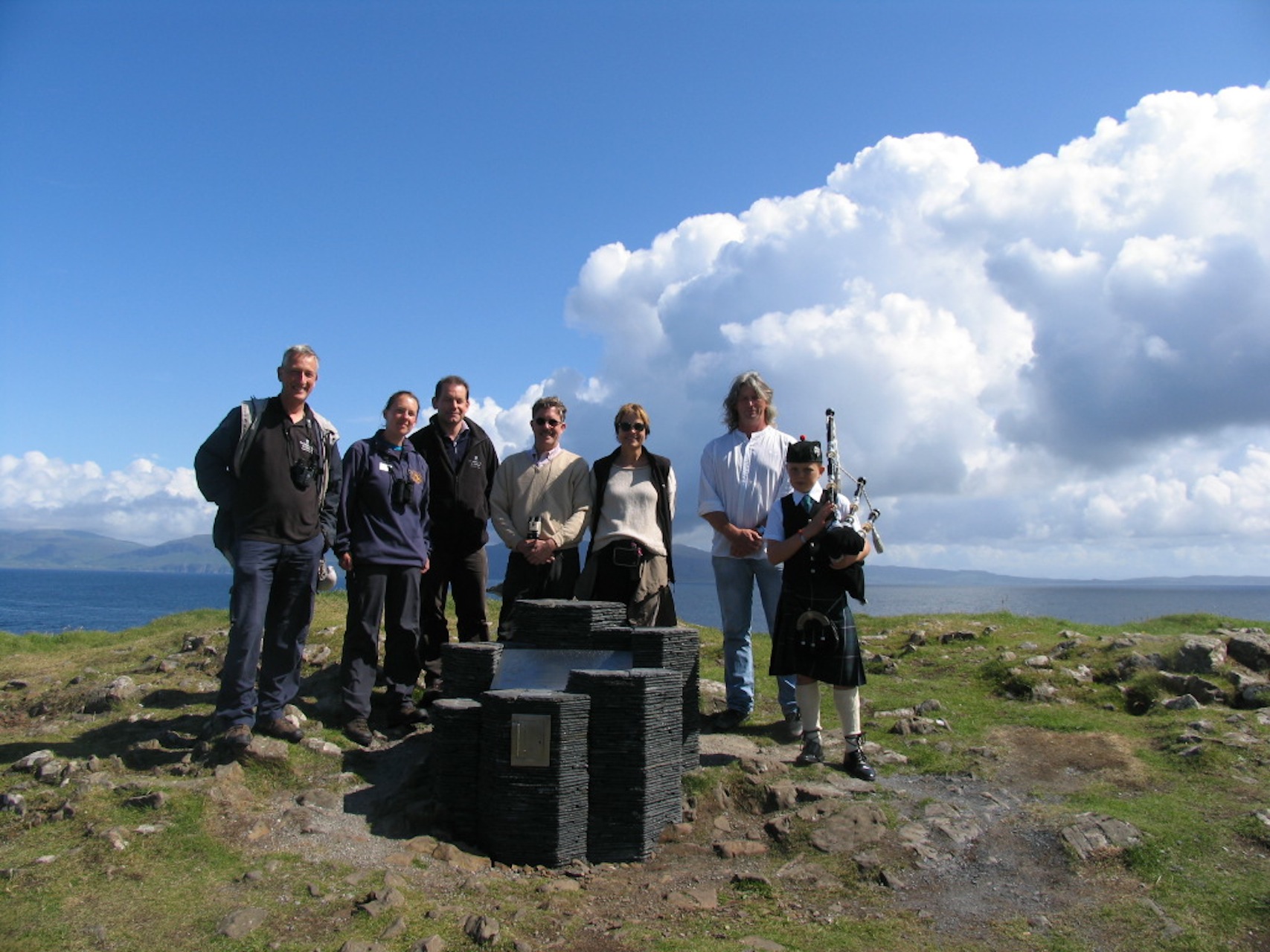
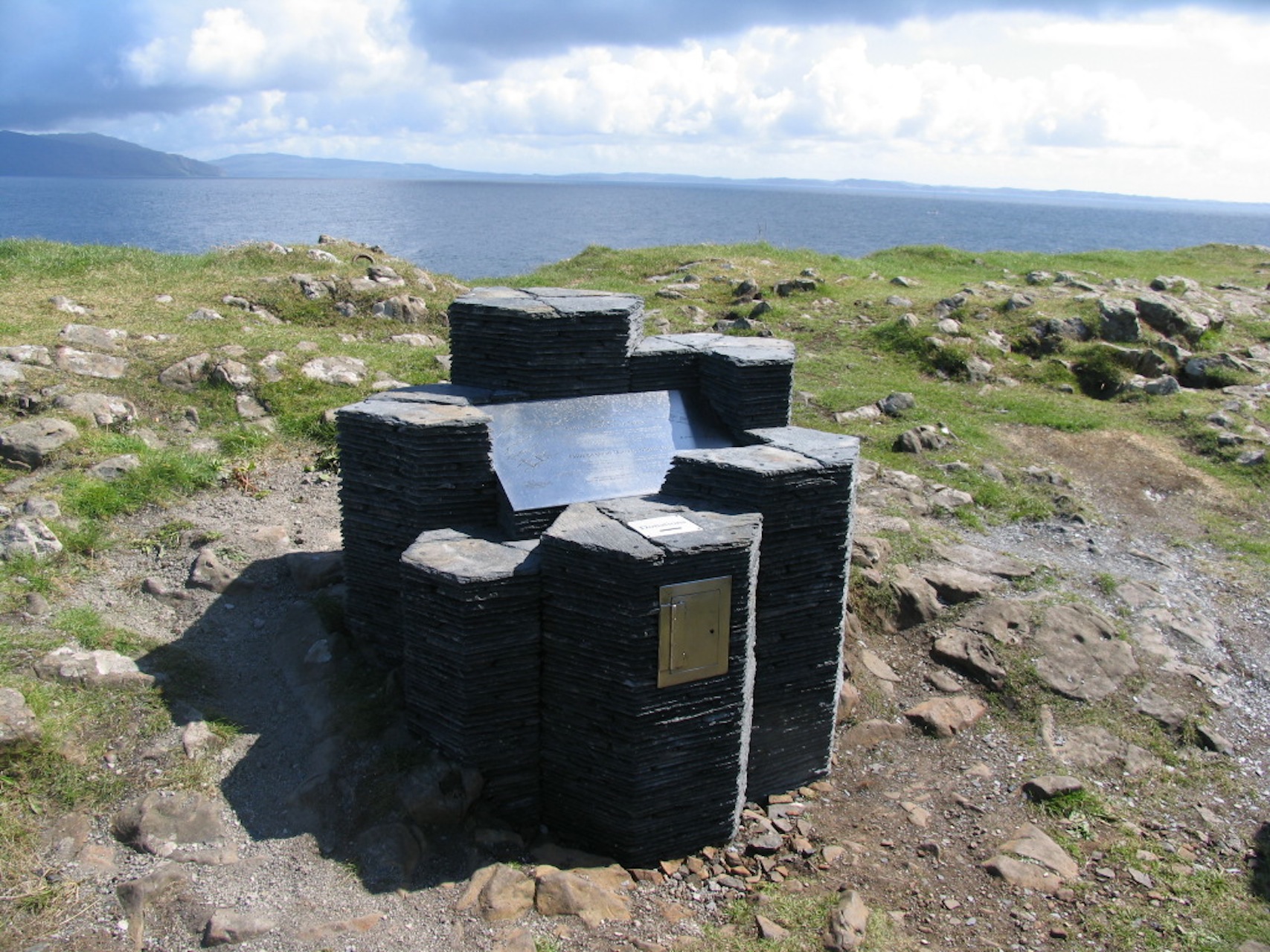
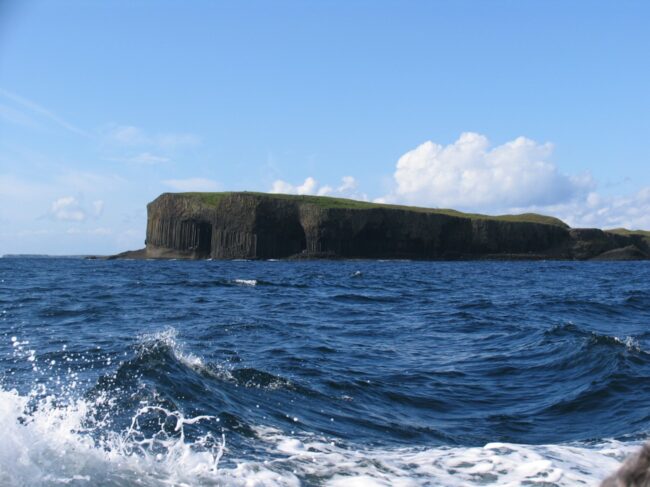

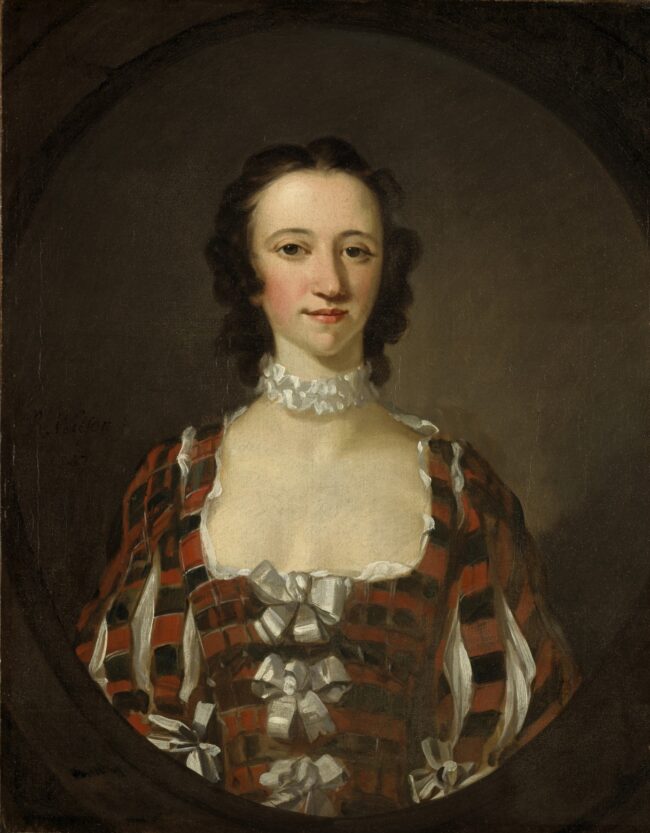
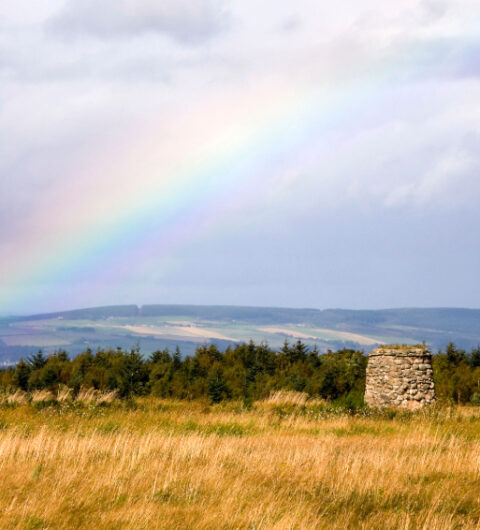
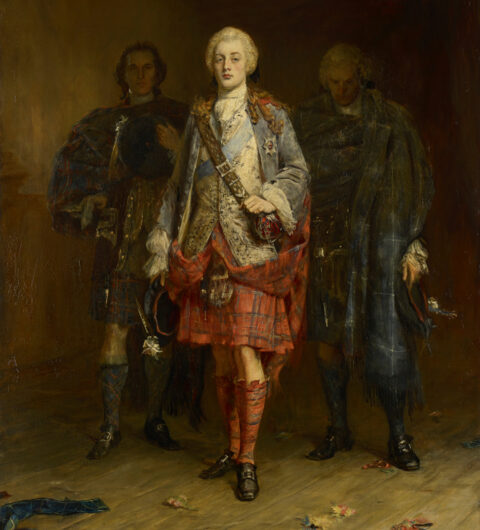
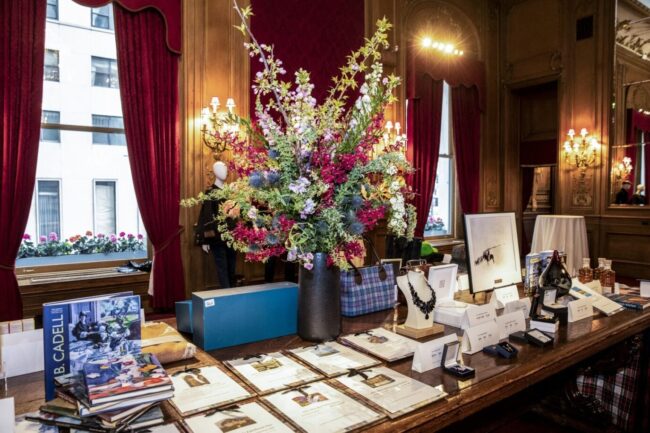
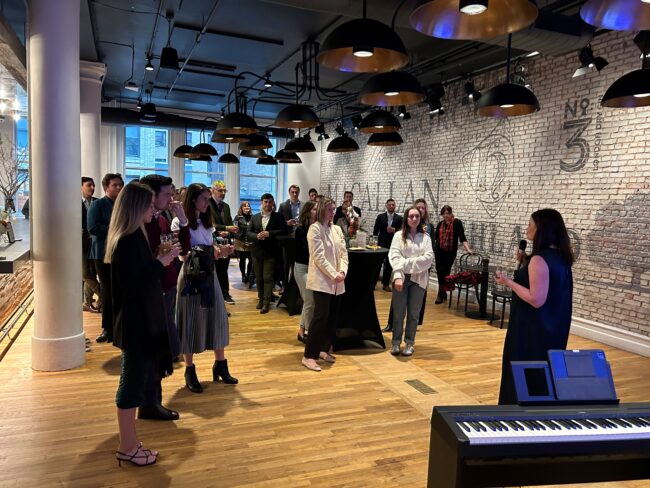

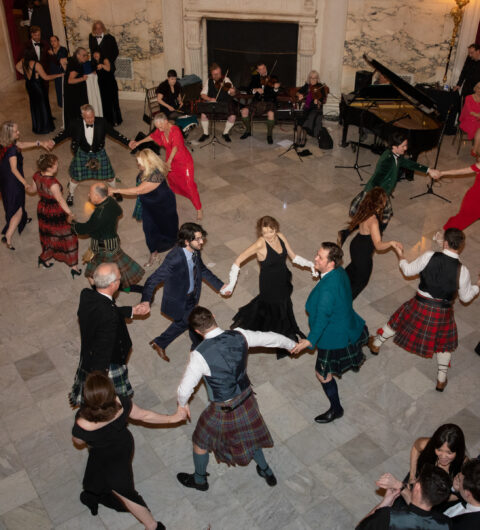

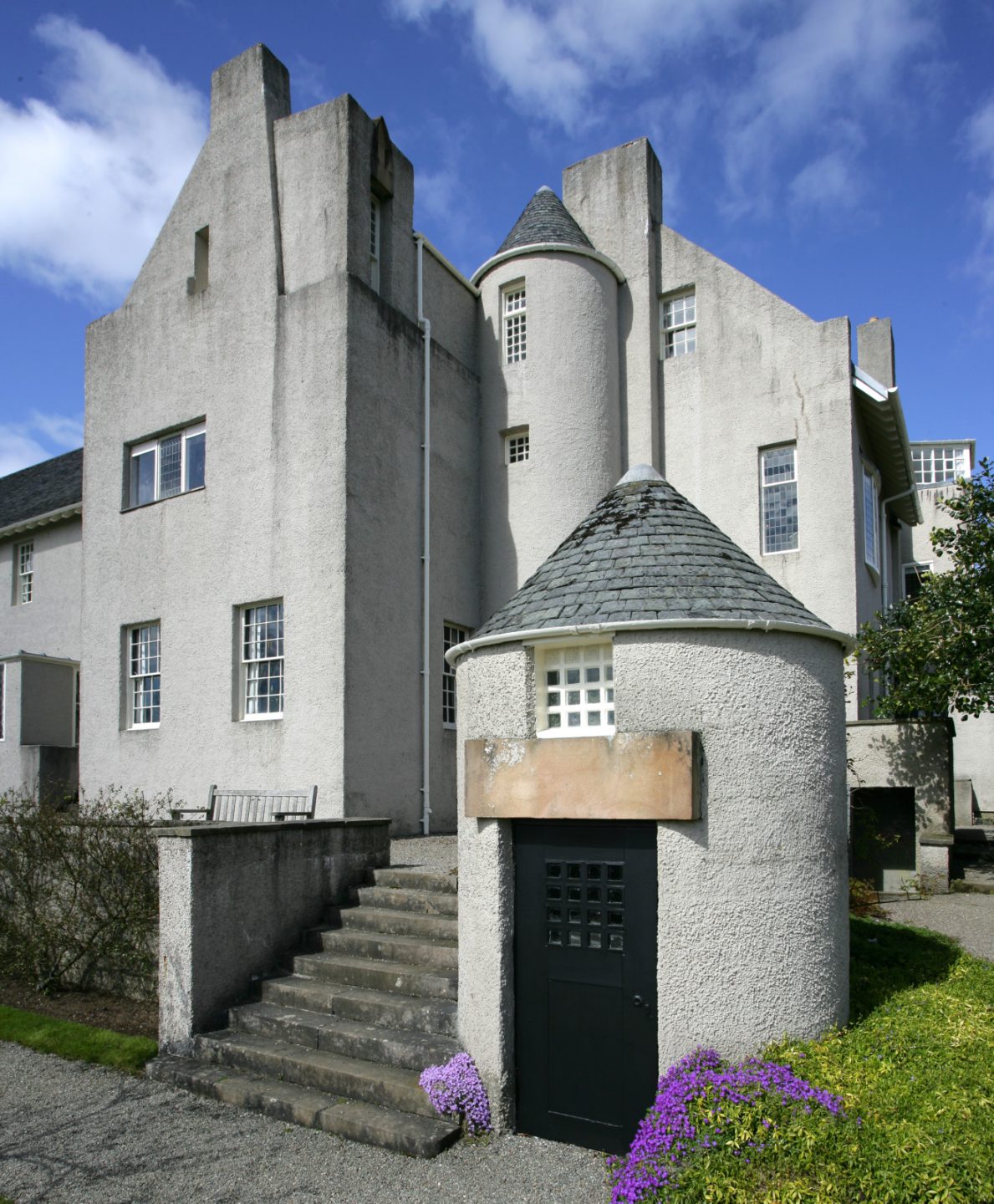
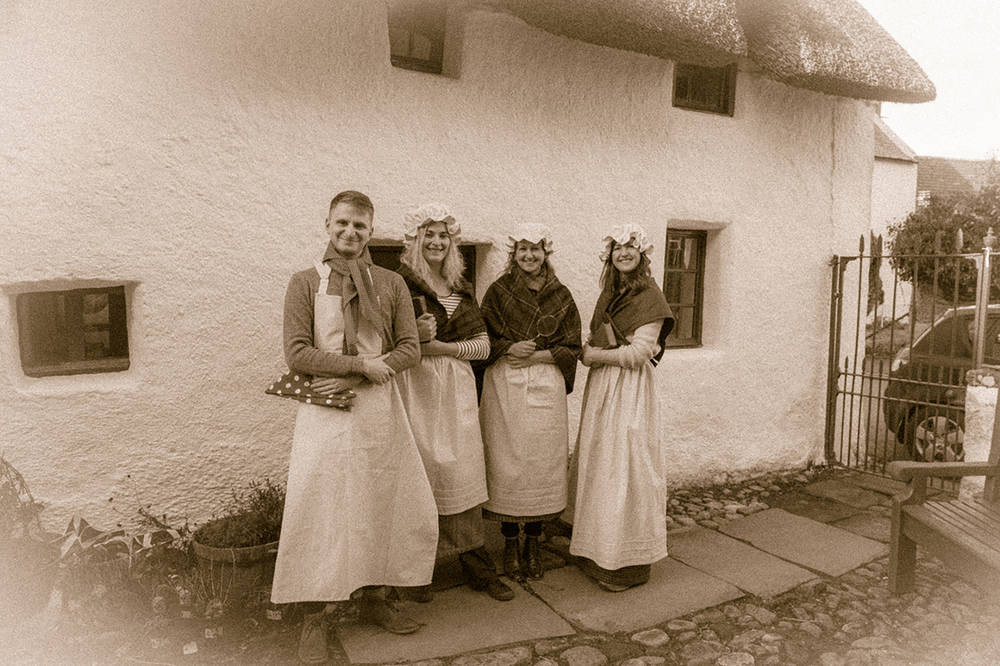
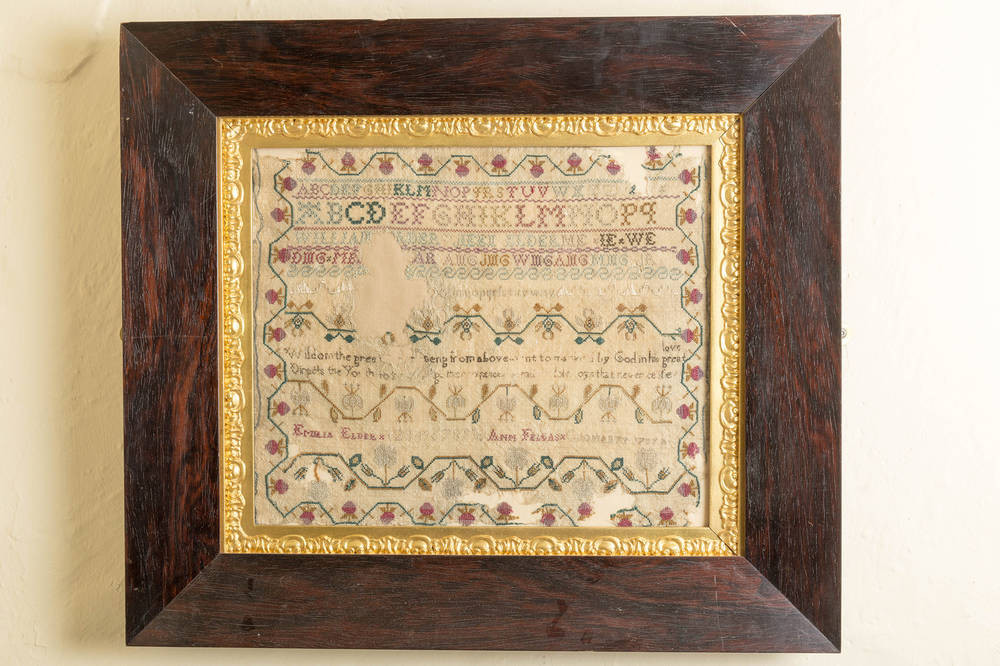
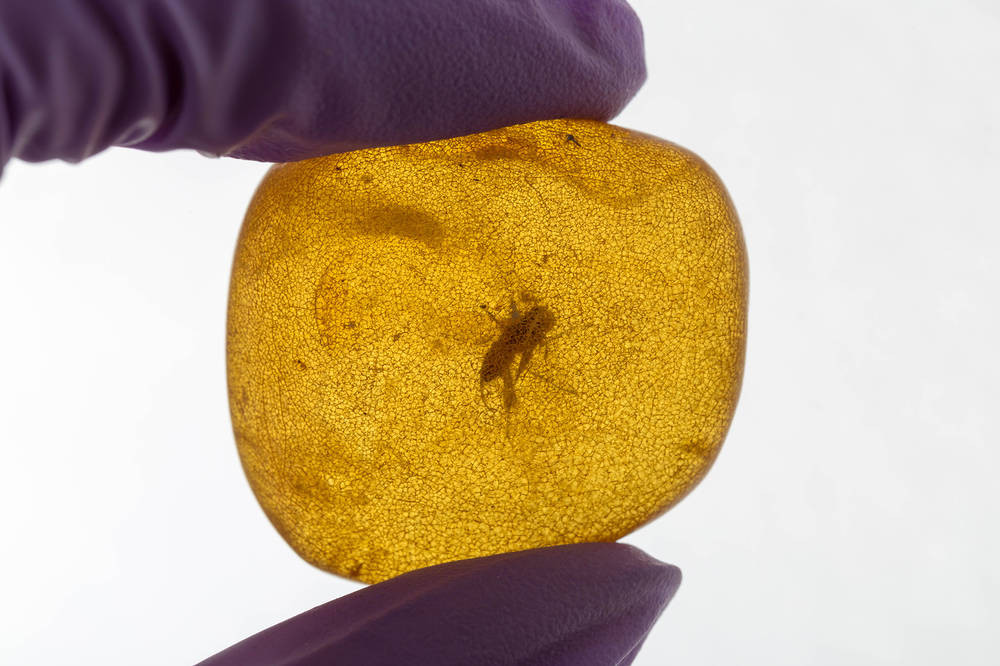
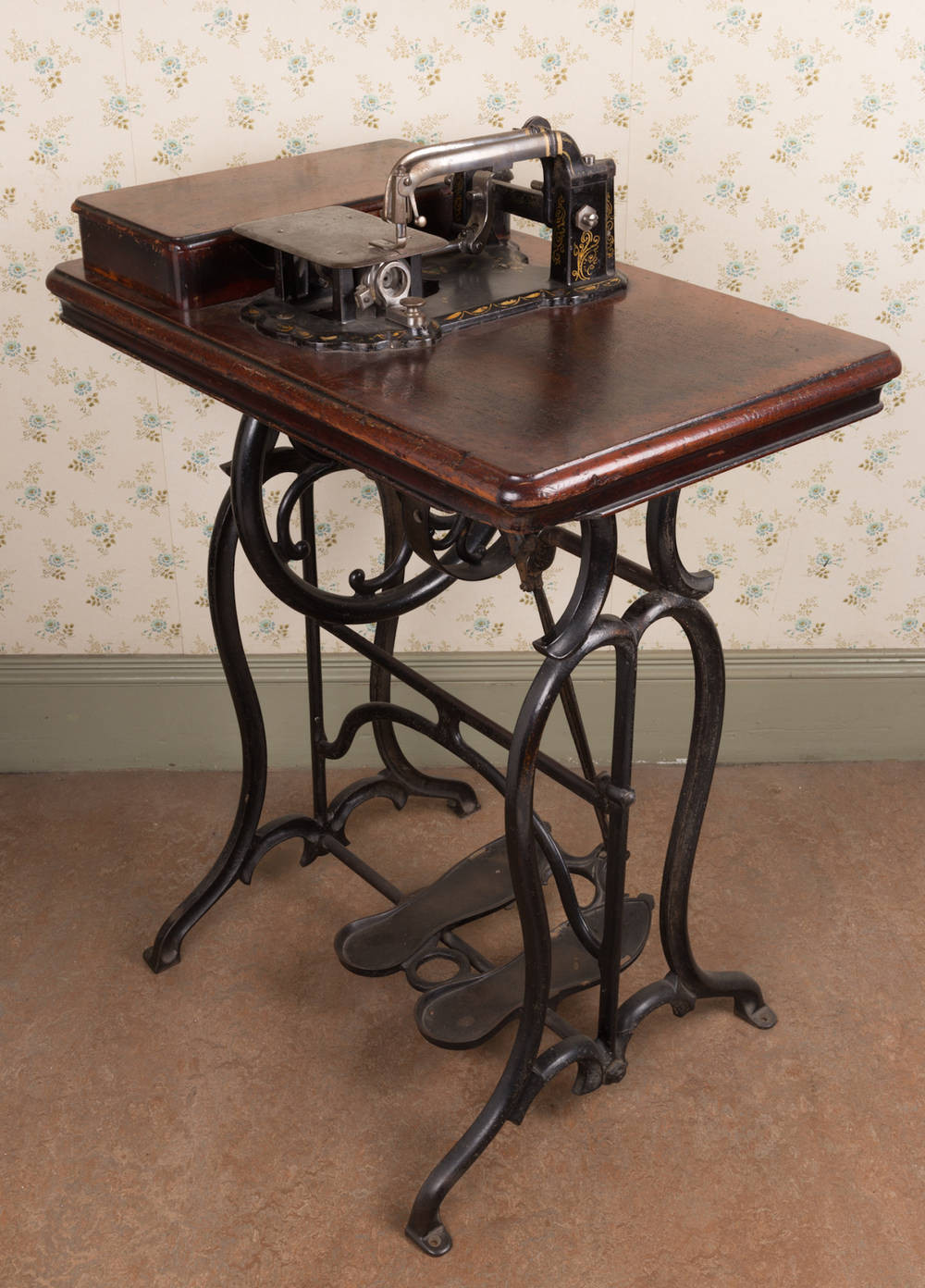
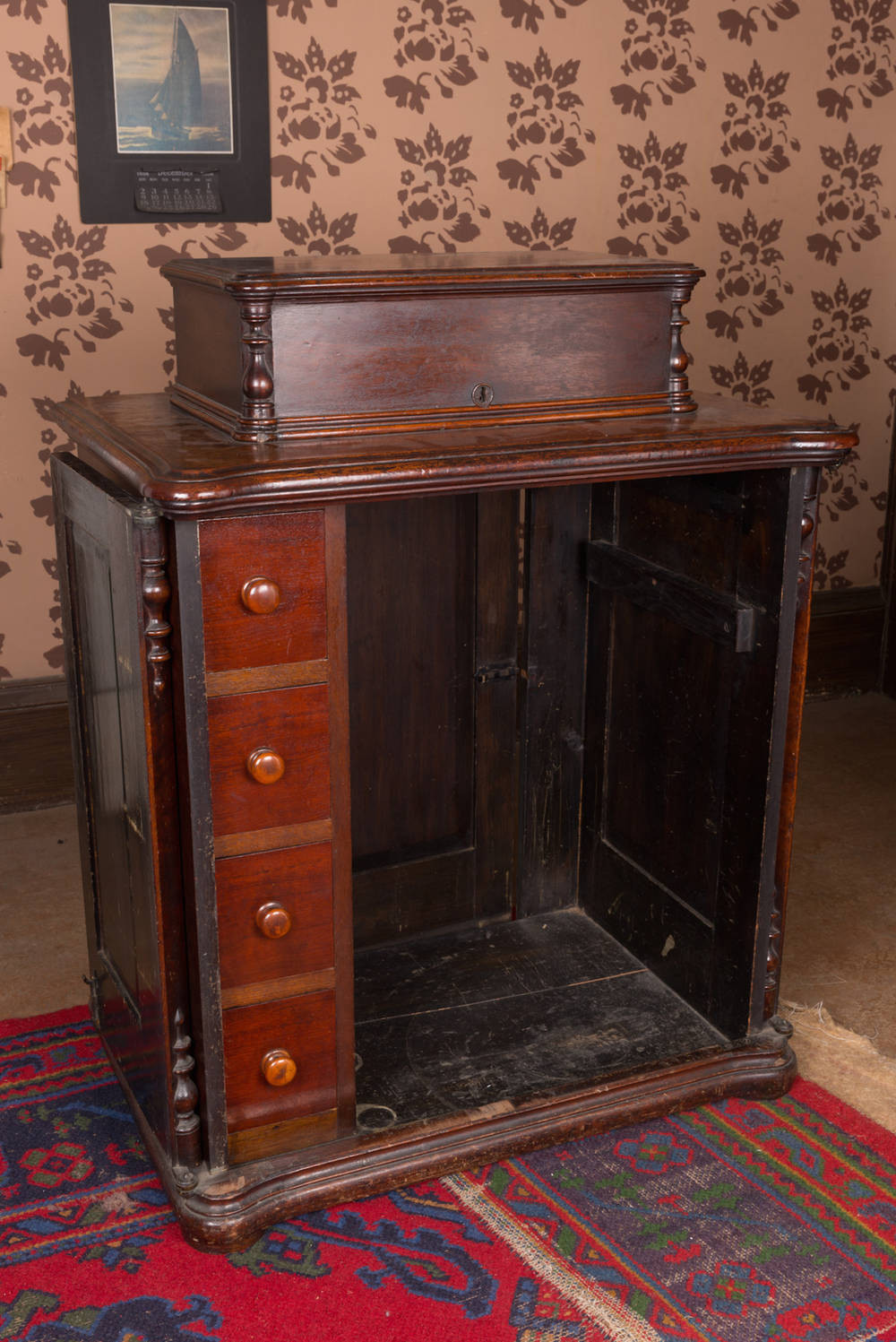
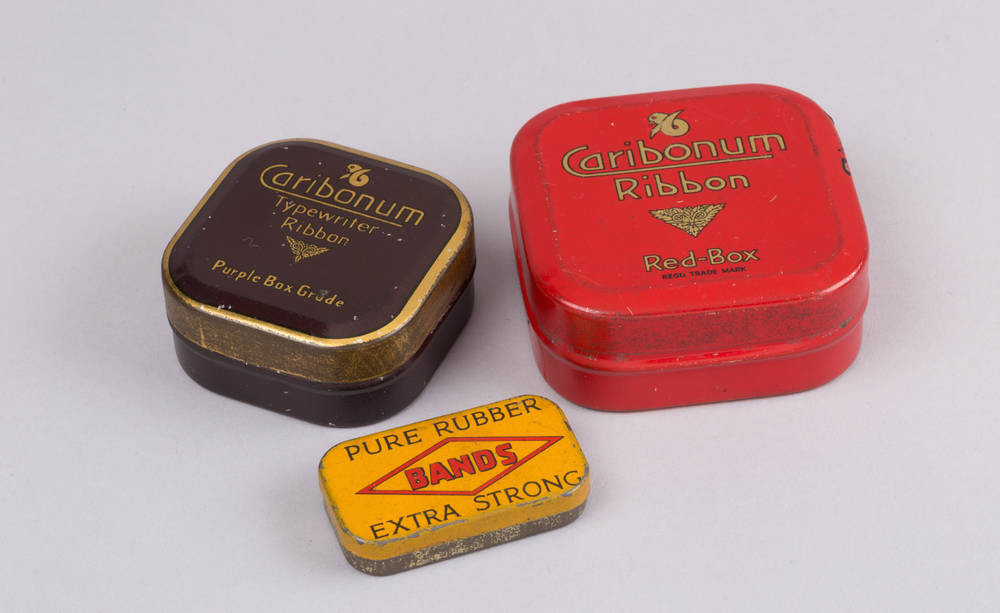
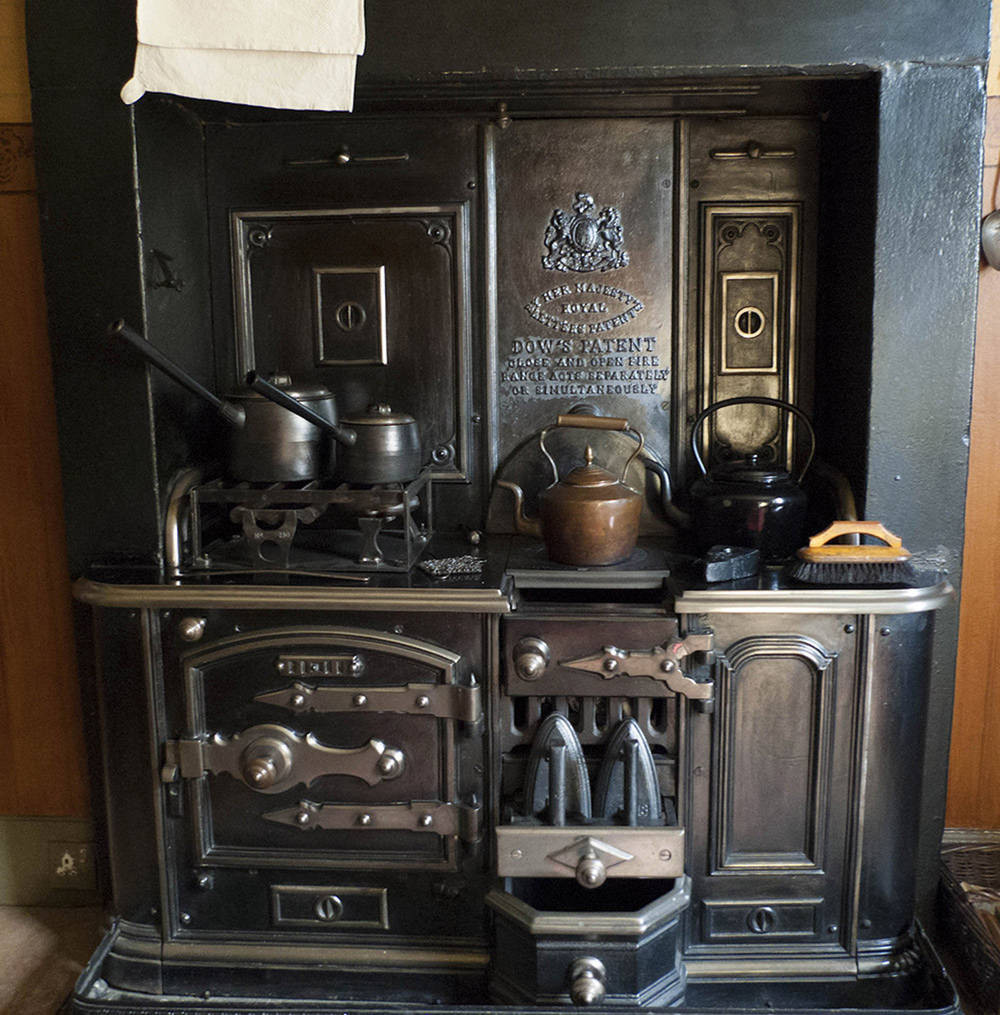
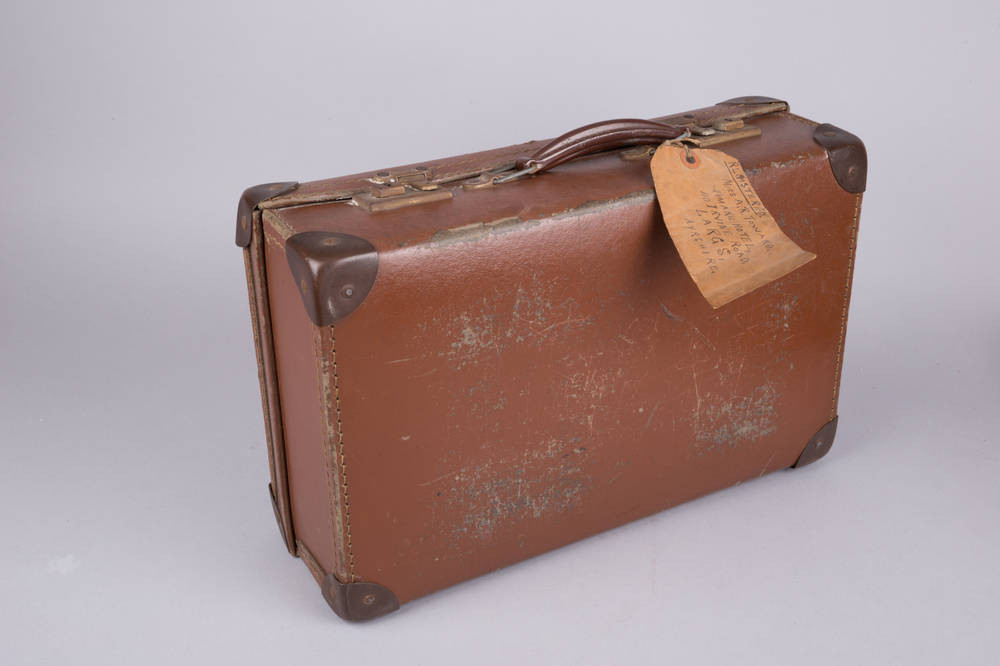
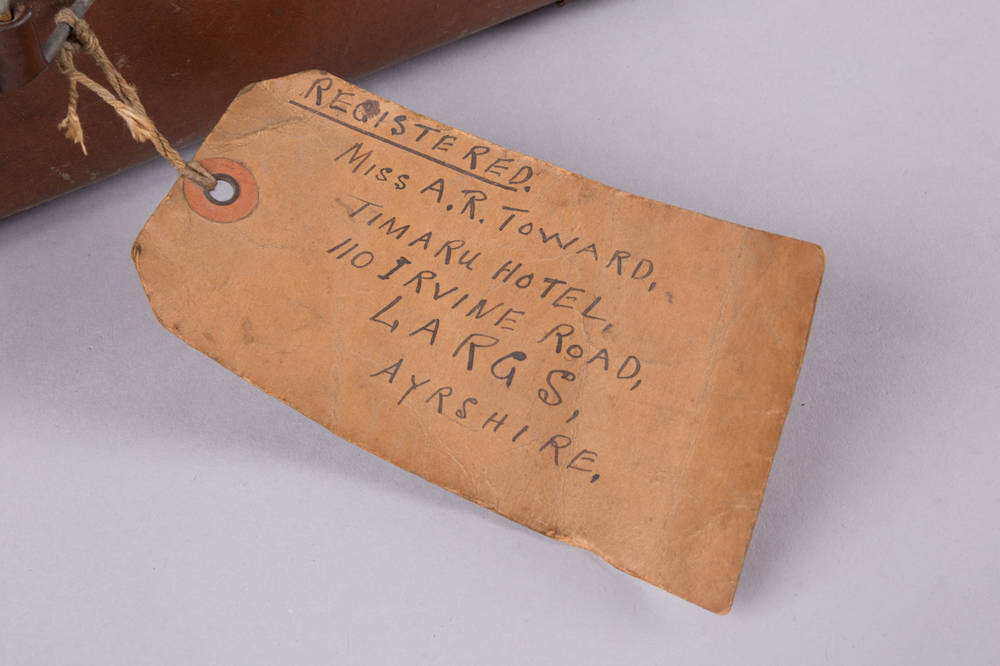
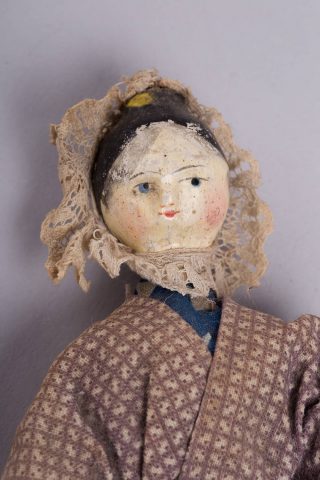
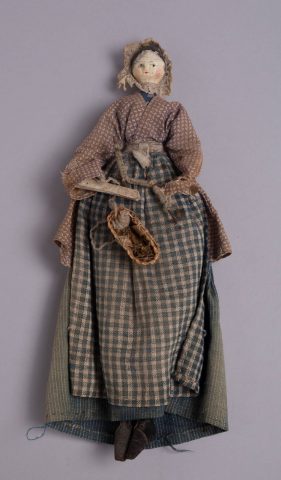
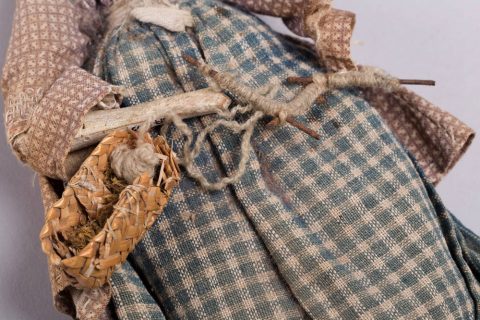
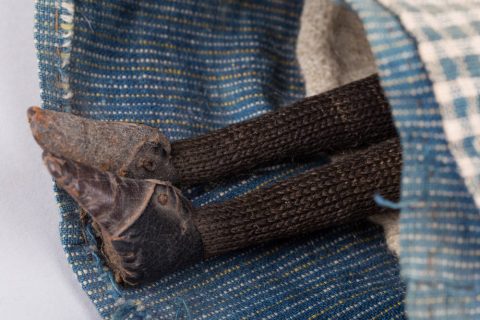
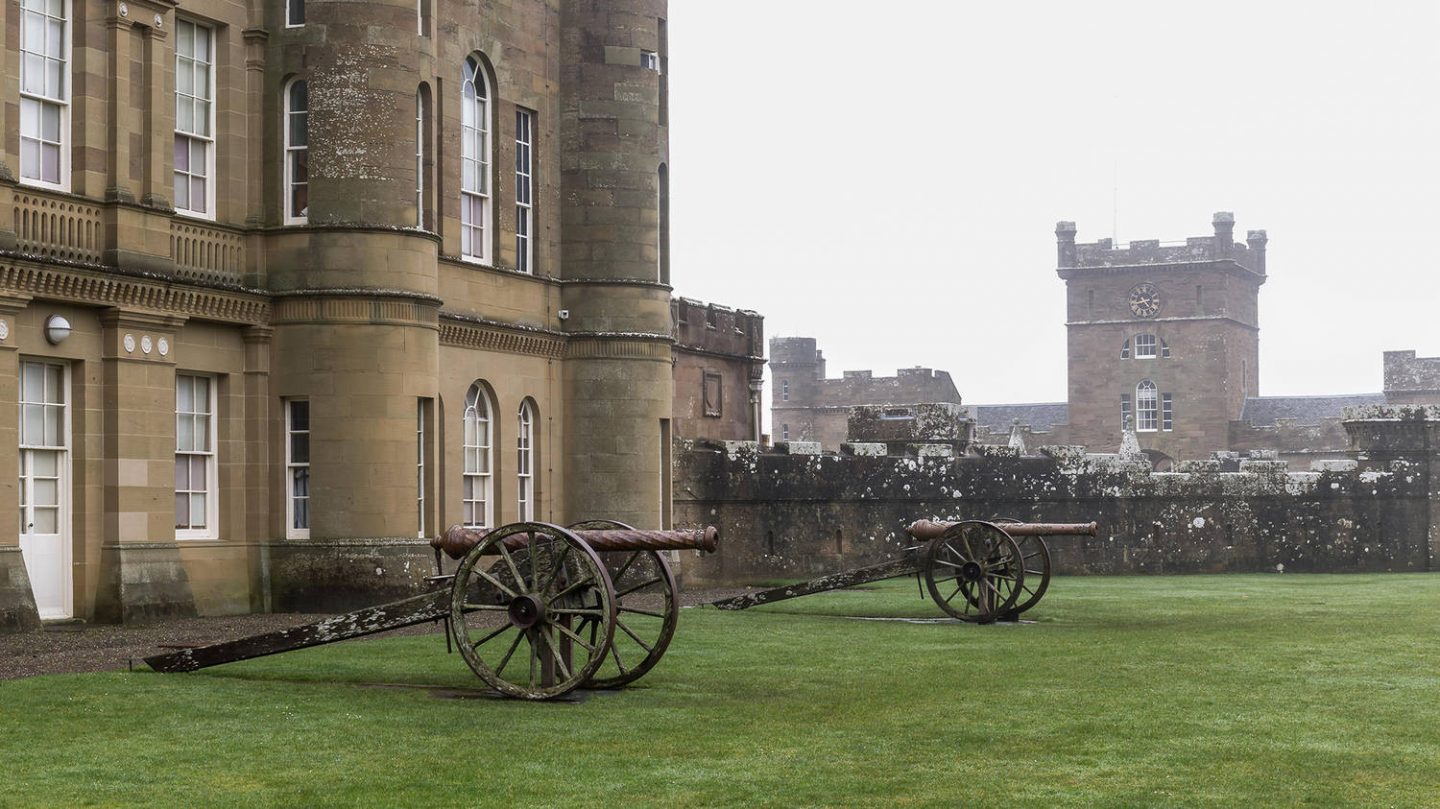
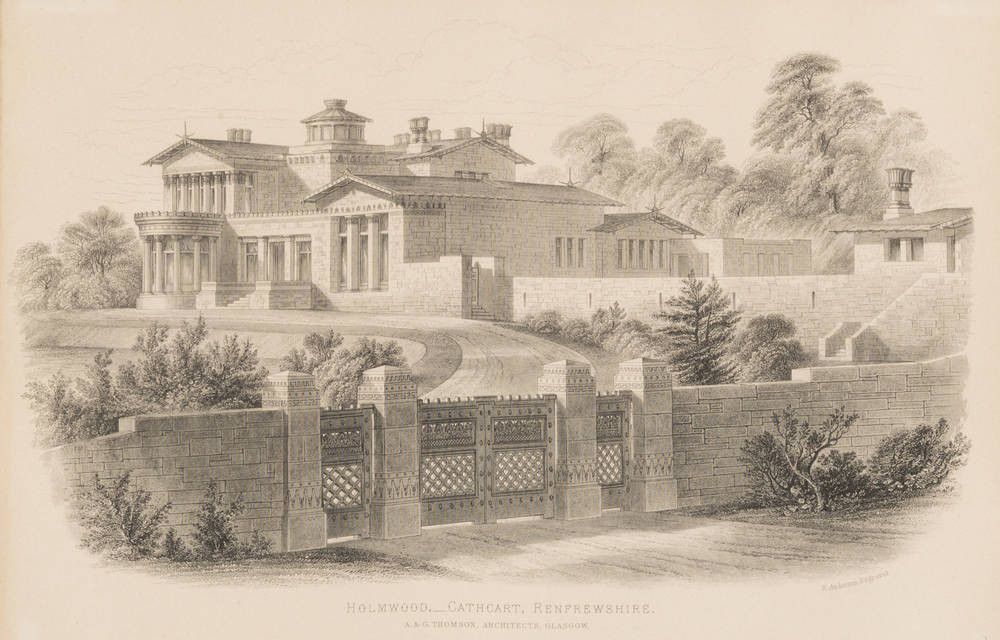
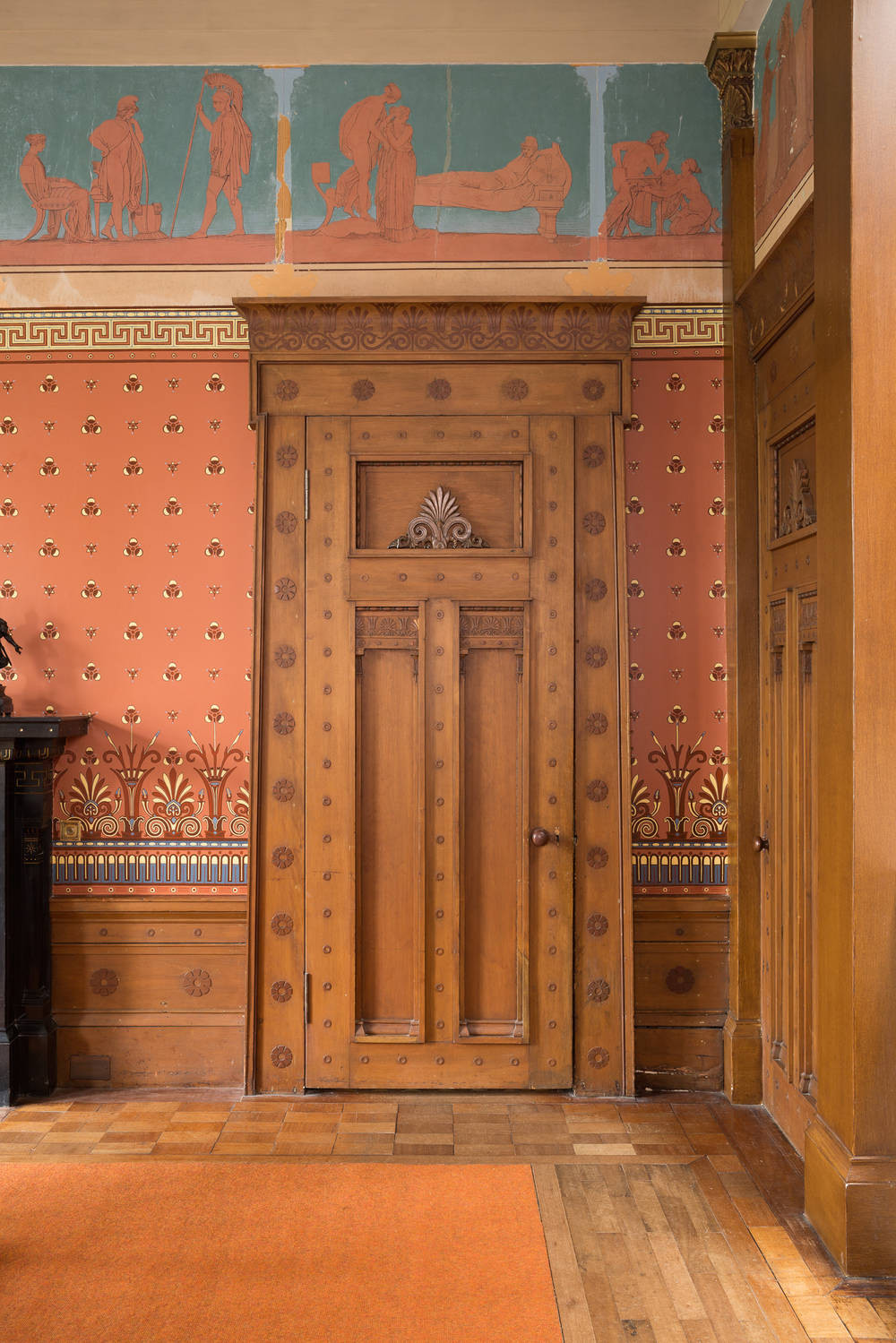
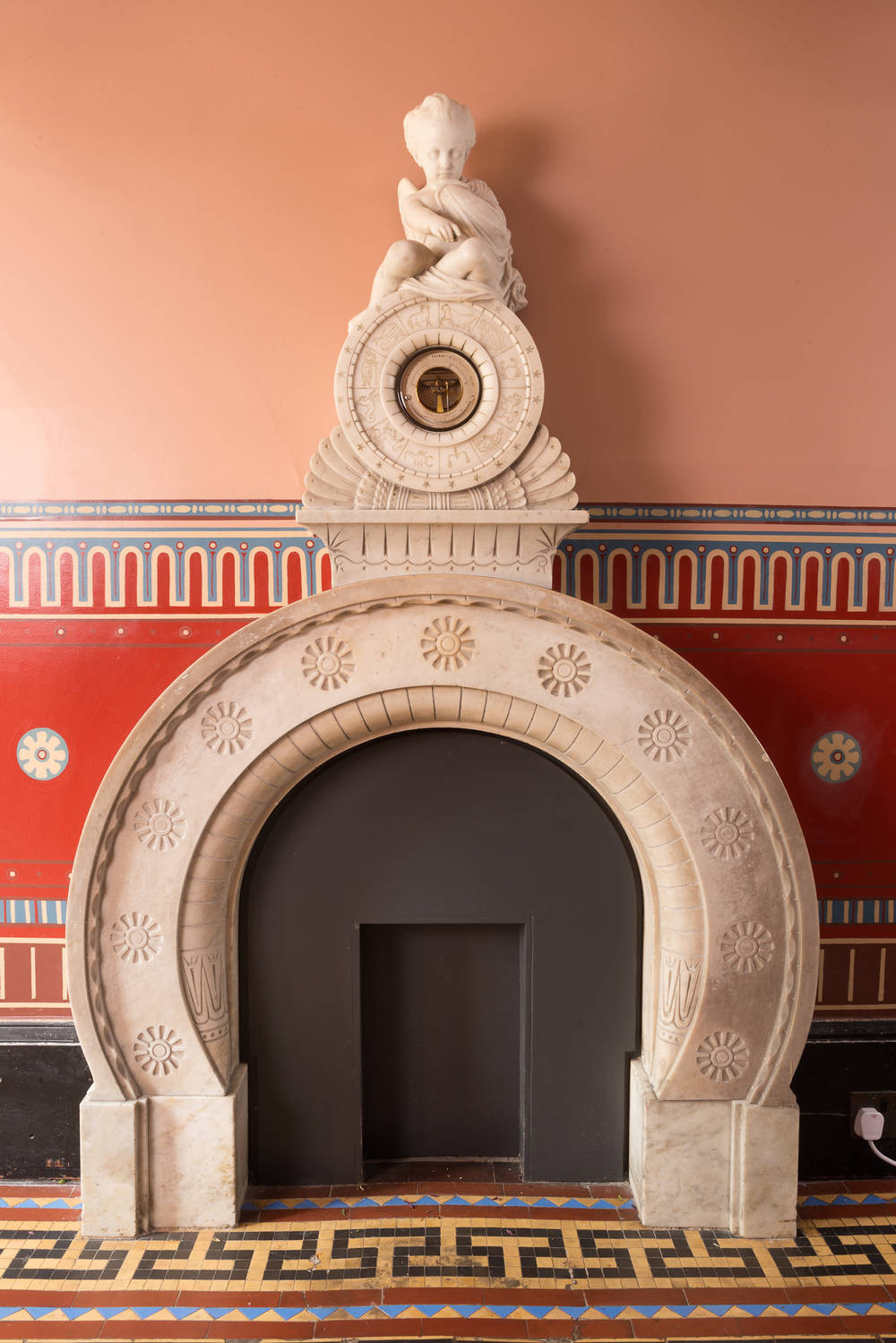
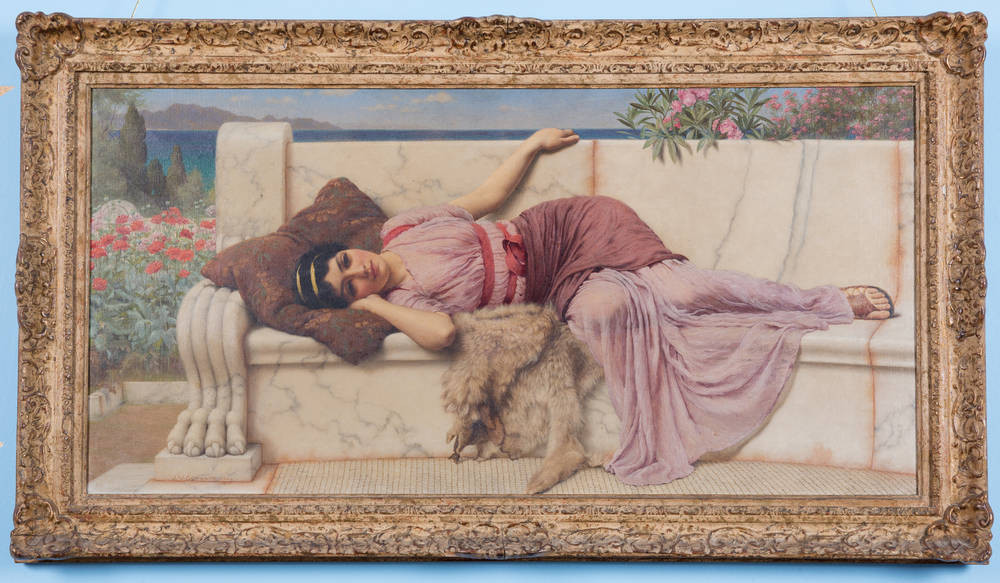
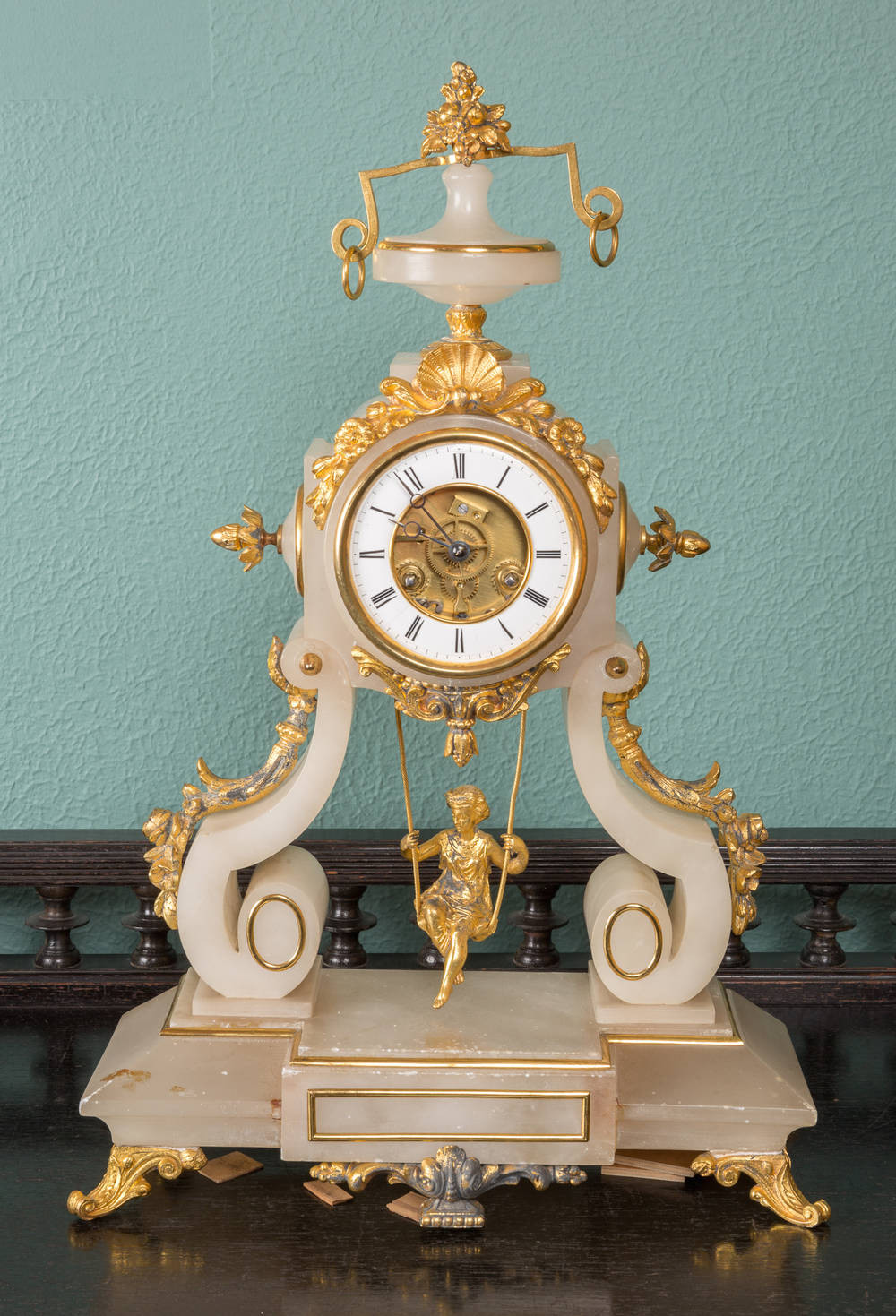

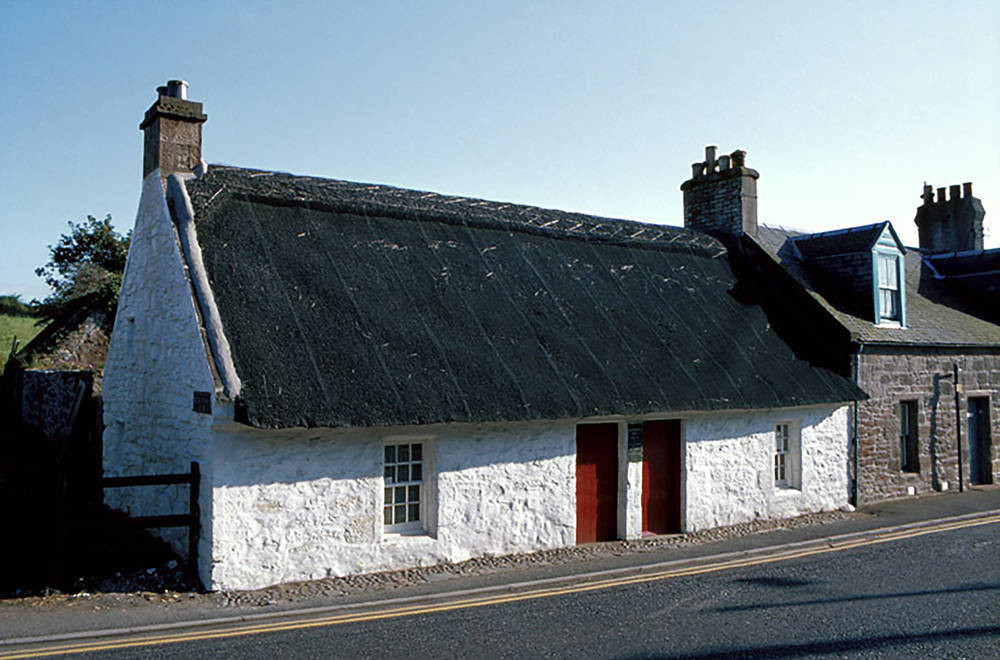

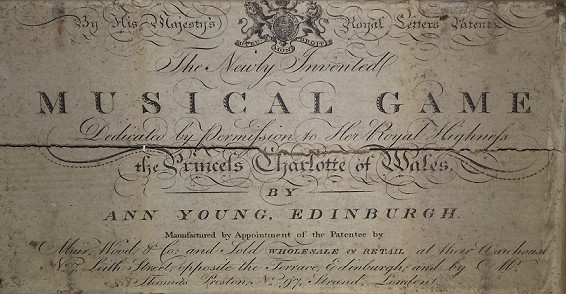
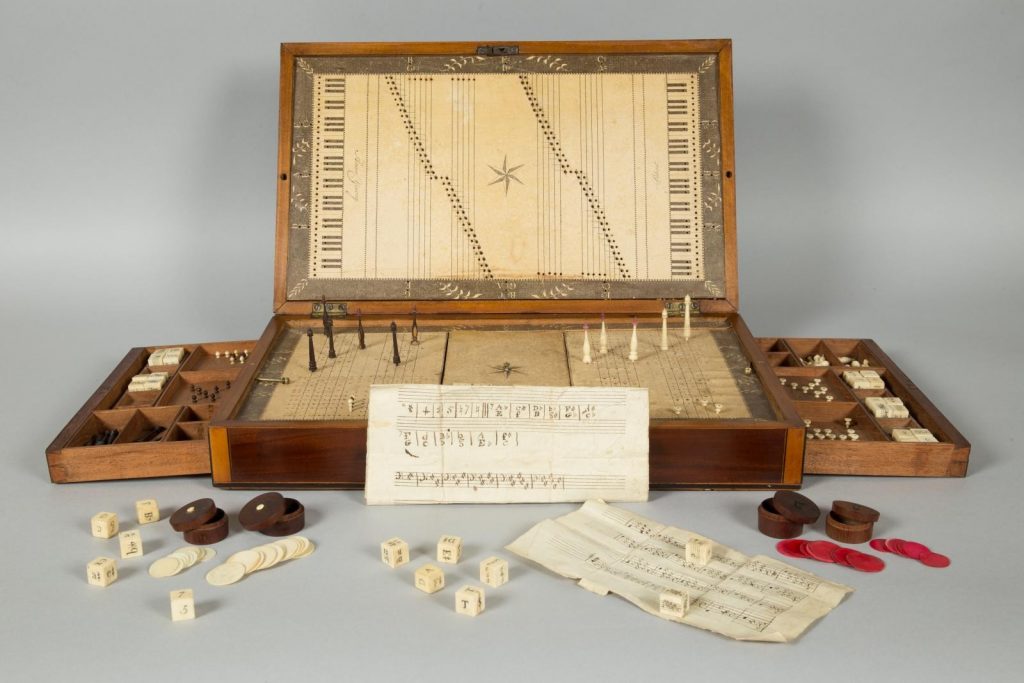
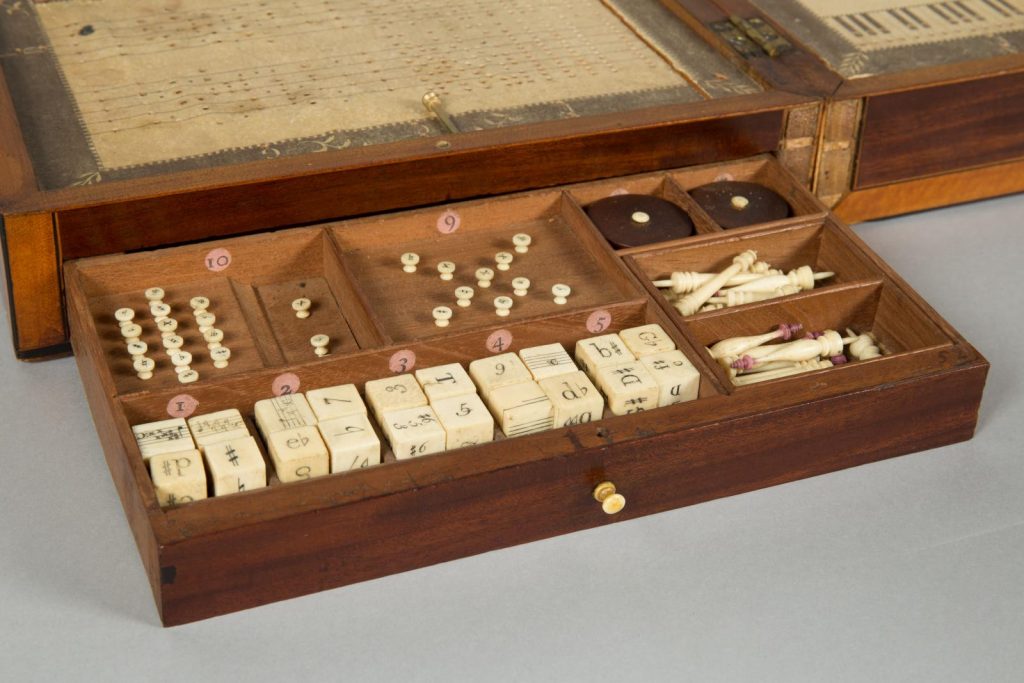
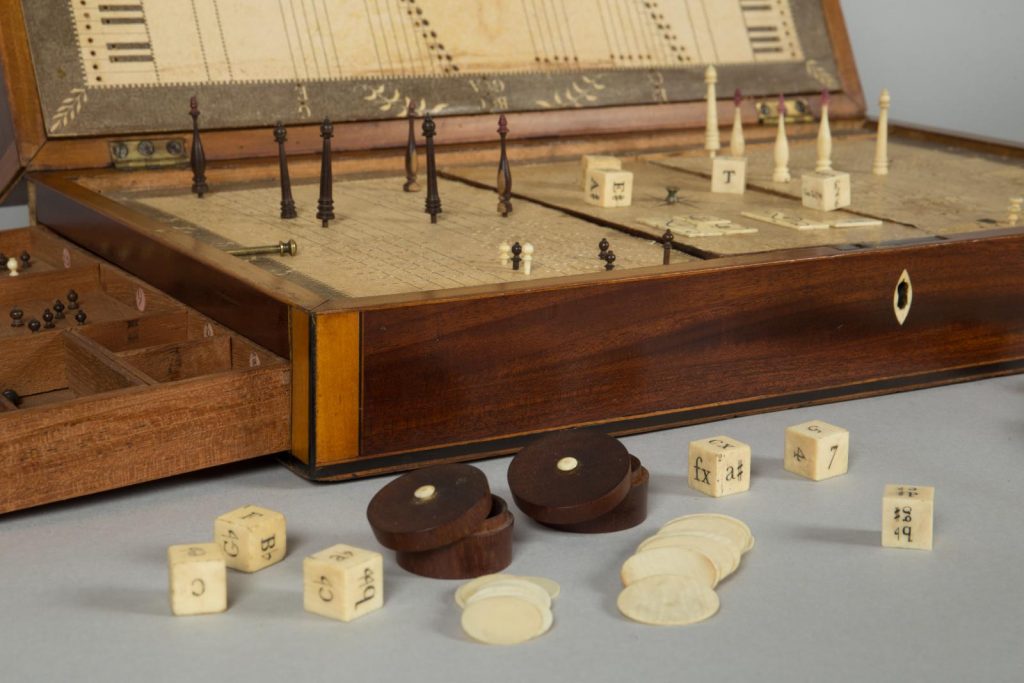
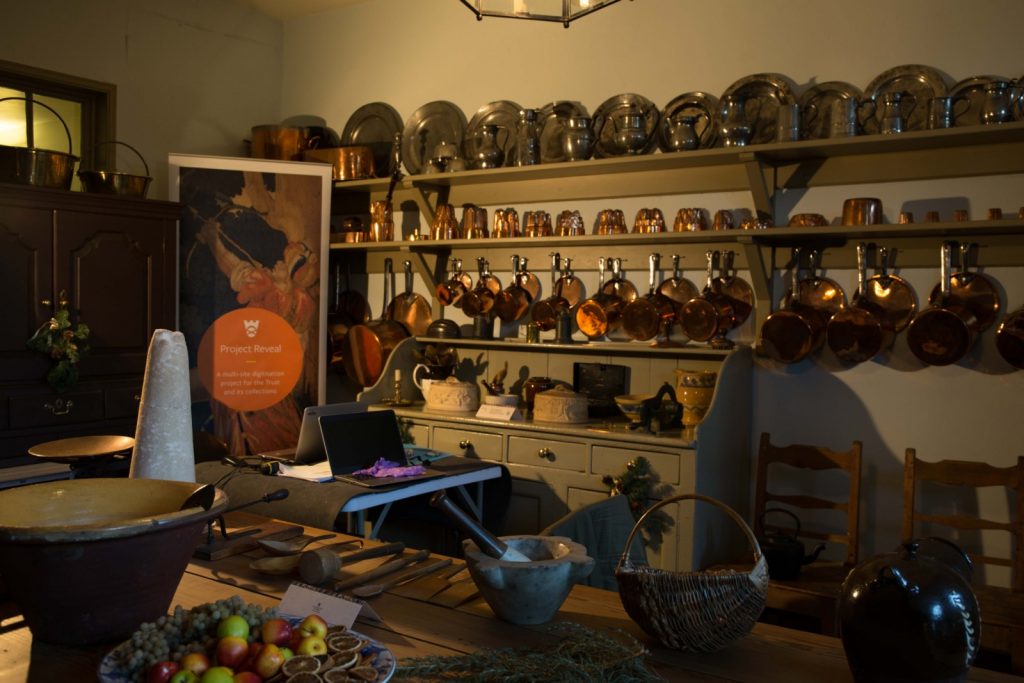
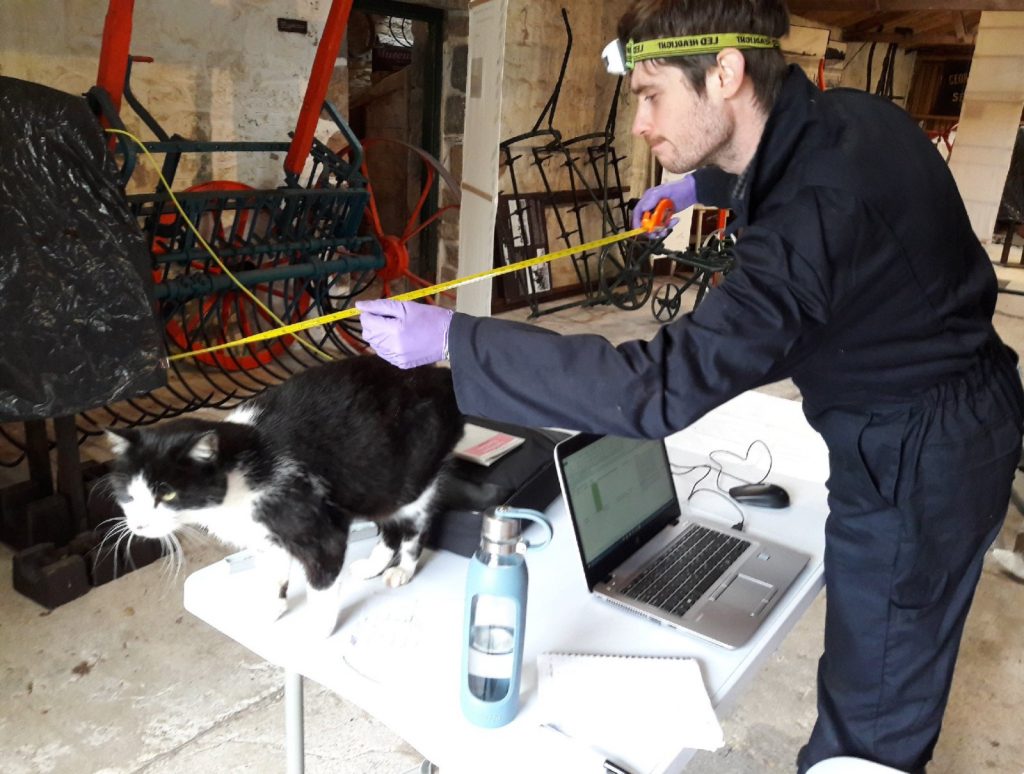
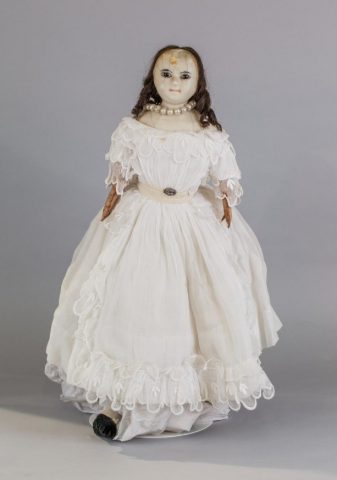
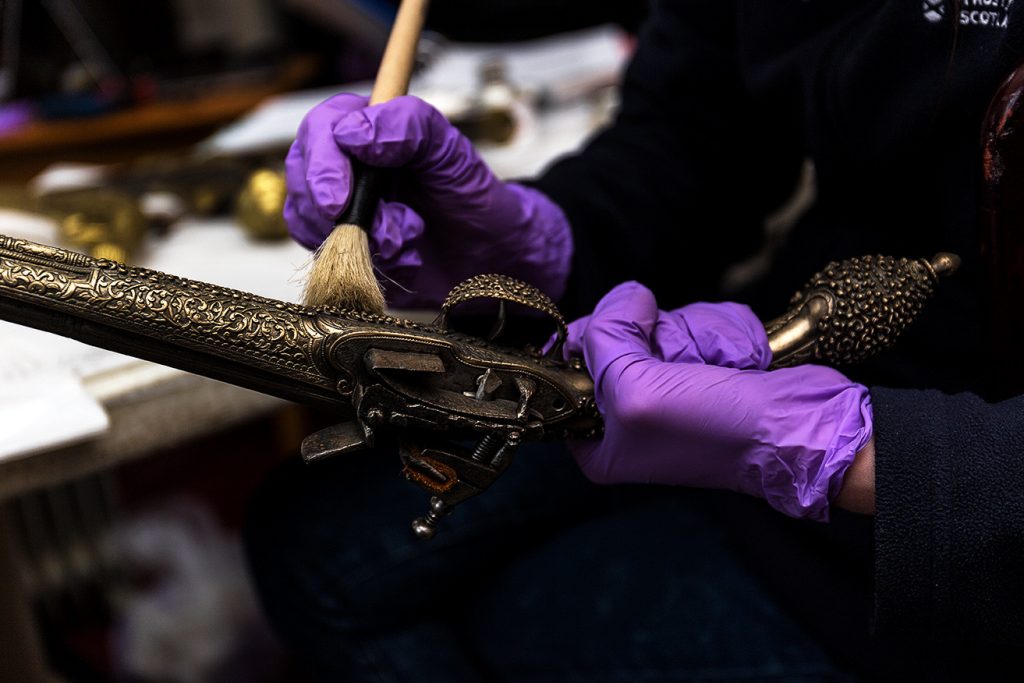

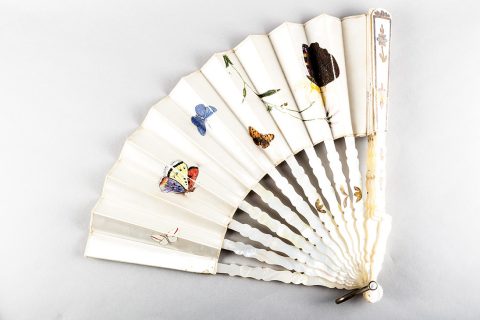 Beautiful silk fans like this were used by women to communicate with men. In an age where a woman’s behavior was highly scrutinized, a fan was a discreet means of communicating her feelings.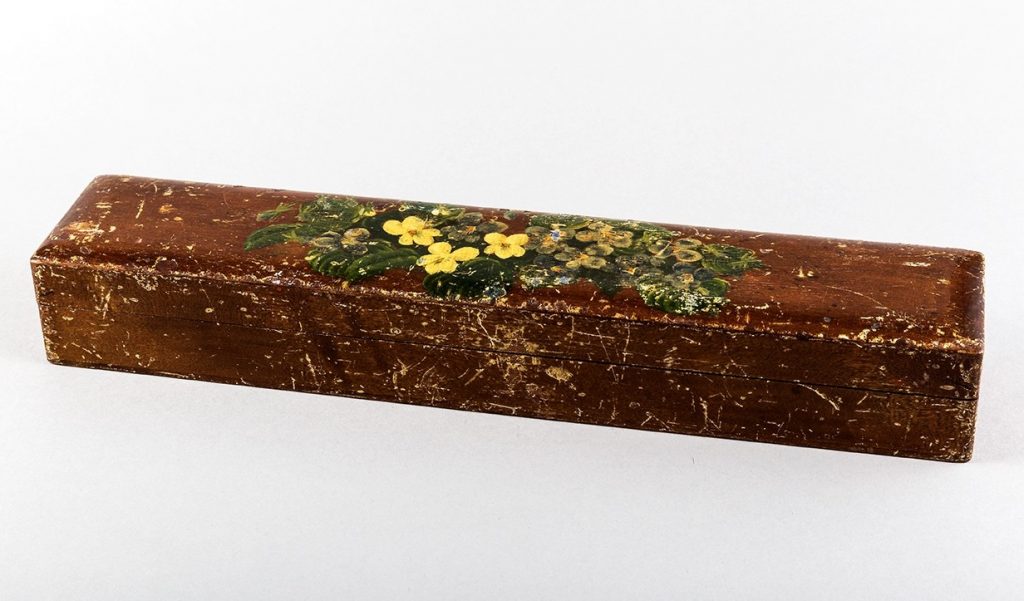

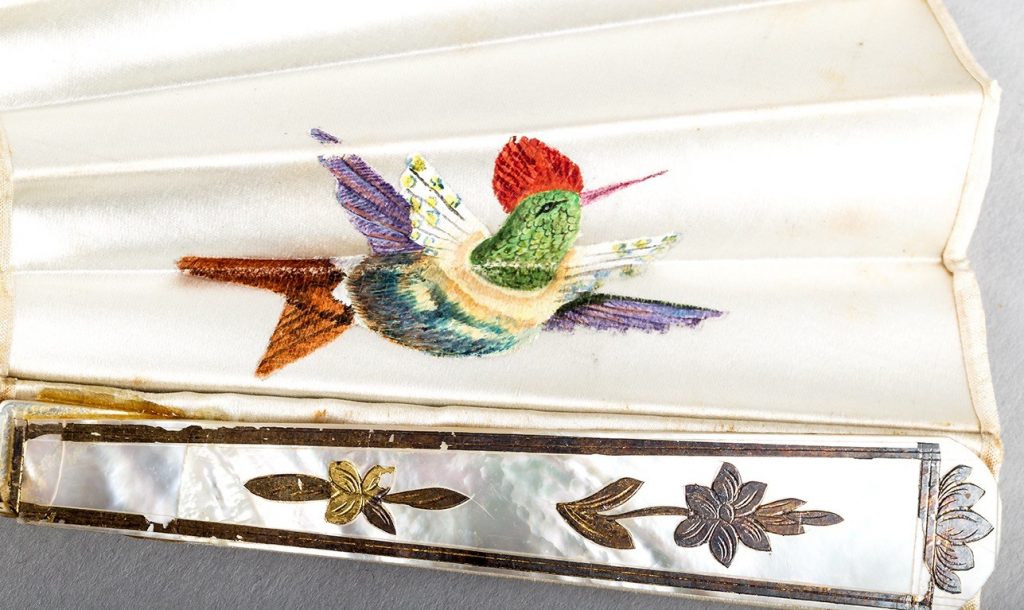
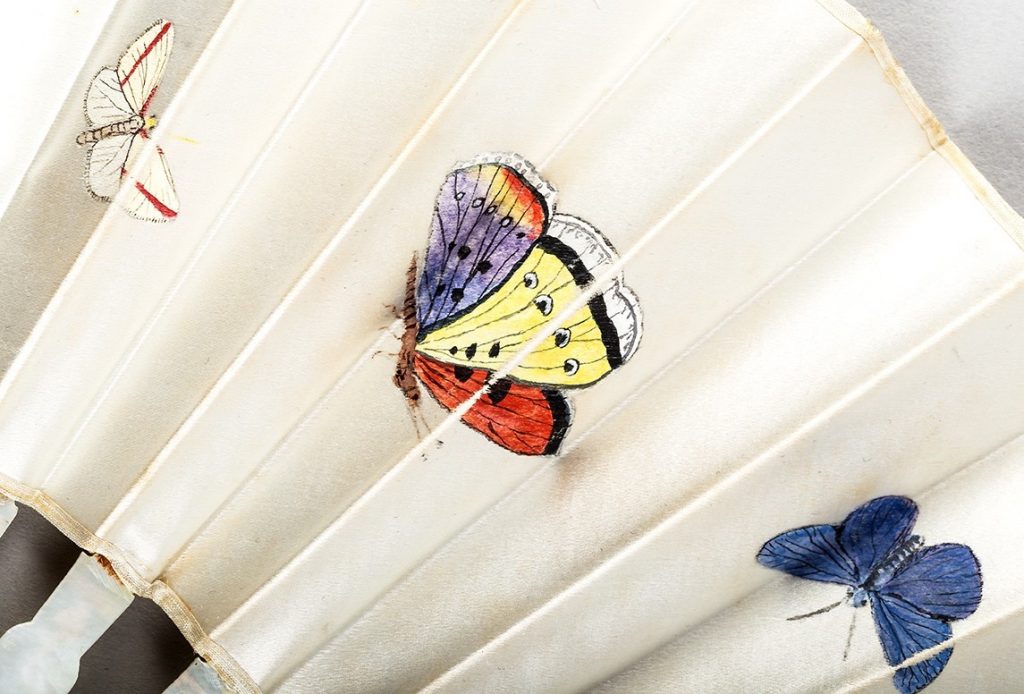
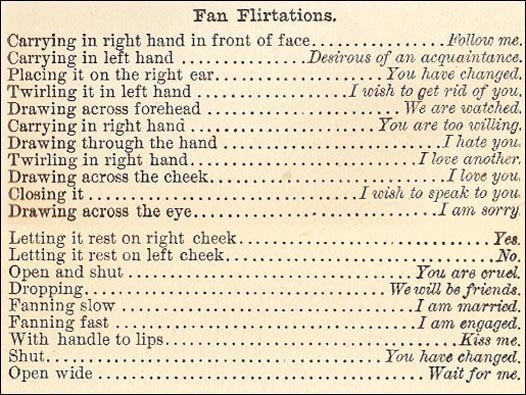
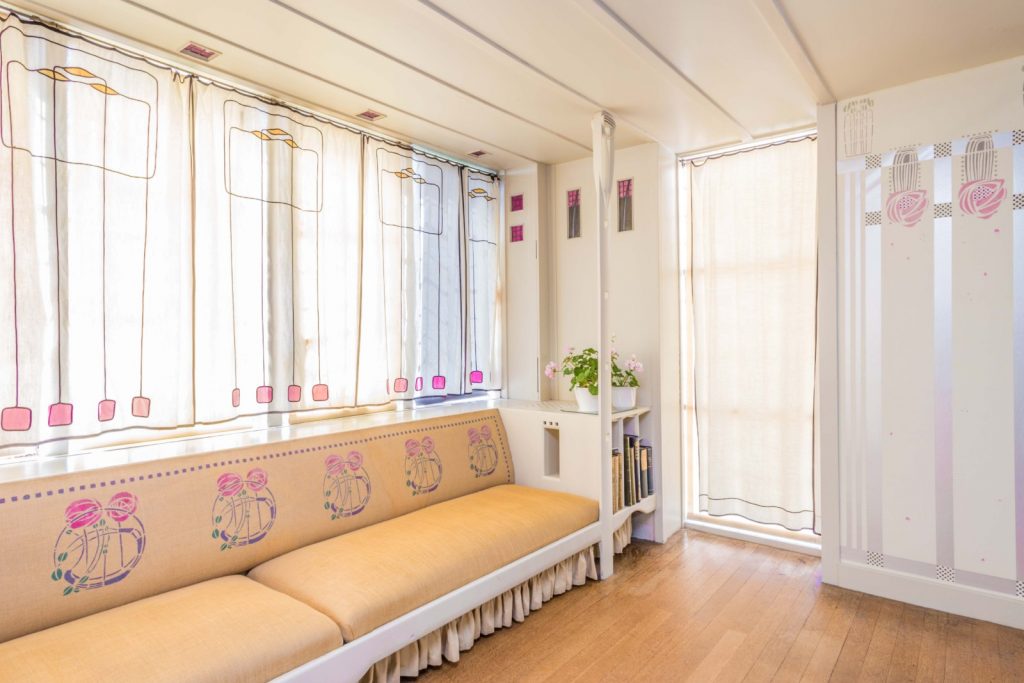
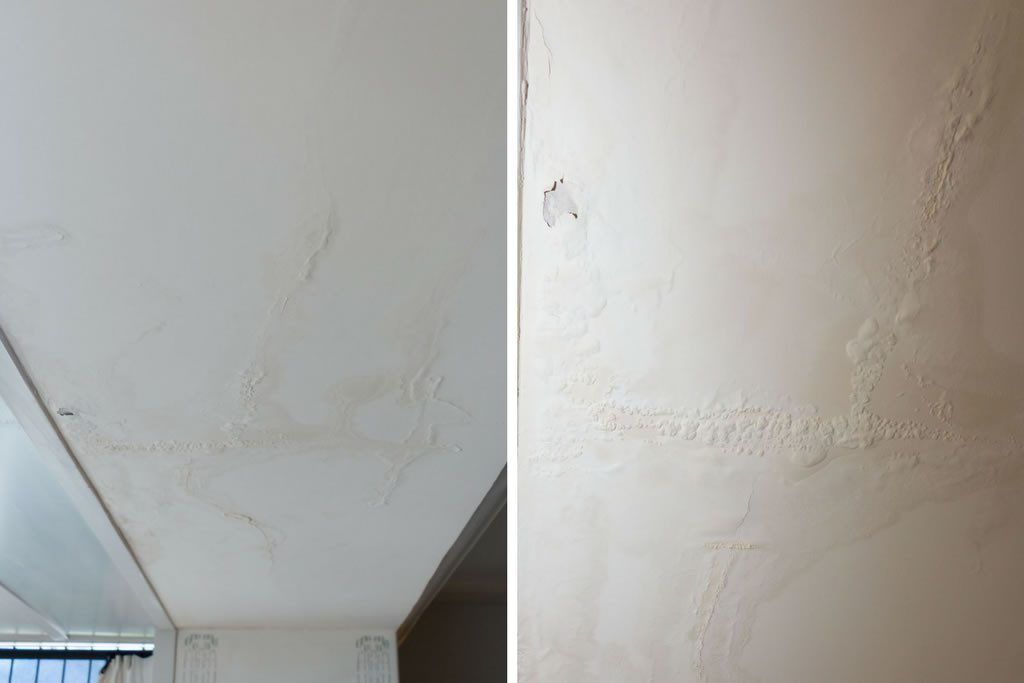
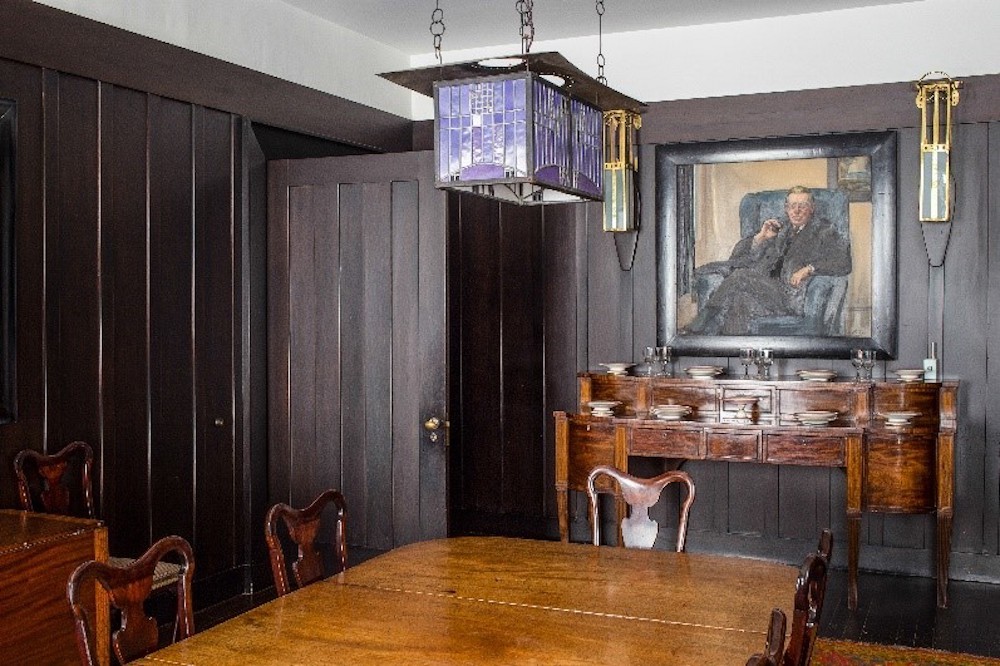
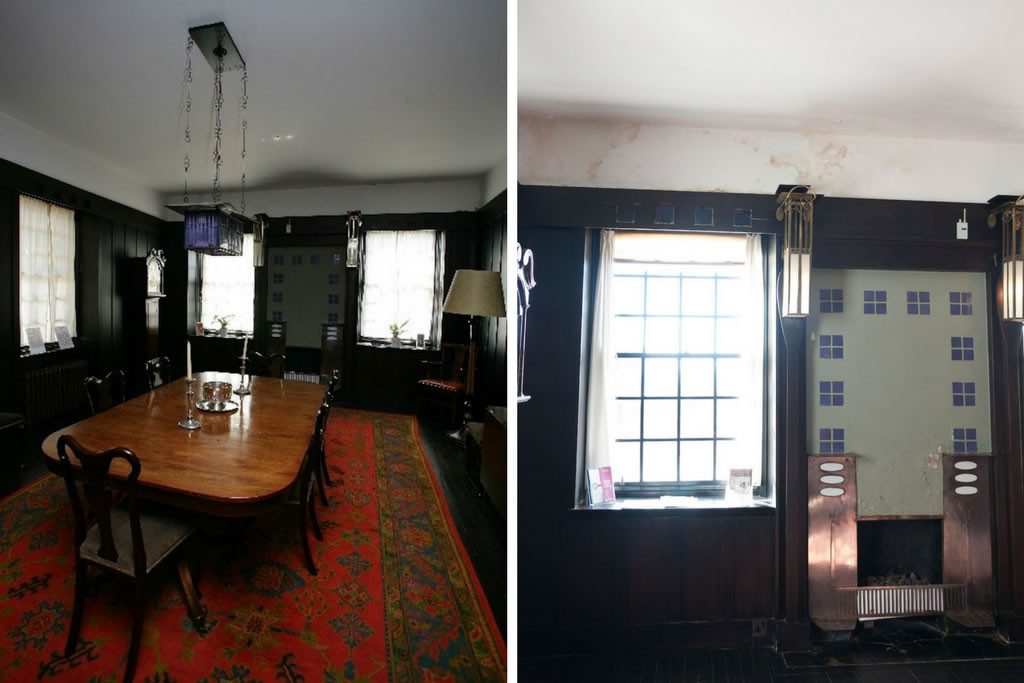
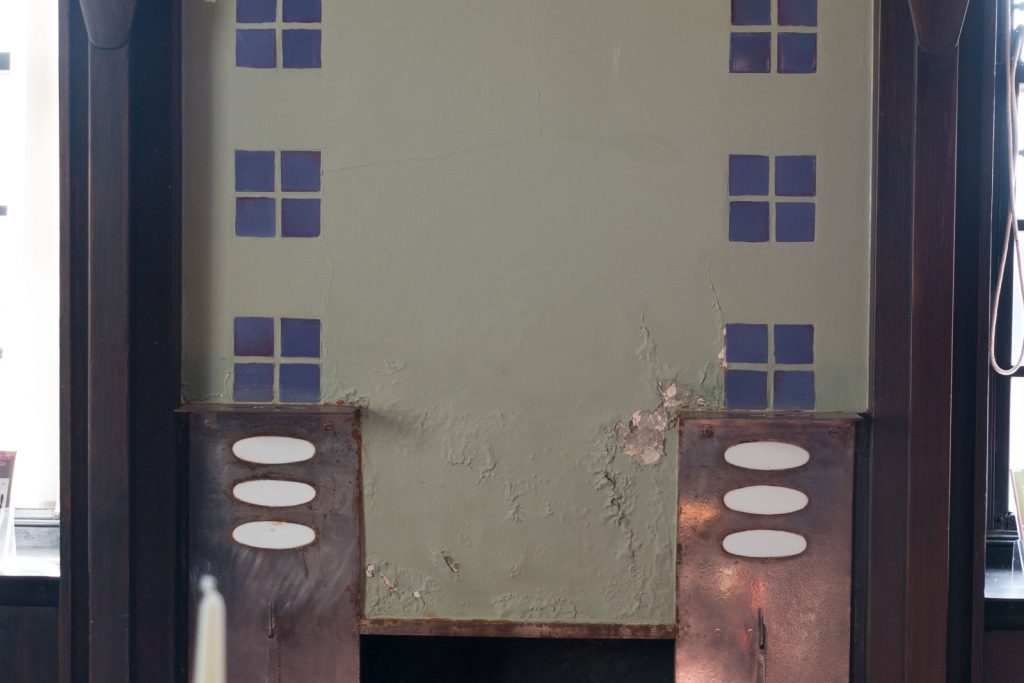
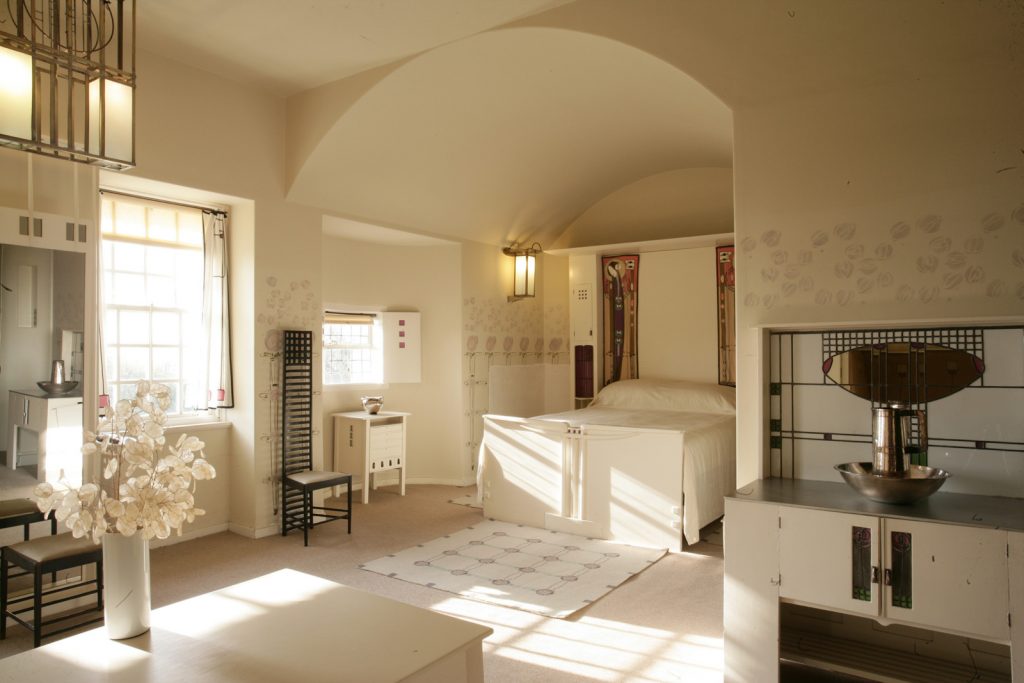
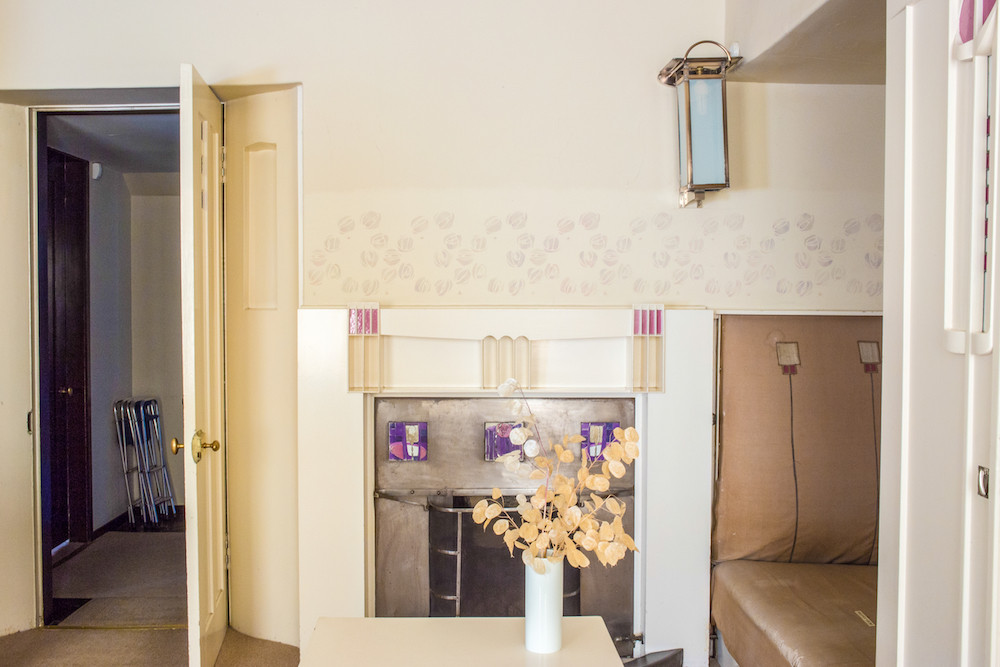
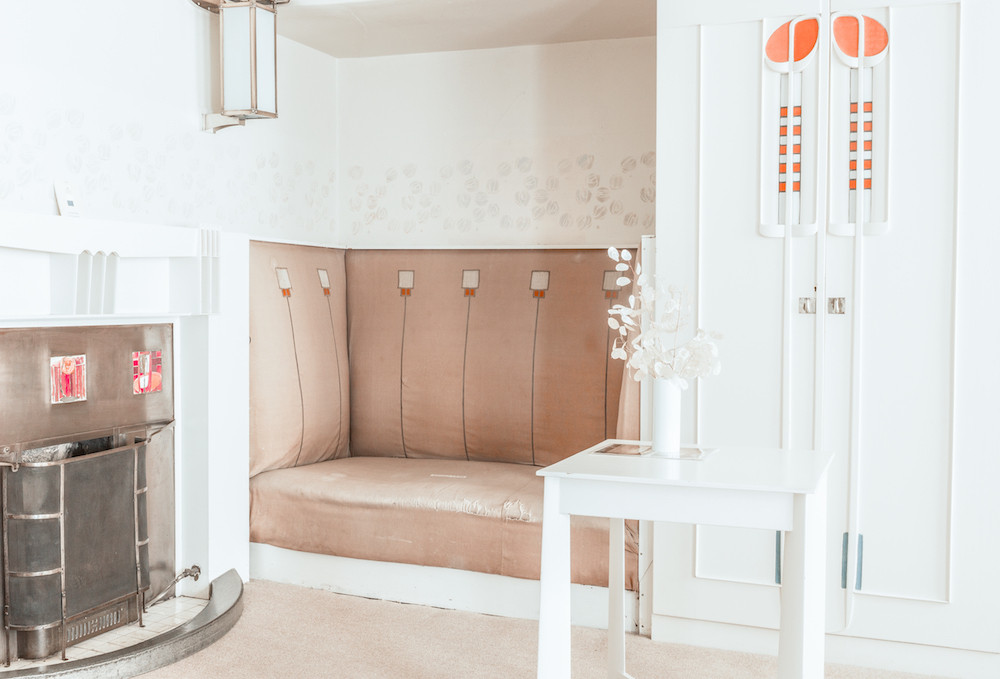
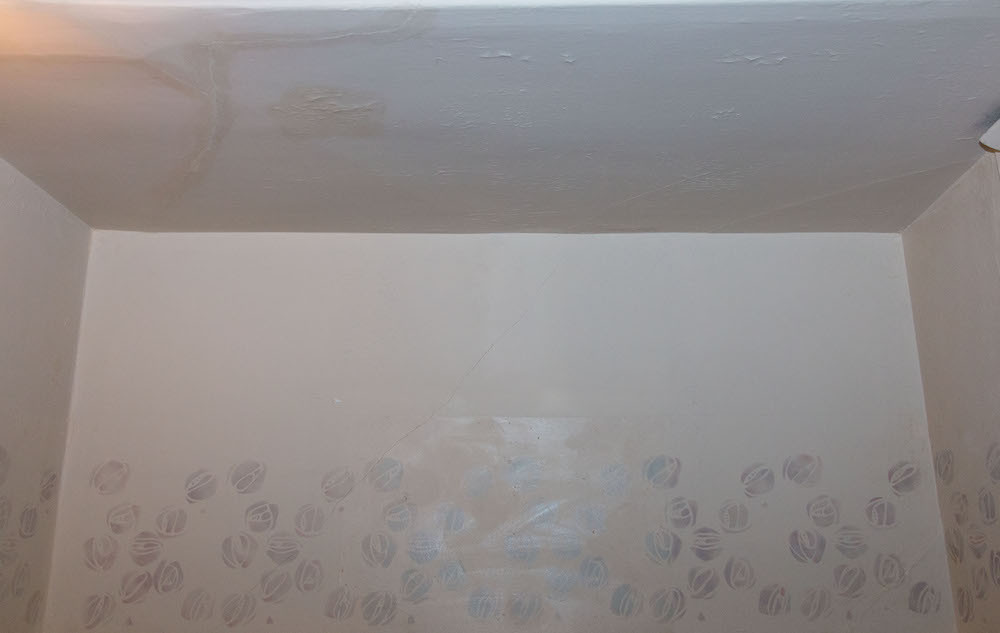
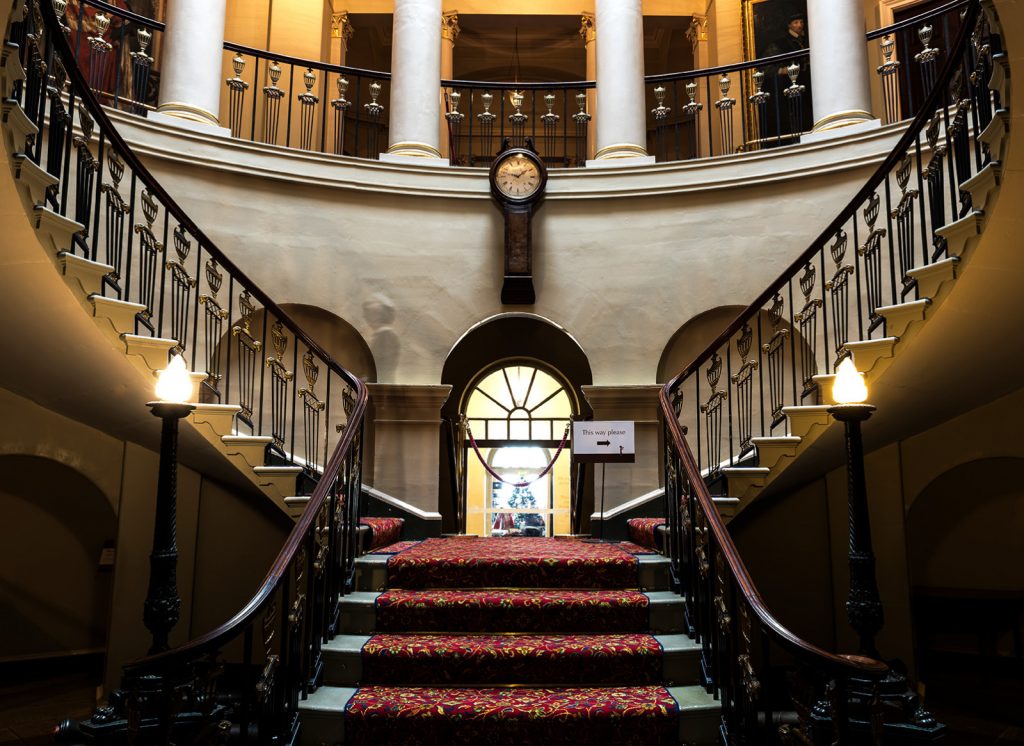
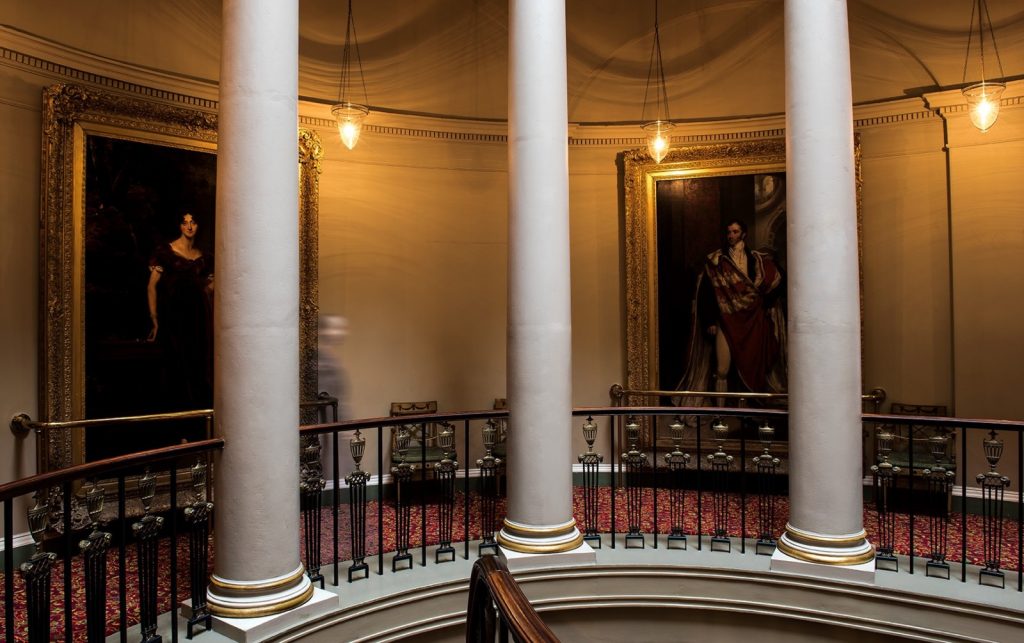
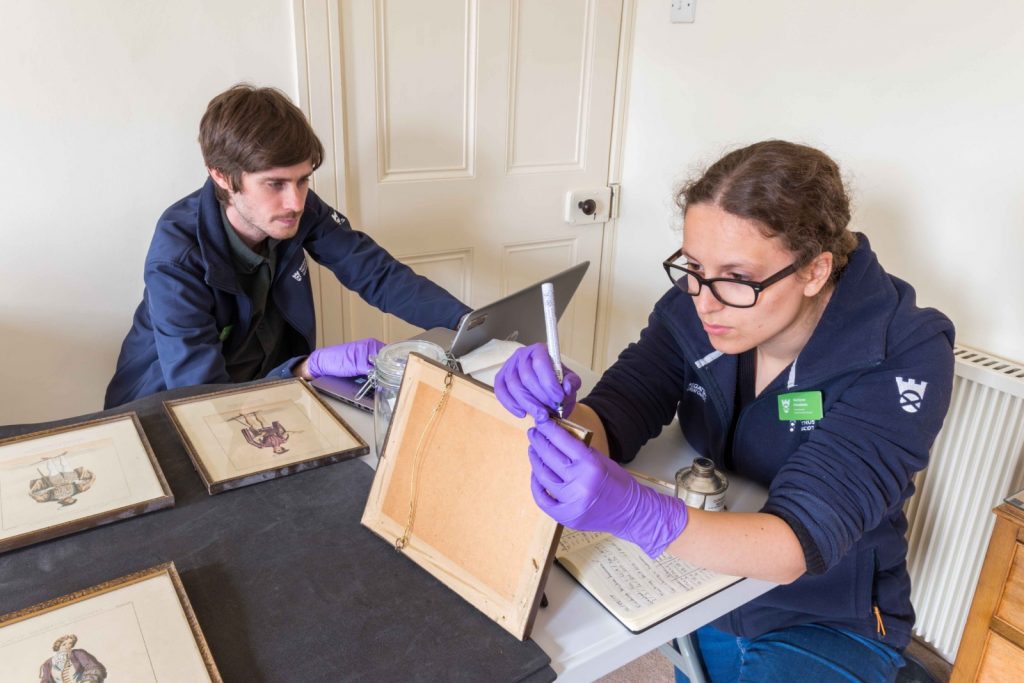
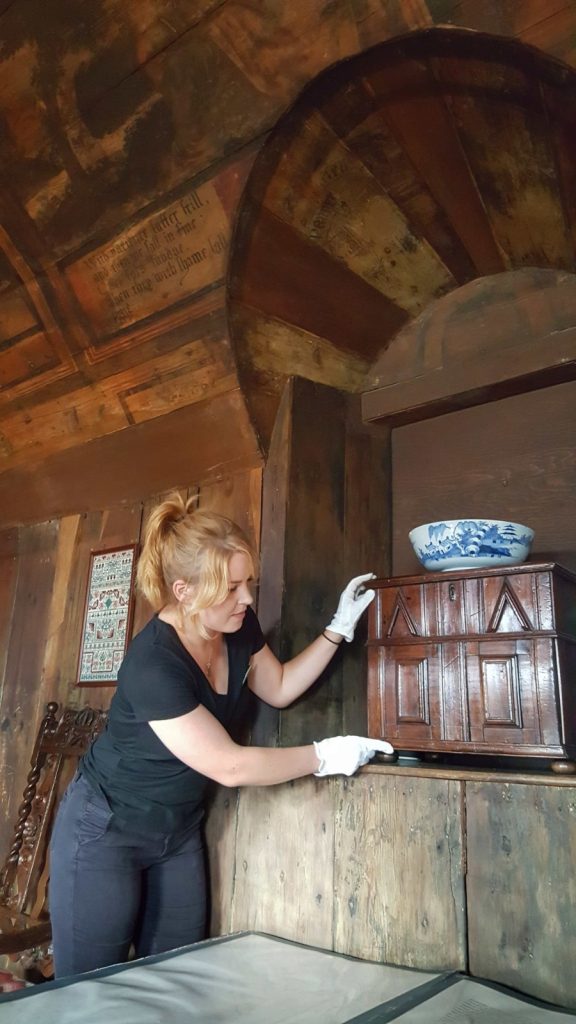
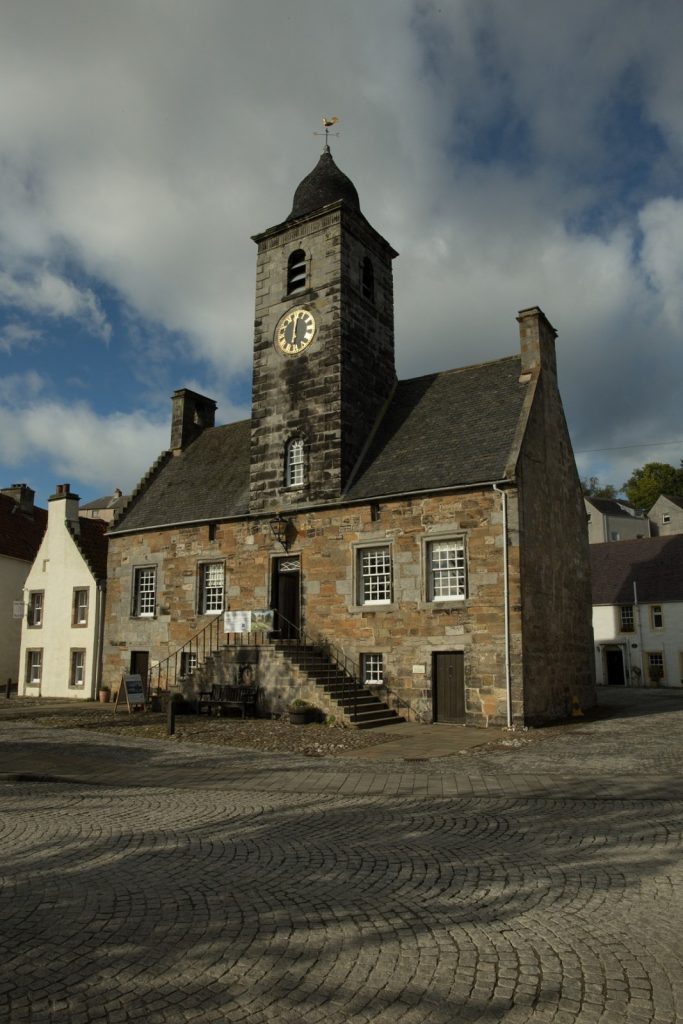
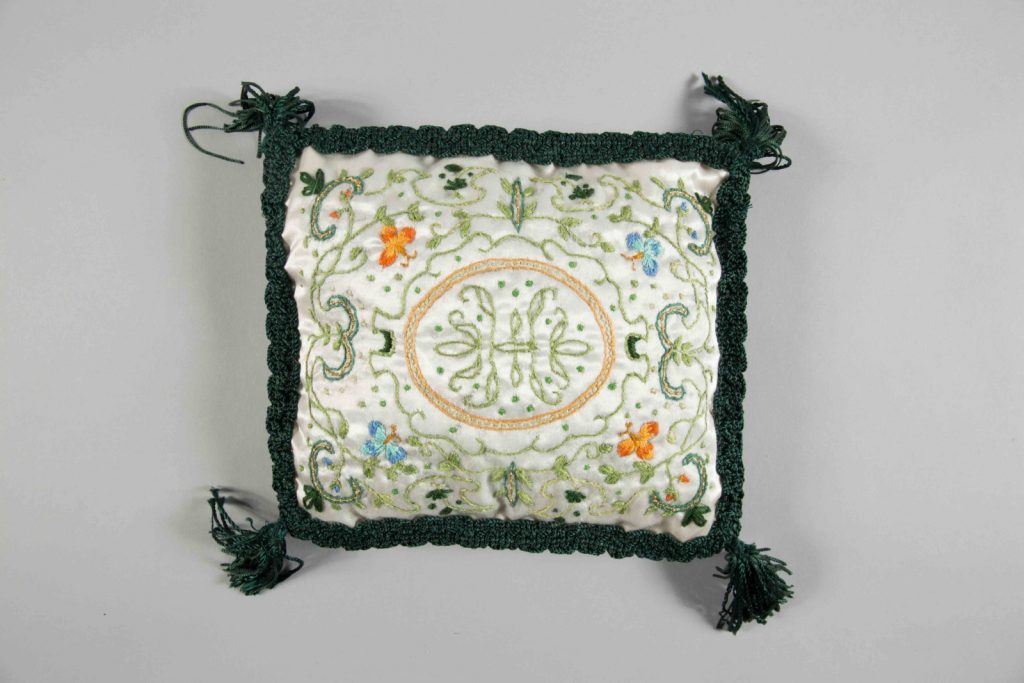
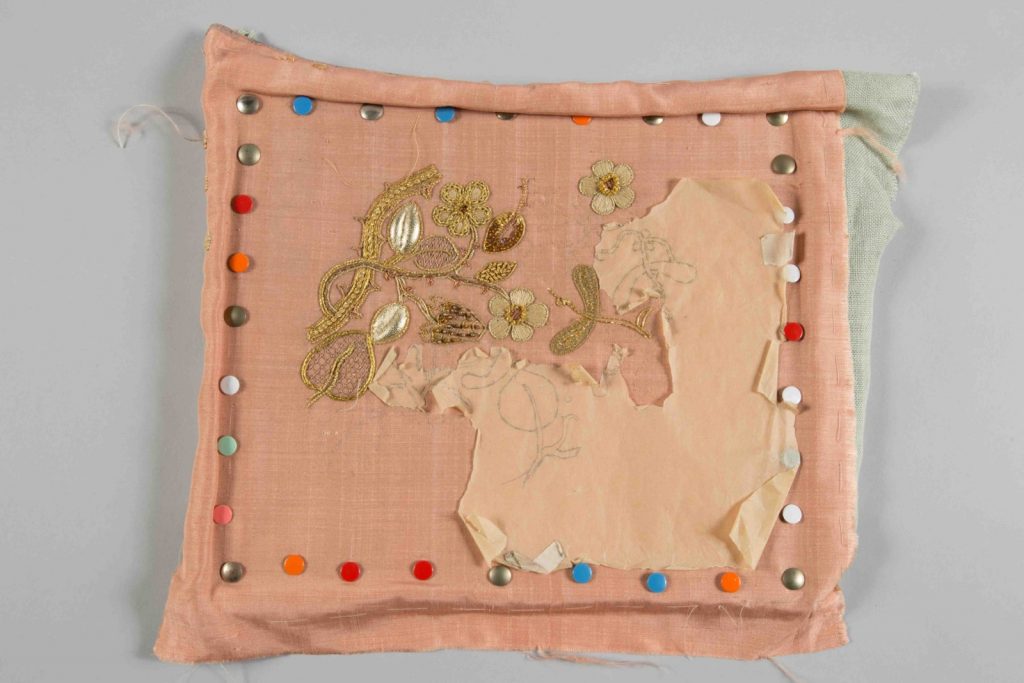
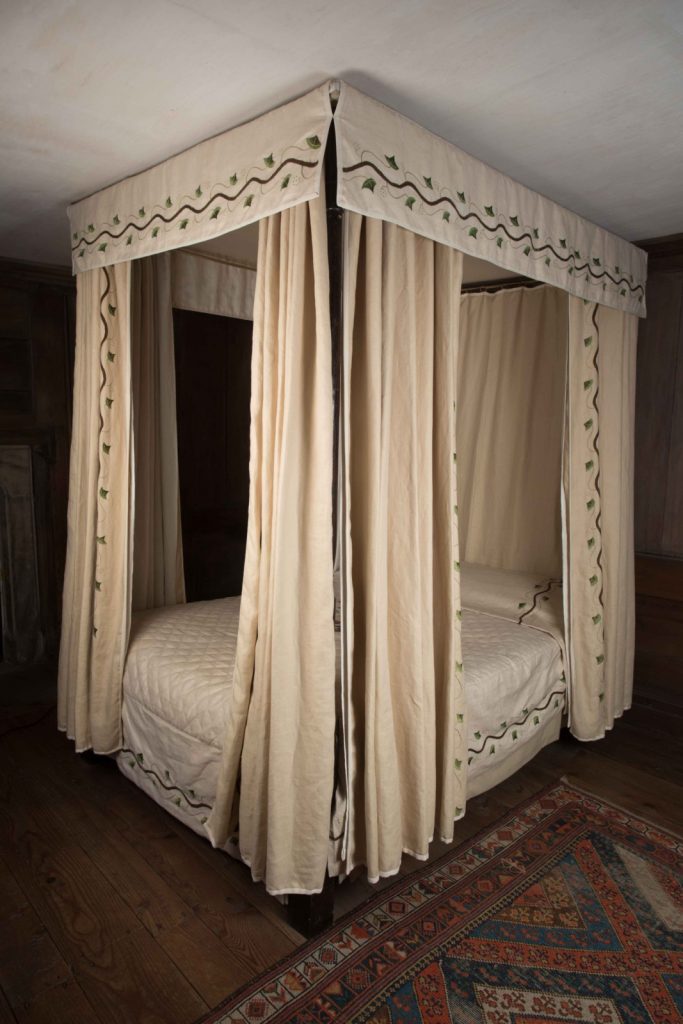
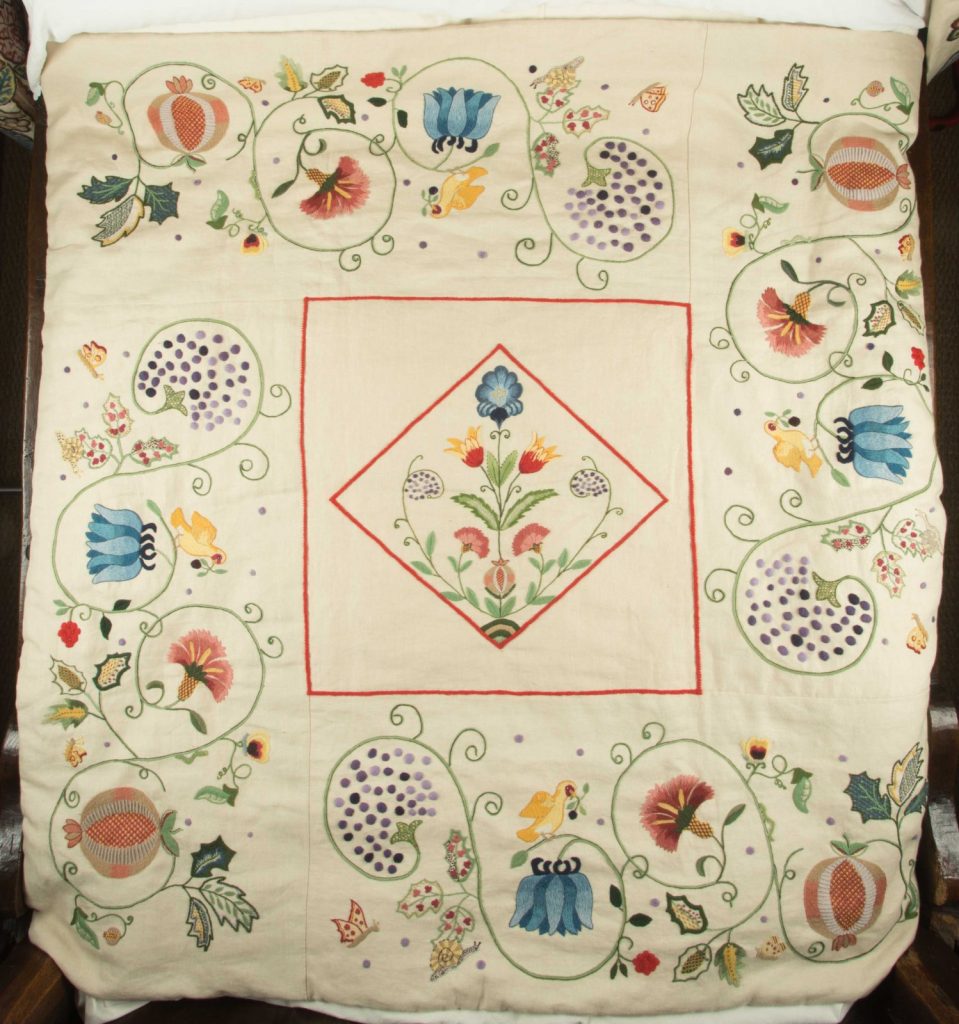
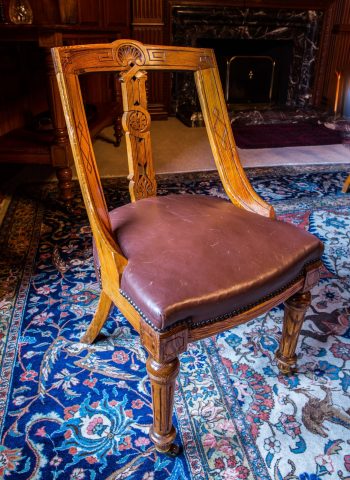
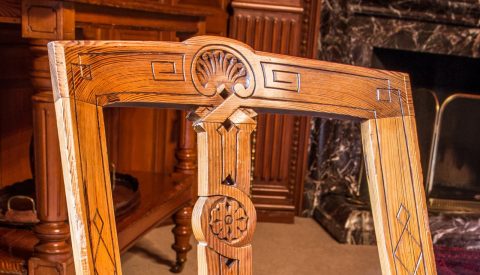
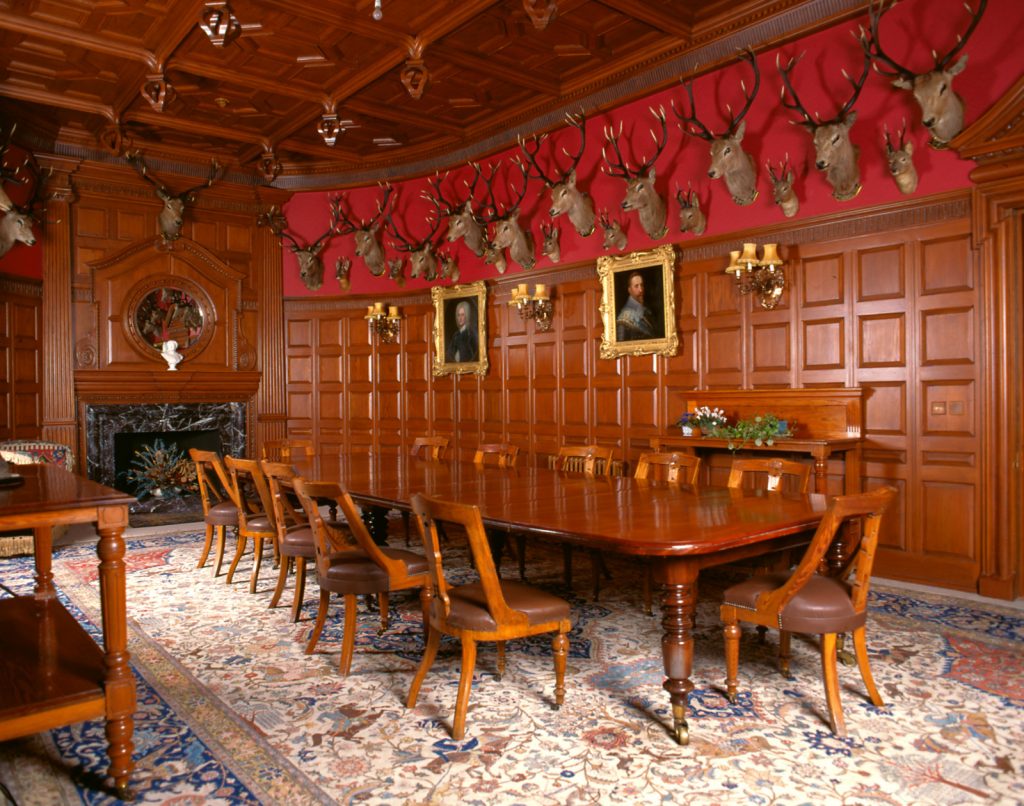
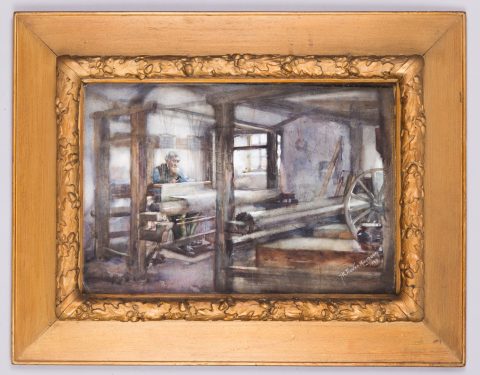

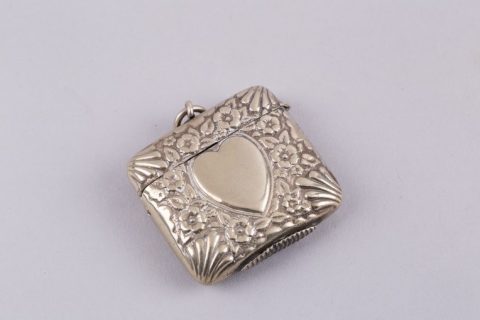
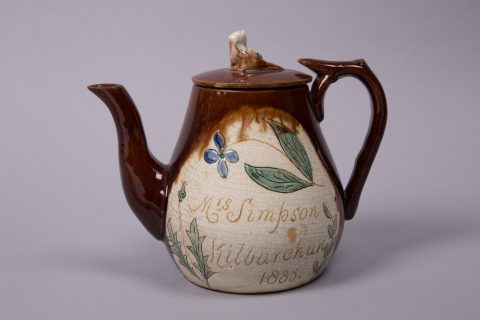
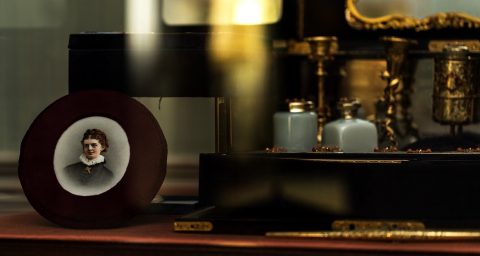
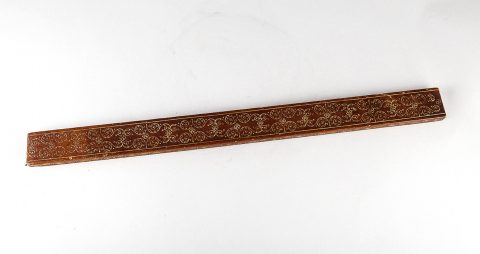
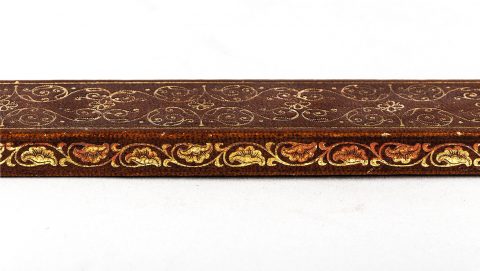
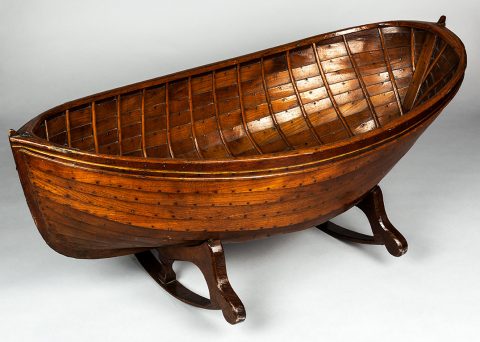
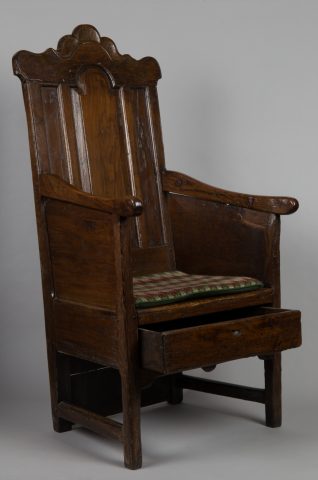
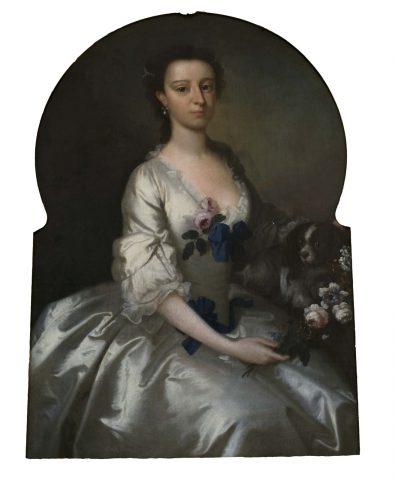
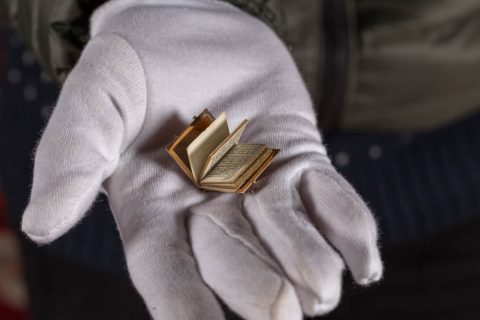
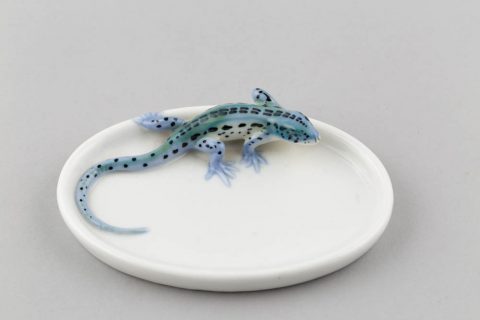
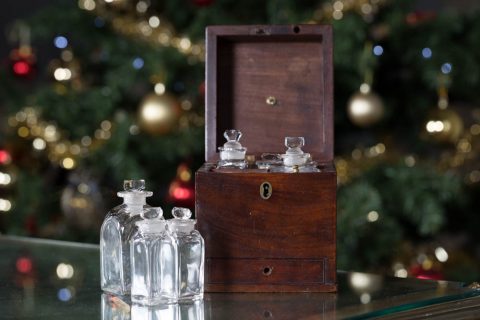
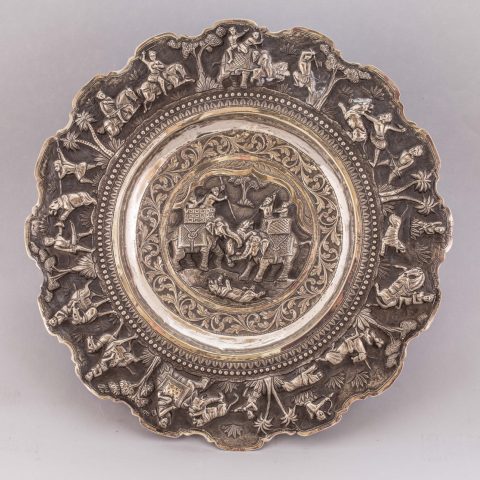
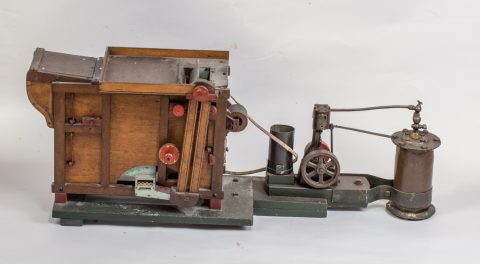
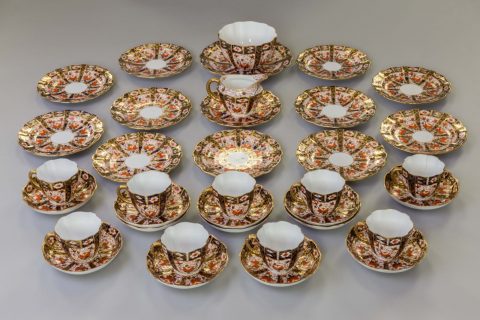
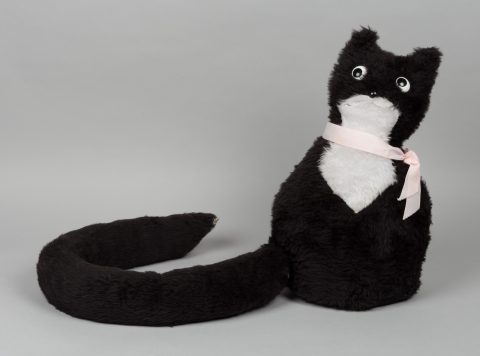
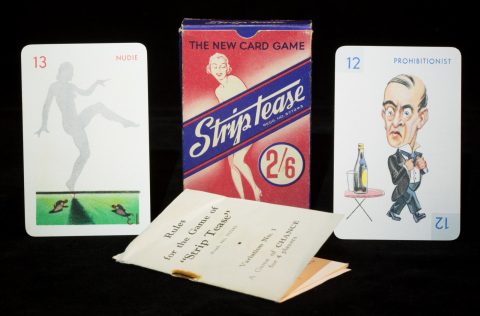
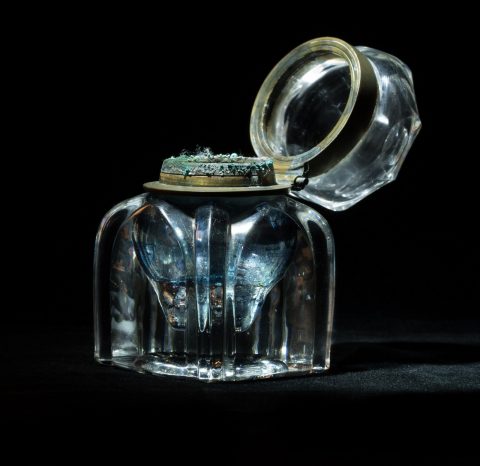

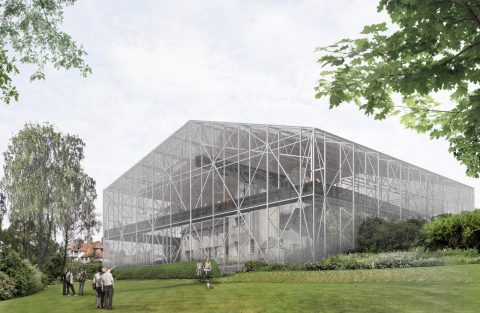
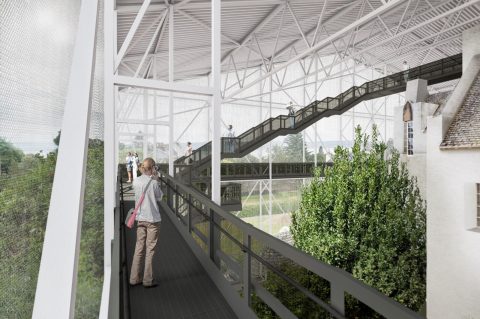
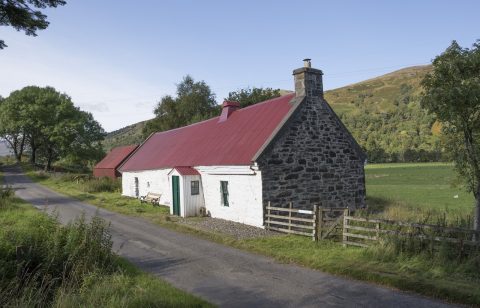
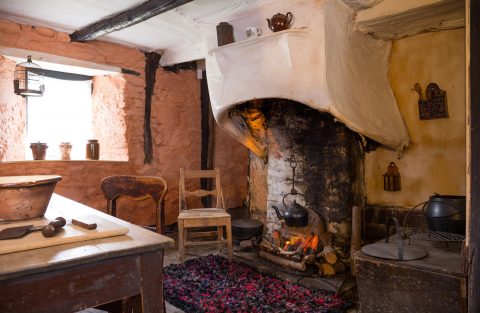
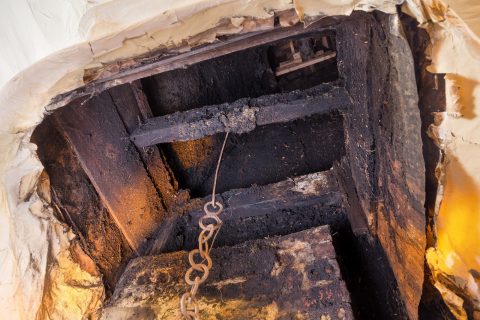
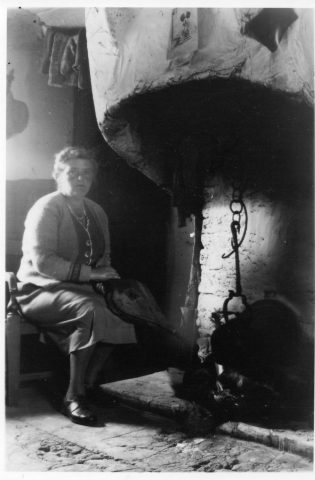
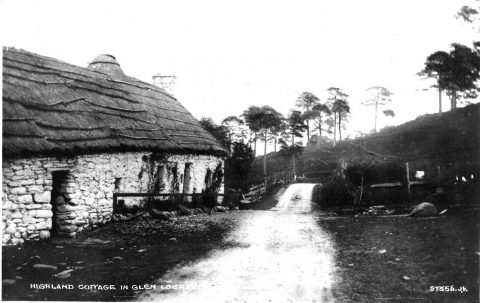
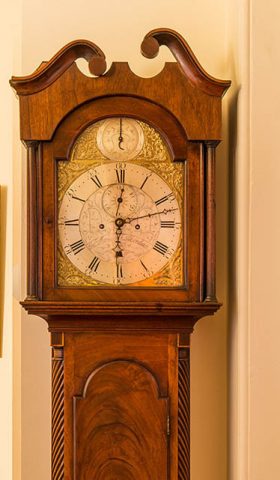
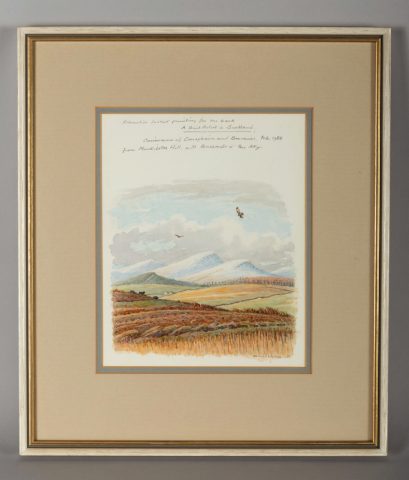
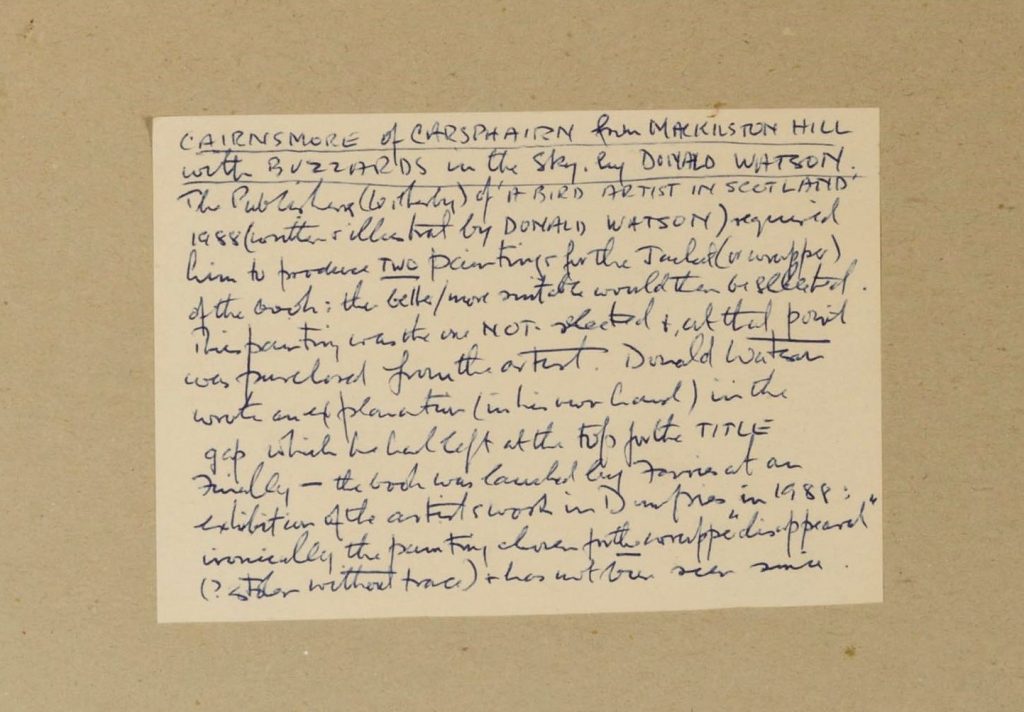
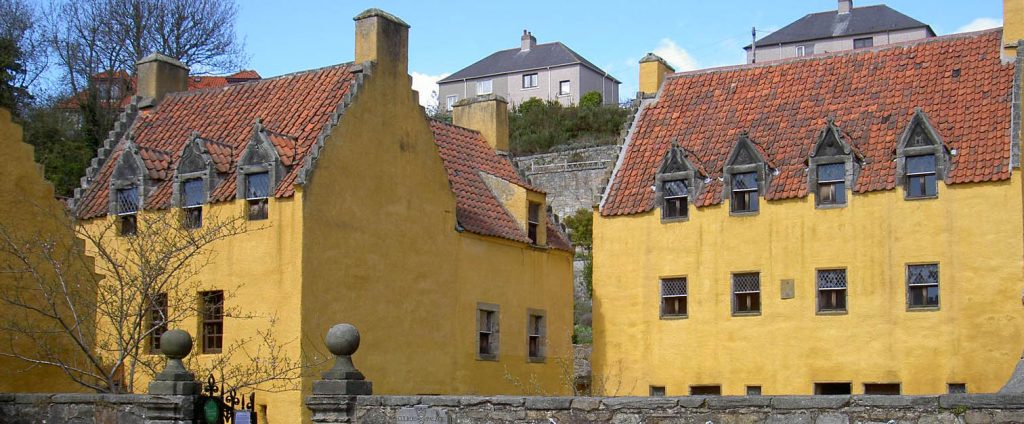 Culross Palace was built between 1597 and 1611 for George Bruce, a merchant and engineer. Among other achievements, he came up with a revolutionary technique of mining coal from under the River Forth and extracting it via a mineshaft in the middle of the river, directly onto boats. He became a very wealthy man and his mansion reflected that: Culross Palace is a beautiful example of late 16th- and early 17th-century design.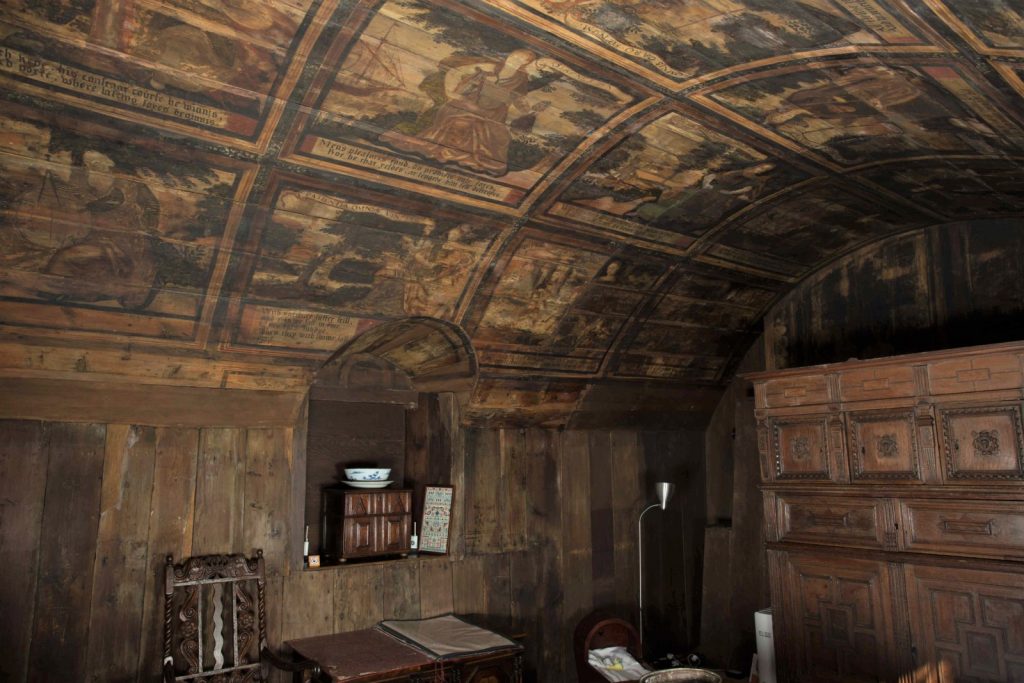
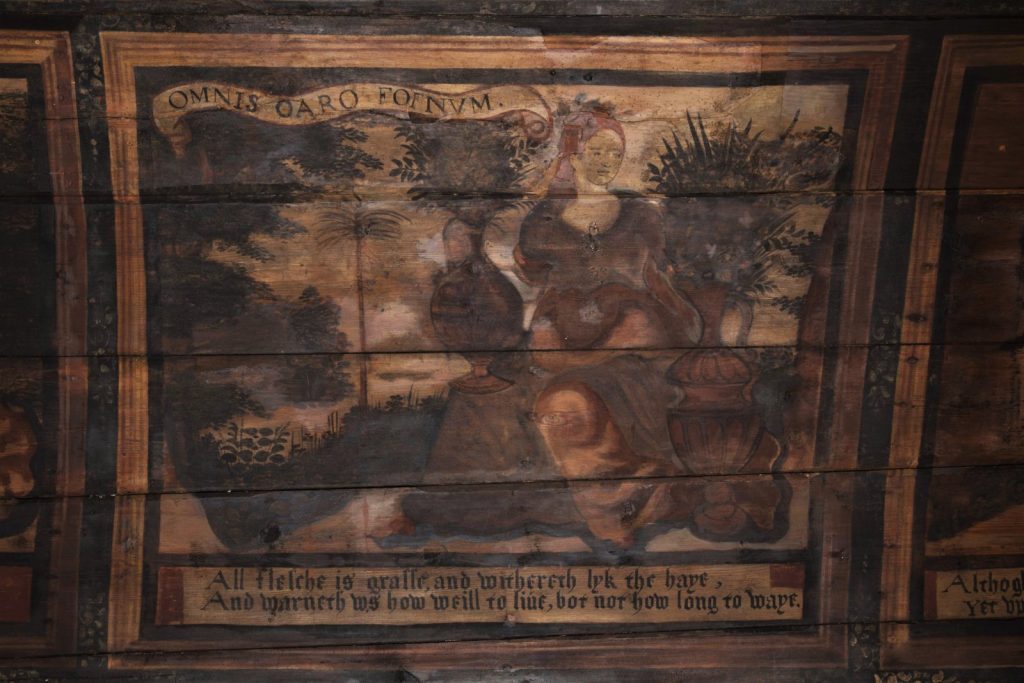
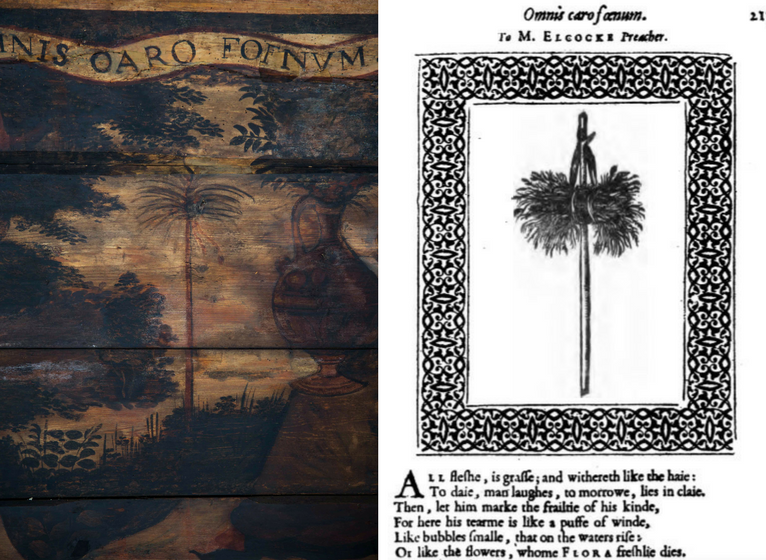
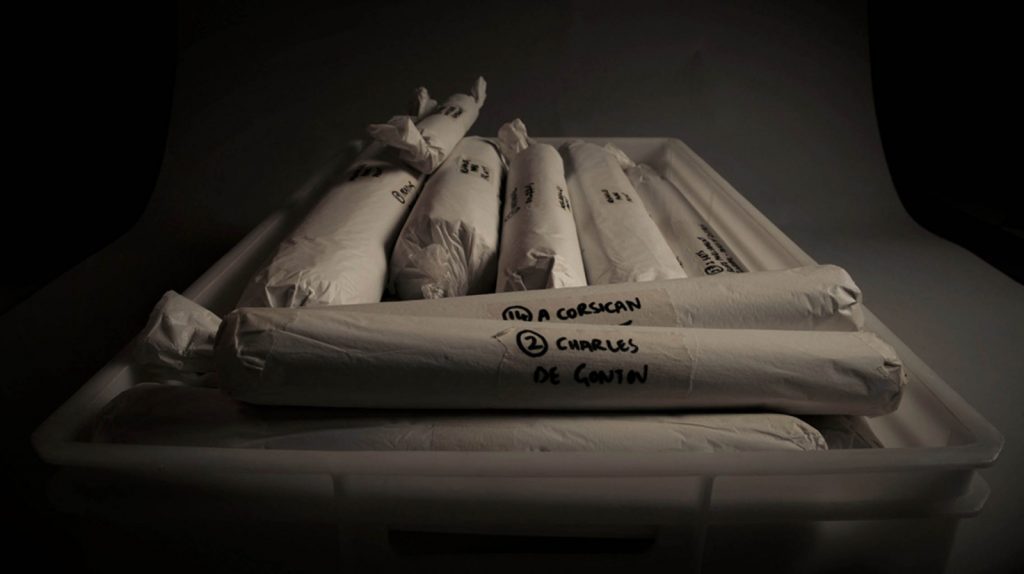 Recently, the team unearthed what appeared to be a rather plain plastic box containing a group of wrapped prints labelled with intriguing titles. But to what exactly did the handwritten labels ‘Peasants Praying’, ‘The Flood’ or ‘Old Man with Beard (Rembrandt)’ refer? What we found was a collection of over 30 prints, dating from the 17th, 18th and 19th centuries. The collection, including a view of Glasgow from 1693 and a portrait of Christopher Columbus from 1750, has no overarching theme but does contain works by a few recurring artists. In this piece we have decided to focus on three of our favourites.
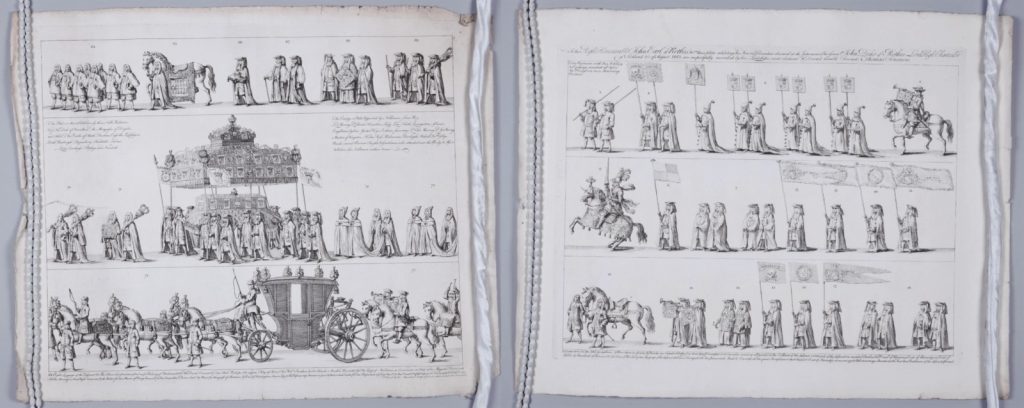 The funeral procession for the Duke of Rothes
 The print of William Hogarth’s Beer Street
 An advertisement for Picturesque Sketches by George Harley
 During their many years at Culzean Castle, the Kennedy family acquired an extensive assortment of memorabilia from all over the world which has embellished the interior – and exterior – of the property ever since. Among the many exotic artifacts and luxurious décor hangs what might seem like an ordinary aircraft propeller. The propeller, however, played a central role during a notable event in modern history.
 It was in this climate of terror that Lieutenant William Leefe Robinson (1895–1918) joined 39 Squadron, Royal Flying Corps, created in 1916 as a defensive response to German dirigible raids. Robinson had served previously as an observer with the Worcestershire Regiment in France. After he was wounded in Lille, he underwent pilot training in Britain and joined the fight against the enemy airships. In April 1916 Robinson had his first chance of shooting down one of the Zeppelins but did not succeed. However, a second opportunity presented itself later that year, in the early hours of Sunday 3 September. After taking off from Sutton’s Farm in Essex, he sighted a German airship, the wooden-framed Schütte-Lanz SL 11, and attacked it at an altitude of 11,500 ft. Having been hit by rounds of machine-gun fire, the seemingly impregnable airship burst into flames – watched by thousands of cheering Londoners. On landing, Robinson was given a hero’s welcome and the night was dubbed ‘Zepp Sunday’ after his exploits. This was the first German Zeppelin to be destroyed over Britain, and the fear of an indestructible enemy slowly began to fade.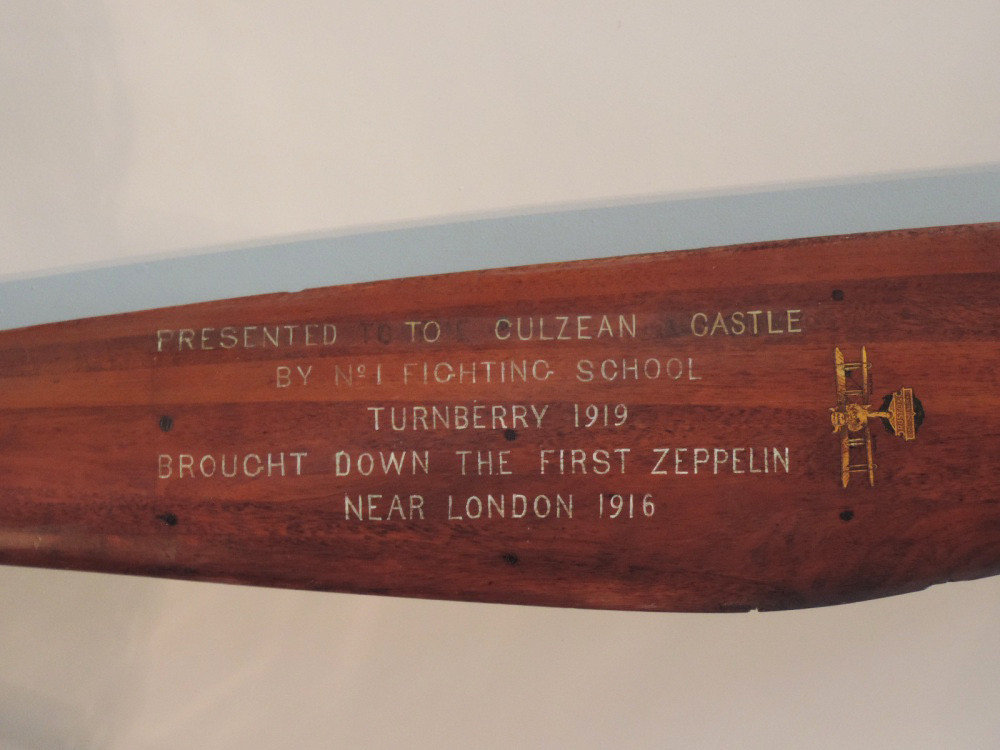
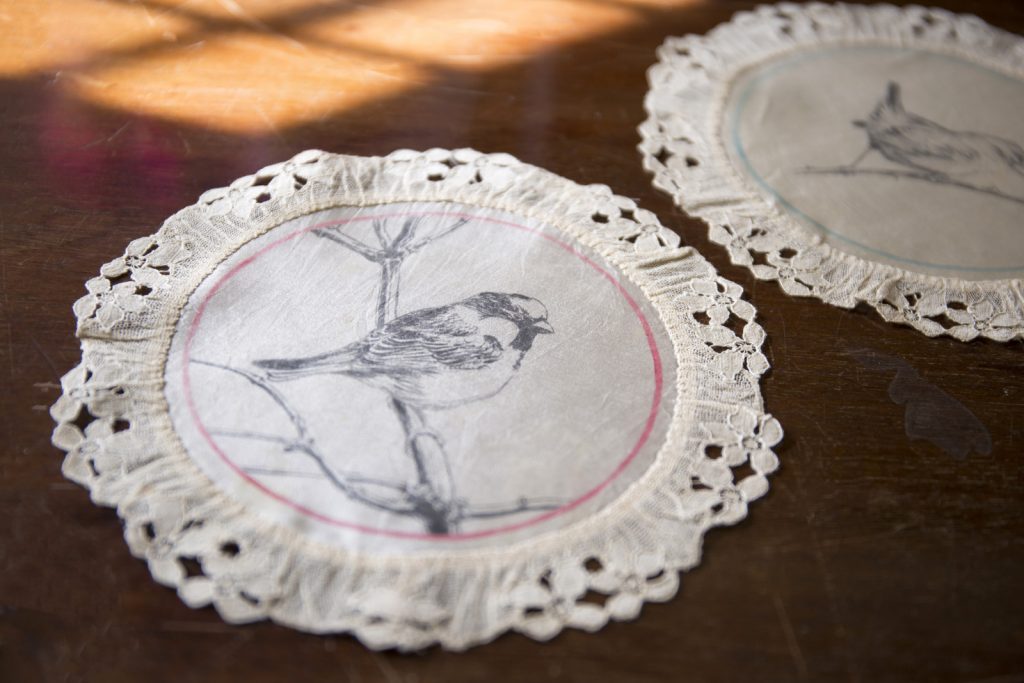
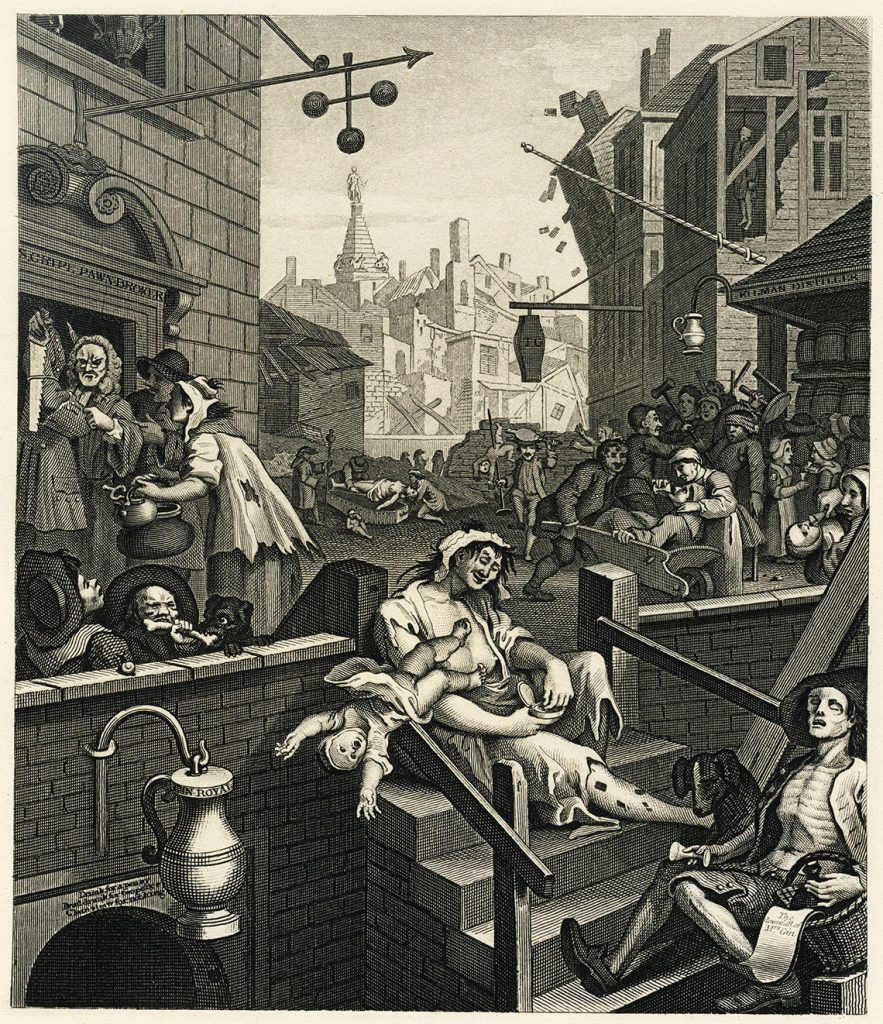
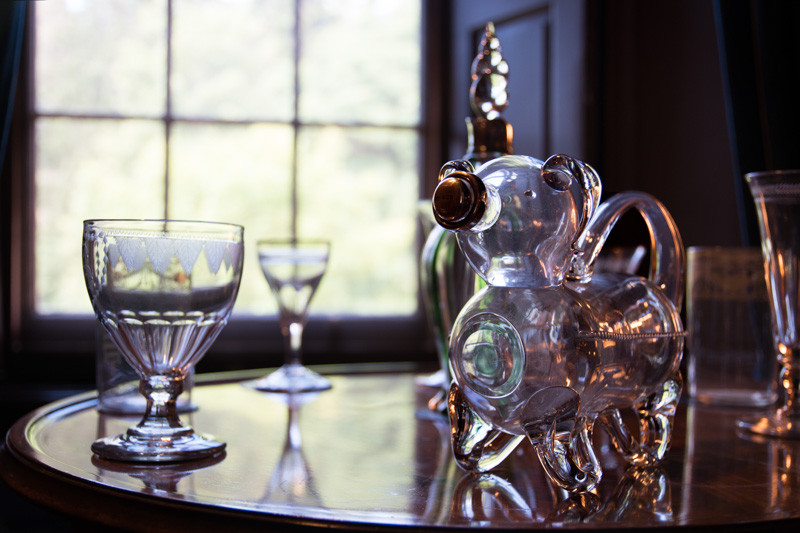
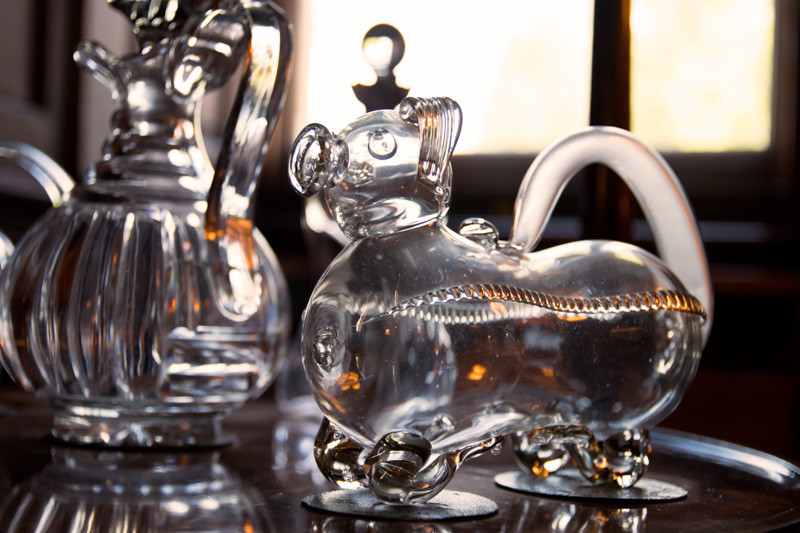
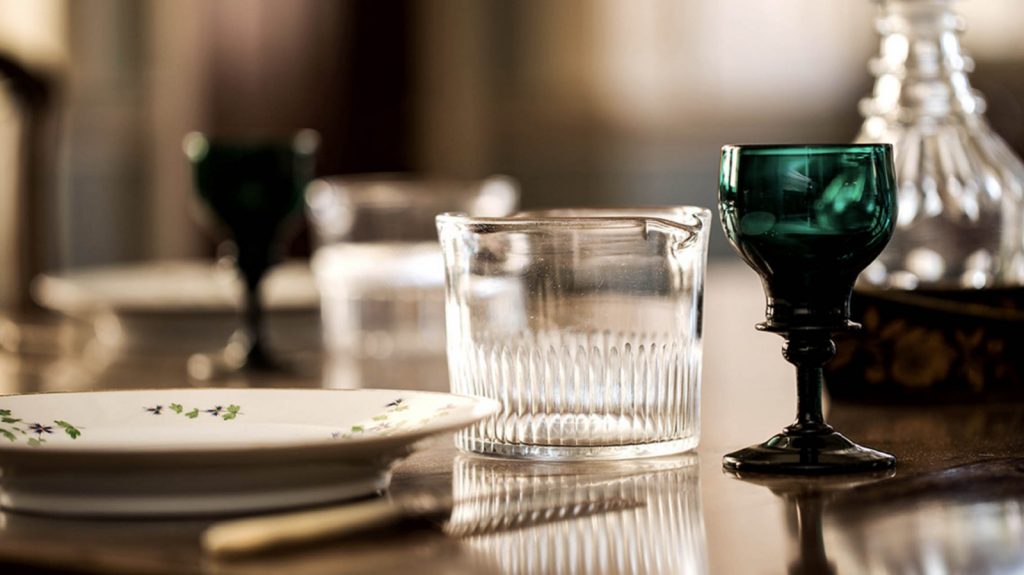
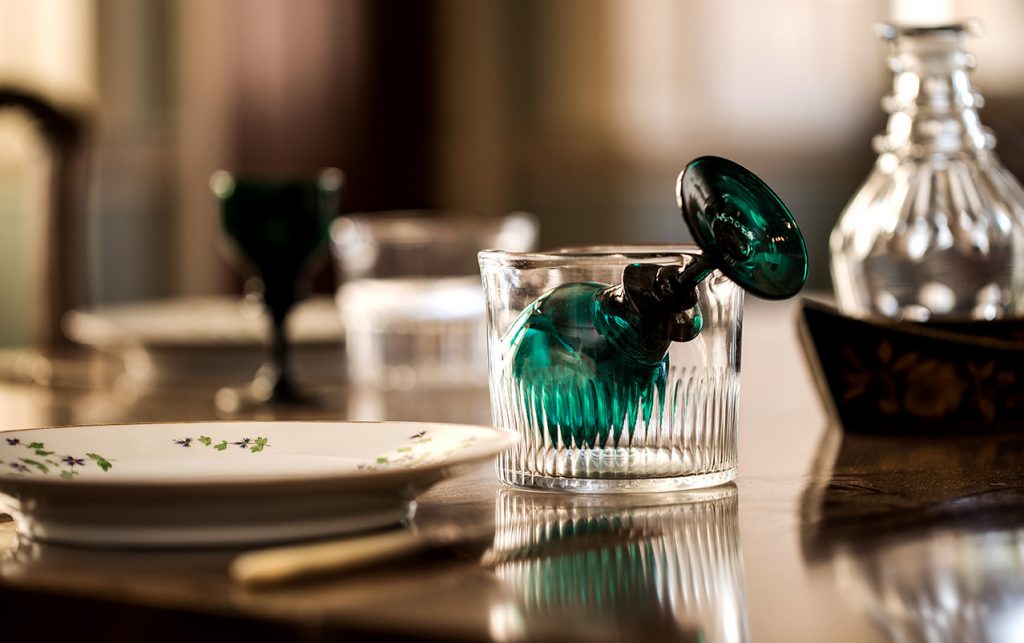
 NTSUSA – What is on the horizon for Toshie Mackintosh?
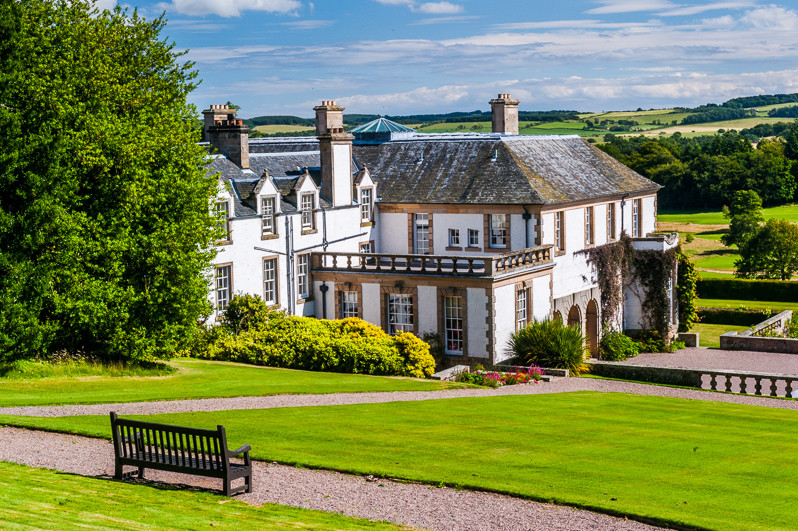
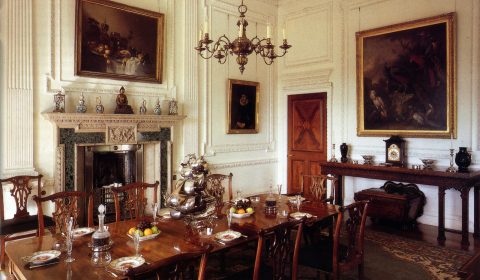
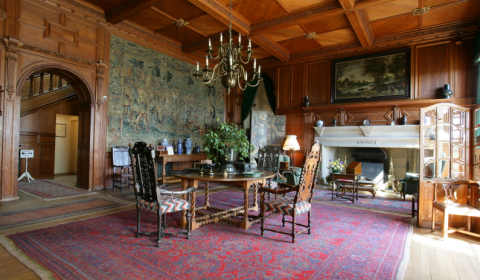
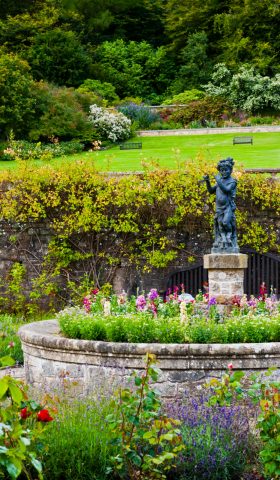 Lorimer also designed the landscaped gardens, with formal lawns, yew hedging, flowering borders and a sunken rose garden.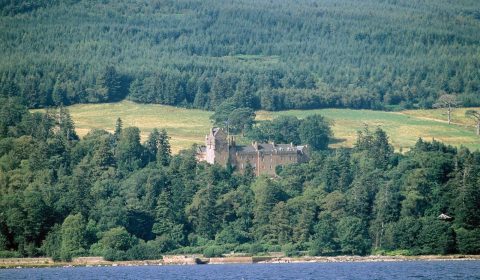
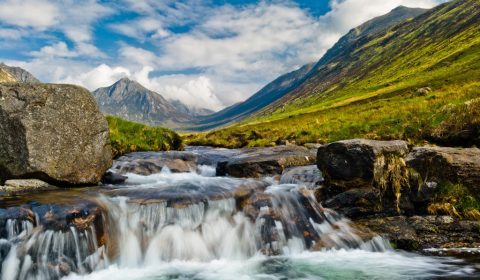
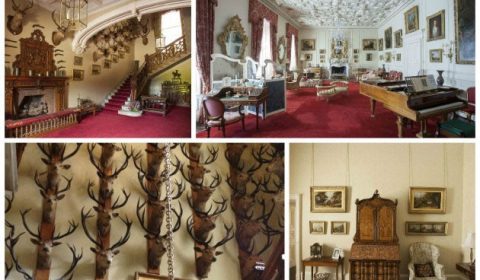
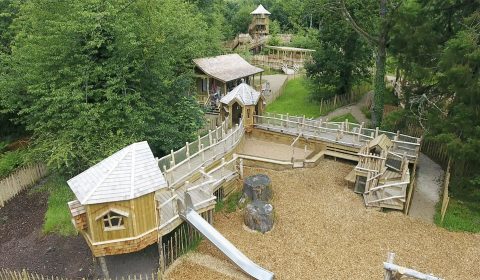
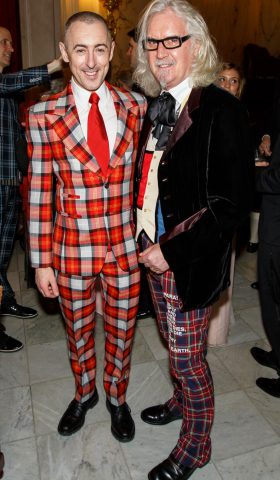
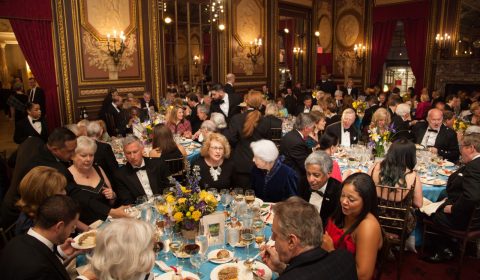
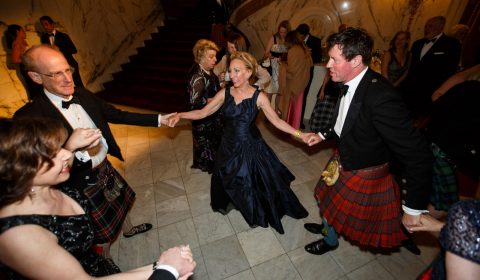
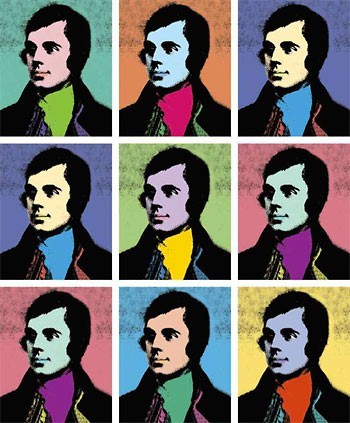
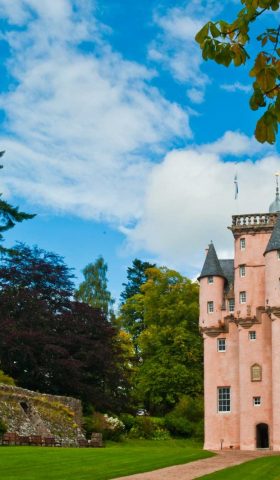
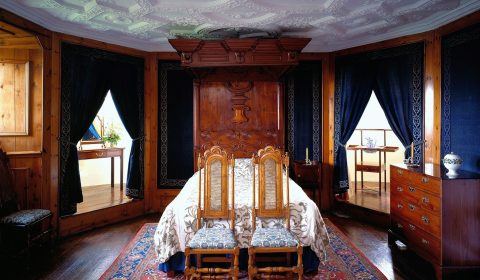
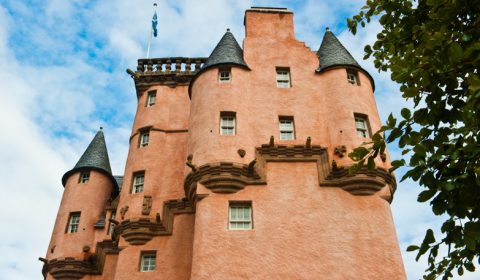 The castle is a fine example of Scottish Baronial architecture and paired with its beautiful surroundings Craigievar Castle looks like it should be the home of a Disney Princess. In fact, it is rumored that Walt Disney saw pictures of Craigievar and that they were part of the inspiration for his design of the iconic Disney Castle. This may be a myth in itself but it is easy to see why it might have been, with its pink walls and turrets, Cinderella would have fit in perfectly. Although, as you now know, the story of the Forbes and the Gordons holds far from a Disney fairytale ending.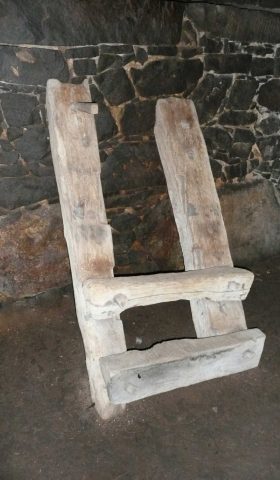
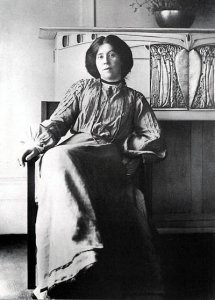
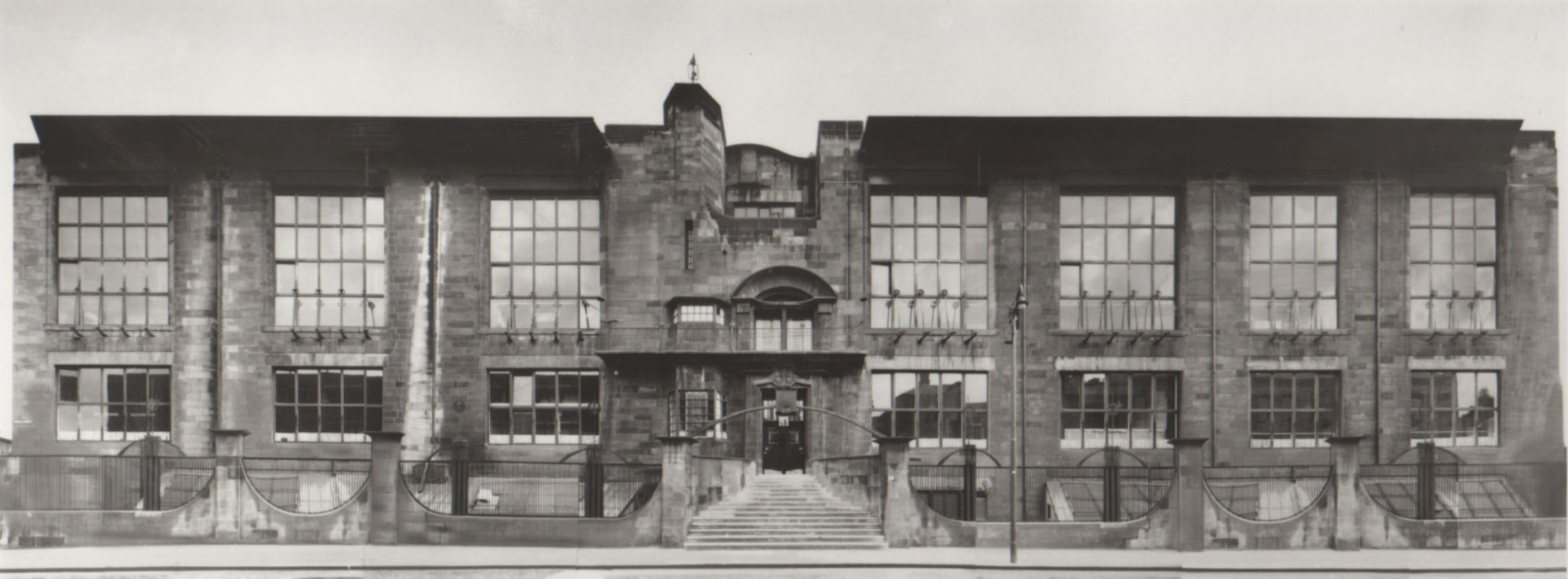
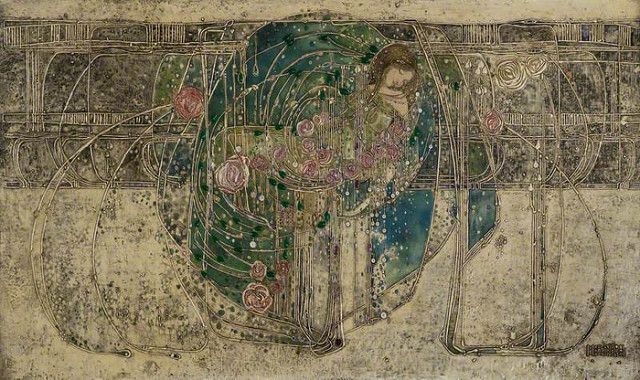
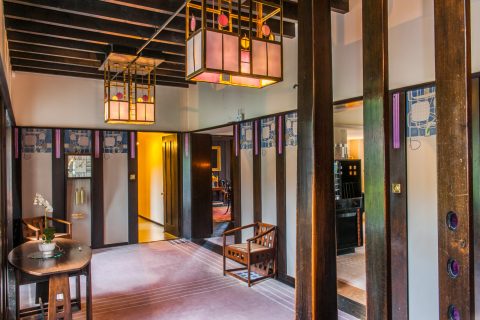 This brings us to the National Trust for Scotland property, The Hill House. In the same year as designing the Room de Luxe at the Willow Tea Rooms, the very busy pair were commissioned by Walter Blackie to design his family home in Helensburgh, just west of Glasgow, atop a hill overlooking the Firth of Clyde. Everything was to be designed by the artists, even the cutlery! For the interiors, Margaret took inspiration from the Blackie family – who had made their living from publishing fairytales. Together, Margaret and Mackintosh created a masterpiece. The entrance hall feels as if you are walking right into the enchanted woods; the drawing room takes your imagination into an elegant rose garden with its extraordinary “Sleeping Princess” gesso above the mantle; and in the bedroom, embroidered silk panels of dreaming women flank the white carved bed and rose colored glass panels. The exterior of The Hill House is striking in its unornamented simplicity. Abstract shapes and forms assemble and reassemble at different angles and points of view. Mackintosh’s approach to the exterior contrasts to the organic nature of the interior, creating a barrier from one world to another.
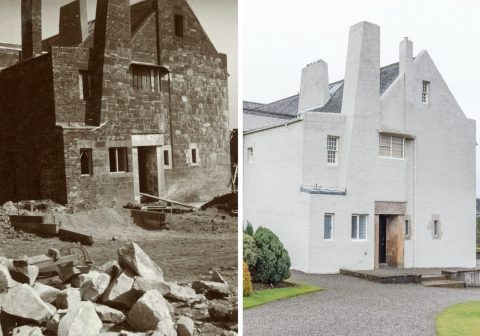 To achieve an unornamented façade, Charles Rennie Mackintosh clad The Hill House in what was at the time considered state-of-the-art building material: Portland cement. The unfortunate result has been persistent and increasingly damaging water penetration that places the house and its artful interiors at severe risk of falling roughcast, damp, and dry rot. Remedies attempted over the past six decades have had an adverse impact on the house’s condition. Seeking a reliable solution, the National Trust for Scotland has embarked on a multi-year project that will result in a long-term maintenance and repair methodology as well as the conservation of the building’s exterior in full view of the public so that visitors can experience firsthand the painstaking, groundbreaking work that goes into preserving an irreplaceable piece of architectural history.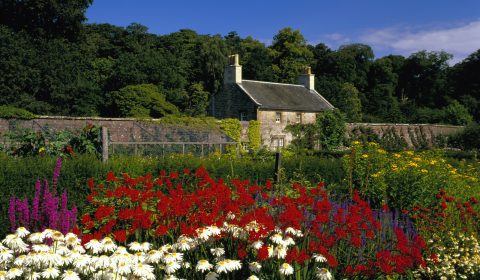
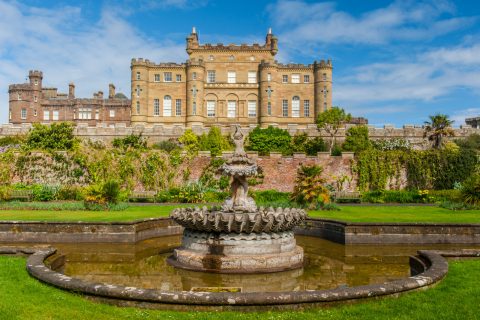
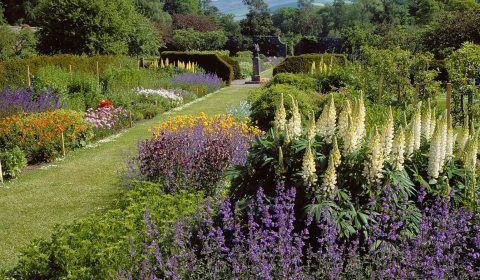
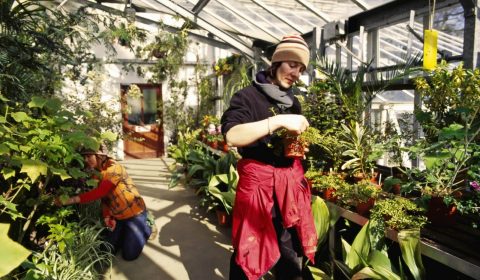
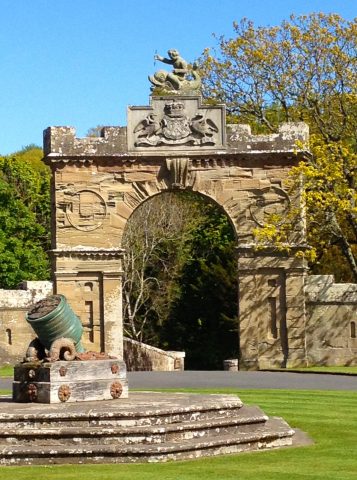
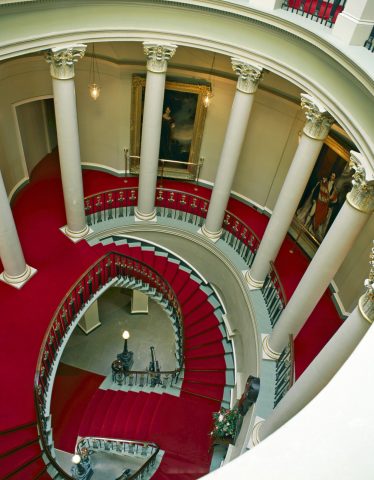
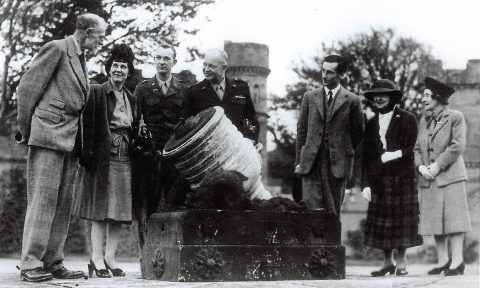
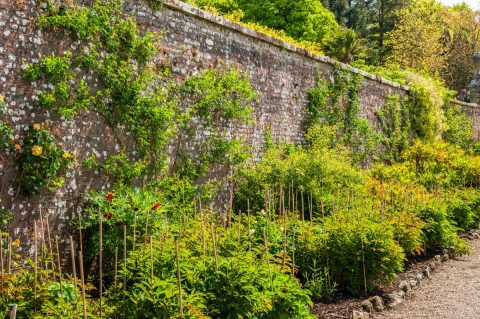
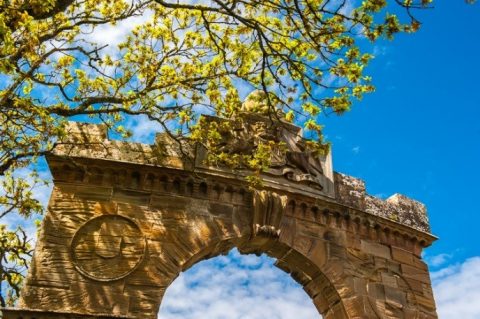
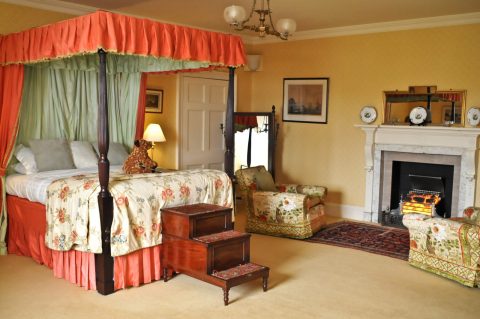
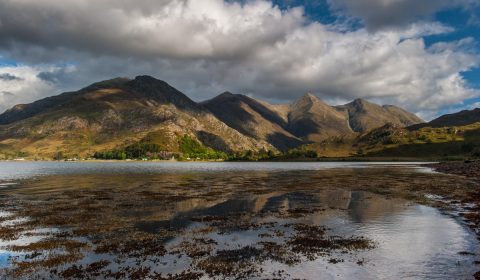
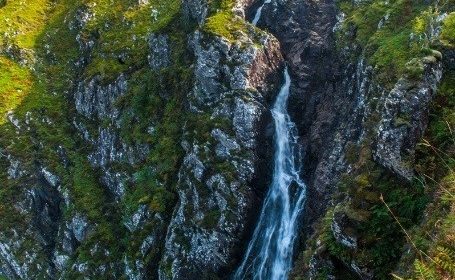
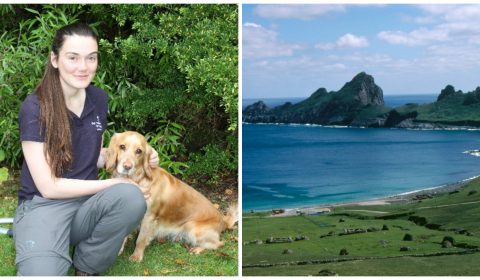
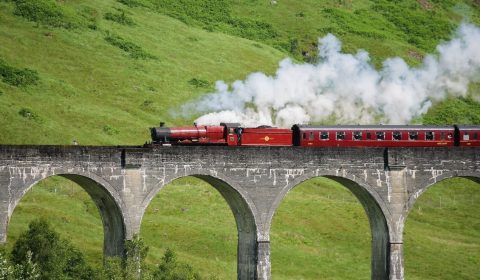
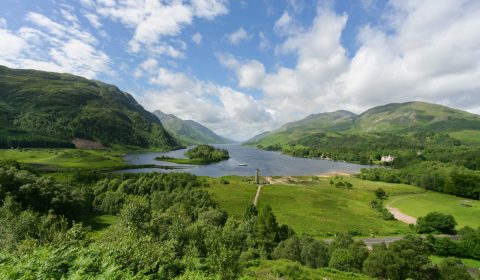
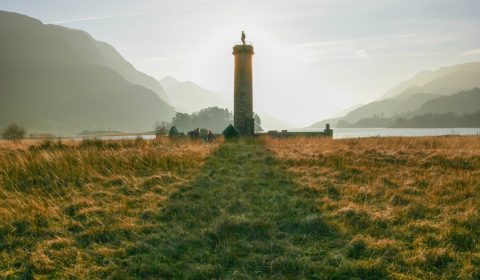
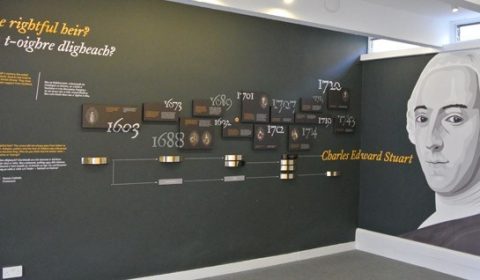
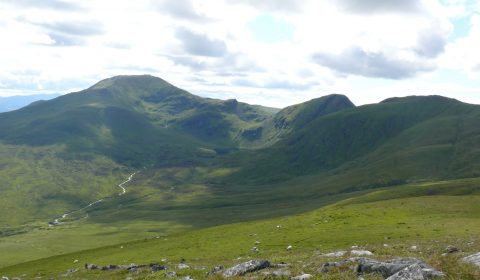
 This week we are lucky enough to get an interview with author and Munroist Alan Rowan about all things Scotland and his debut book, “Moonwalker”. Alan is a mountain fanatic and has climbed the Munros twice, the Corbetts and all the 3000-foot peaks in England, Ireland and Wales, many of them during the “wee, small” hours. He is currently closing in on a third round of Munros as well as ticking off the Grahams.