Scotland’s Hoolie in the City
More than 250 years ago, poet Robert Burns danced to traditional Scottish tunes played on a Baroque painted fiddle at the Bachelor’s Club in rural Ayrshire.
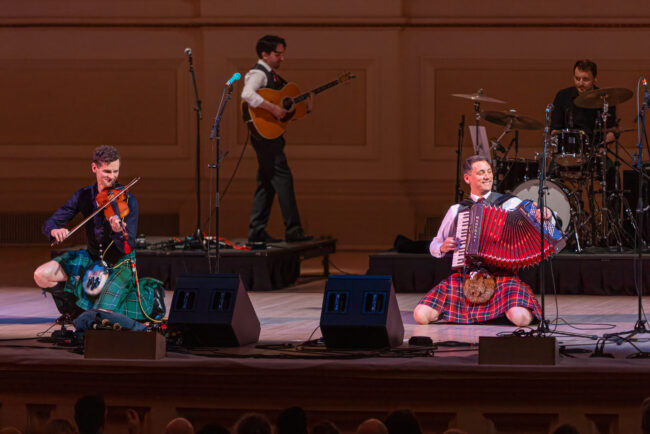
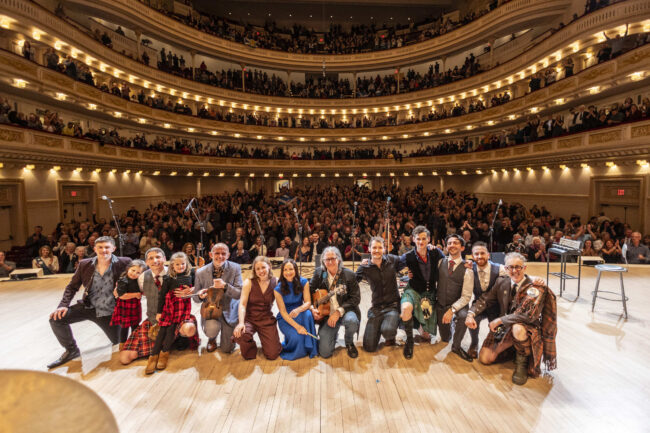
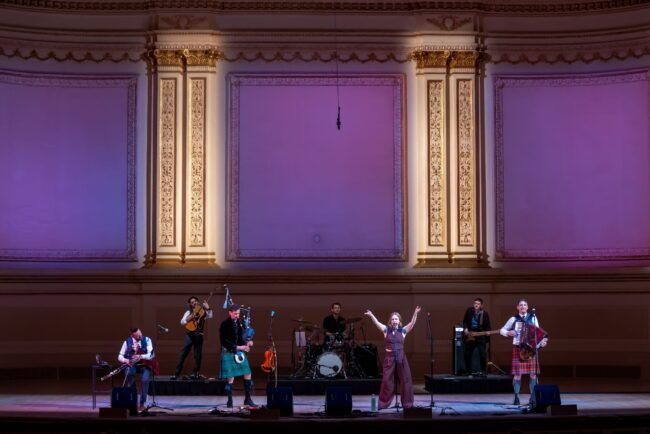
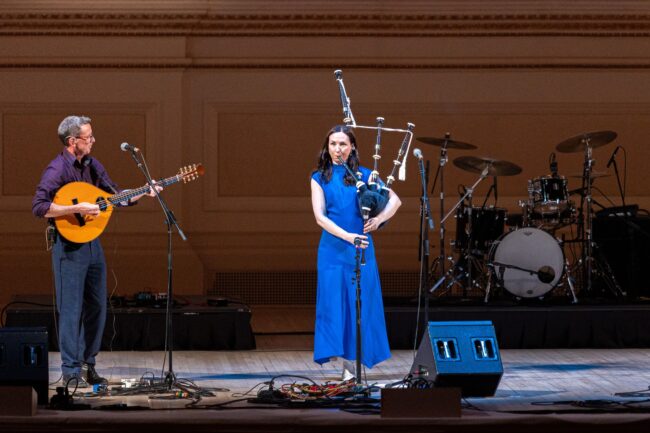
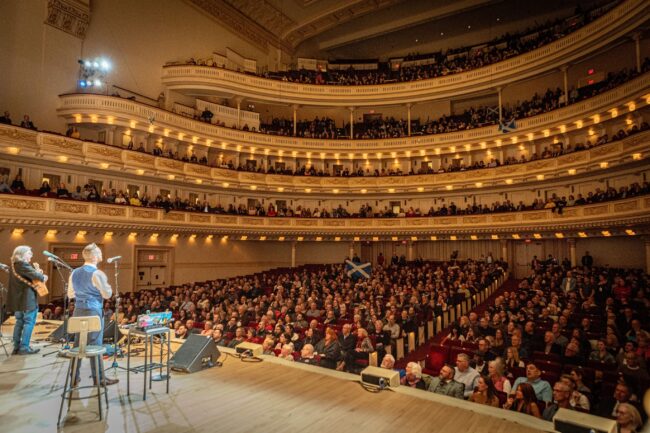
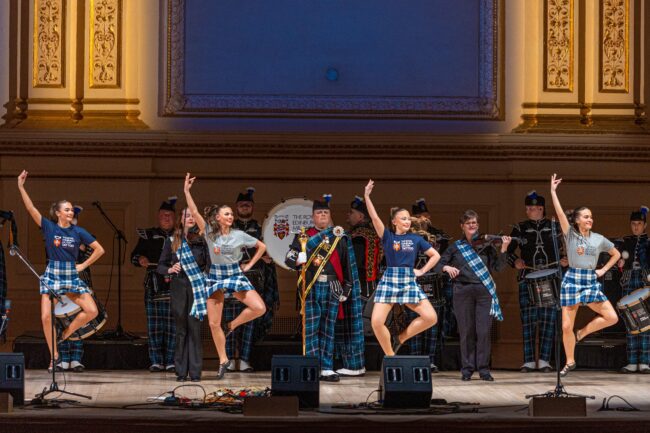
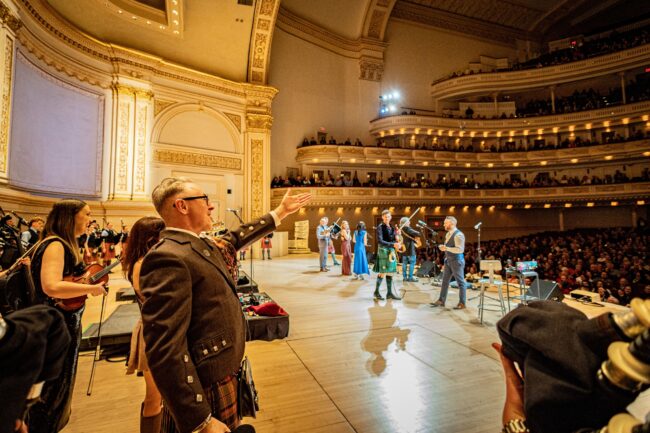
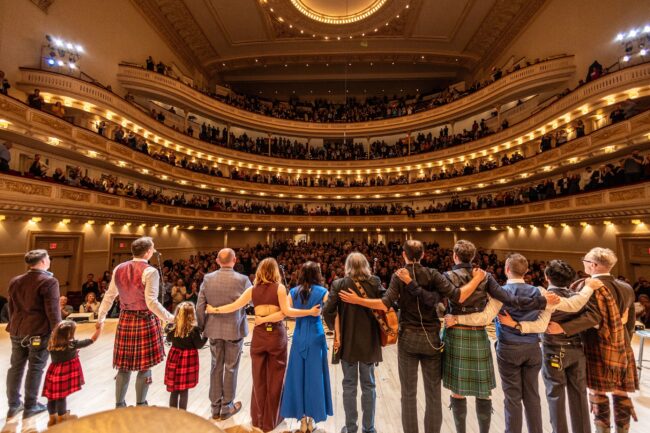
On April 5, the historic instrument – known as the Gregg fiddle – made its debut at Carnegie Hall in the hands of celebrated fiddler and composer Duncan Chisolm. A highlight of the inaugural Scotland’s Hoolie in the City concert, which capped off NYC Tartan Week activities, Chisolm and the fiddle shared the stage with contemporary Scottish icons Alan Cumming (NTSUSA’s 2009 Great Scot), Dougie MacLean, Julie Fowlis, and Mànran, as well as performers from the Royal Edinburgh Military Tattoo and the Oban High School Pipe Band.
The process of bringing the Gregg Fiddle to the US involved significant planning by the National Trust for Scotland’s conservation and curatorial staff and was made possible with the support of Virgin Atlantic and Freeman’s|Hindman. The instrument was described as “an aging celebrity who flew into New York, accompanied by a personal bodyguard” by The New York Times, which highlighted the significance of the “national treasure.” (New York Times: A 270-Year-Old Scottish Folk Fiddle Makes Its Carnegie Hall Debut)
The Gregg fiddle, named for Burns’s dancing master and usually kept safely on display in the Robert Burns Birthplace Museum in Alloway, Scotland, was thought to have been constructed around 1750 and is played a handful of times each year – an important element of the National Trust for Scotland’s efforts to conserve the one-of-a-kind instrument.