Jump to navigation Jump to content

Mackintosh Illuminated

Help Protect the Artistic Legacy of Charles Rennie Mackintosh and Margaret Macdonald

Theirs is a story told so far only in fragments: how two incredible talents arose amid the dynamism of late nineteenth-century Glasgow to create an architectural and artistic vision that continues to resonate worldwide.

Mackintosh Illuminated brings together the conservation of Mackintosh and Macdonald’s physical legacy with fully accessible digital content and community and educational outreach that will position this great artistic partnership as one of the most important in international design history.

We invite you to join us as we shine a light on the remarkable legacy of two of Scotland’s greatest cultural icons.
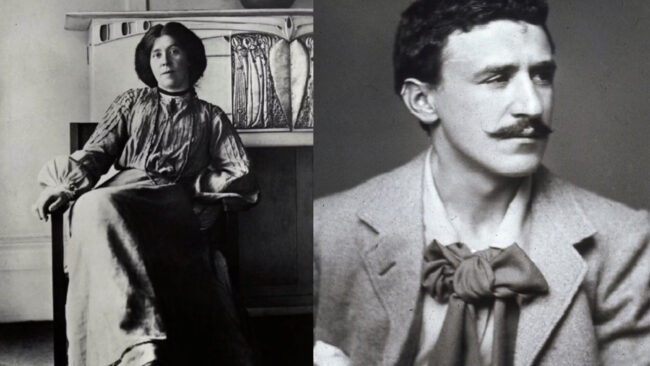
“Margaret has genius, I have only talent.”

-Charles Rennie Mackintosh

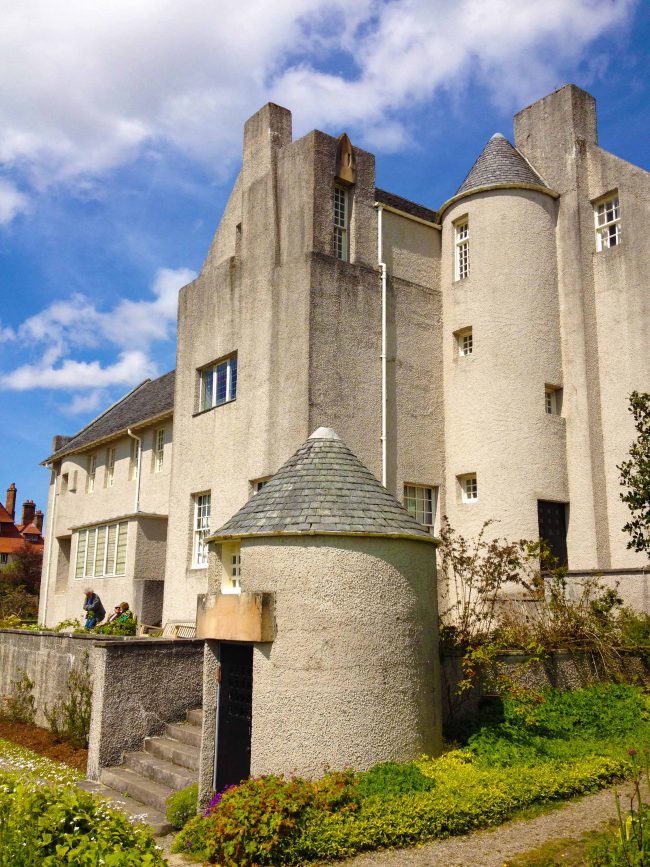
The National Trust for Scotland proudly safeguards two of the most accessible architectural gems by Charles Rennie Mackintosh in partnership with Margaret Macdonald: the Hill House and Mackintosh at the Willow.

Mackintosh (1868–1928) was a pioneer in architecture and design who left an indelible mark on the Arts and Crafts movement. Globally renowned for his avant-garde approach, he seamlessly melded elements of traditional Scottish architecture with influences from Japanese design and the Art Nouveau style.

Mackintosh worked alongside his wife, the artist Margaret Macdonald (1864–1933), to conceive spaces that are total works of art—gesamtkunstwerke—incorporating architecture, furniture, textiles, metalwork, and graphic arts into a unified artistic experience. Together, this visionary couple helped set the world on the path to Modernism.

The Hill House

Built from 1902 to 1904 for Glasgow book publisher Walter Blackie, the Hill House stands as Charles Rennie Mackintosh’s domestic masterpiece and one of the most important Modern buildings in the world. The Hill House’s austere external aesthetic was influenced by Scottish vernacular architecture and contrasts with the adventurous Glasgow Style interior designed in collaboration with his wife. In its most famous rooms, the couple’s total approach to design, which pays attention to every detail from stained glass and textiles to light fittings and furniture, reaches its breathtaking height.

A revolutionary designer, Mackintosh incorporated cutting-edge building materials and techniques to execute his artistic vision. However, the Hill House’s external coating of Portland cement has proven susceptible to water ingress over the past 120 years, exacerbated by the wet climate on the west coast of Scotland, where it rains more than 260 days per year. The walls have become saturated and started to crumble, with damp and dry rot threatening its world-famous interiors.

To prevent further damage, in 2018 the National Trust for Scotland embarked on a pioneering conservation approach: erecting the Box, a protective chainmail shelter that has allowed the Hill House to slowly dry out. The Box must be removed in 2028. Before then, the Hill House will be made watertight, its concrete cladding removed and replaced with new exterior finish. By saving the building and restoring its precious and groundbreaking interiors, we will ensure its enduring influence on design.

Mackintosh at the Willow

Mackintosh at the Willow, which dates to 1903 and sits in the heart of Glasgow’s city center, is the only surviving of four tea rooms designed by Mackintosh and Macdonald for trailblazing entrepreneur Miss Catherine Cranston. Her tea rooms were a popular setting for socializing in early 20th-century Glasgow, especially for women. Patrons had never seen anything like Mackintosh and Macdonald’s daringly stylized interiors, and their design was highly influential on the development of the Modern style in Europe and beyond.

Following decades of closure and deterioration, the Willow Tea Rooms Trust (WTRT) saved the building in 2014 and undertook a major restoration project to preserve its original design, replicating its furnishings so it could be brought back into full use as a restaurant and creating exhibition and learning spaces to enable outreach programs. The National Trust for Scotland acquired the property in 2024 to safeguard its future following a period of uncertainty caused by the cumulative impact of the fires at The Glasgow School of Art and the Covid-19 pandemic.

Mackintosh at the Willow provides the opportunity to link the architect’s masterful design for a family home, the Hill House, with his concurrent and no less innovative commercial work for Miss Cranston. Together, these two buildings tell the story of Glasgow at the turn of the last century, as well as the story of one of Scotland’s greatest artistic partnerships.

Securing Mackintosh and Macdonald’s Legacy

Charles Rennie Mackintosh was a groundbreaking designer whose continuing influence is felt far beyond Scotland. But recent years have not been kind to Mackintosh’s work, and there is deepening public concern for his legacy. Fires in 2014 and 2018 have left only a shell of The Glasgow School of Art’s Mackintosh Building, one of the city’s most iconic landmarks. Other sites designed by Mackintosh, like The Lighthouse and Scotland Street School, have closed. The momentum to celebrate Mackintosh and his artistic vision has slowed.

Margaret Macdonald was a pioneering and accomplished artist in her own right, studying alongside her future husband at The Glasgow School of Art. As a collaborator and an artistic equal, she helped define the Glasgow Style. Together, Macdonald and Mackintosh were selected to exhibit at the avant-garde Vienna Secession exhibition in 1900, where the international art world was entranced by their design for a tea room. Their work influenced Gustav Klimt, Josef Hoffman, and even Frank Lloyd Wright.

But Macdonald’s legacy is still too often overlooked. As part of Mackintosh Illuminated, we will highlight an understanding and appreciation of the couple working in tandem and their vital joint role in the development of International Modernism.

Meeting Critical Community Needs

Our work is not just about heritage – it’s about people.

Glasgow is a city steeped in history and with a thriving artistic culture. But it is also home to 47 of the 100 most deprived housing estates in Britain. Many communities close to Mackintosh at the Willow face poverty, poor health, and unemployment. Before reopening in 2014, Mackintosh at the Willow partnered with The King’s Trust to support skilled employment training for individuals of low socio-economic status. At Mackintosh at the Willow, they have flourished in hospitality and education roles. A key goal of Mackintosh Illuminated is to increase work with underserved communities in both Glasgow and Helensburgh, providing education programs, hands-on training, and partnerships that will help access opportunity while also sparking creativity and joy for new audiences and local visitors.

We Need Your Help

The total cost of Mackintosh Illuminated is $26 million over five years. The National Trust for Scotland has secured foundational funding of $1.5 million from the National Lottery Heritage Fund toward Phase One, with a further $9.5 million pledged for delivery. We now need to bridge a gap of over $15 million to bring this project to life, and we welcome all support.

Join us as we transform public understanding and elevate the legacy of Charles Rennie Mackintosh and Margaret Macdonald.

Sign up to receive occasional updates from The National Trust for Scotland Foundation USA


By submitting this form, you are consenting to receive marketing emails from: The National Trust for Scotland Foundation USA, PO Box 9207, 25 New Chardon Street Lobby, Boston, MA, 02114, https://www.ntsusa.org. You can revoke your consent to receive emails at any time by using the SafeUnsubscribe® link, found at the bottom of every email. Emails are serviced by Constant Contact

This site is protected by reCAPTCHA and the Google Privacy Policy and Terms of Service apply.