
Resilience in Bloom:
A Journey Through Scotland’s West Coast Gardens
This May, I had the opportunity to join fellow NTSUSA supporters on a week-long journey through some of the most extraordinary gardens in the care of the National Trust for Scotland. From the architectural charm of Helensburgh to the rugged beauty of Argyll, Arran, and Gigha, we encountered landscapes bursting with life, shaped by centuries of vision and care.
But alongside the vivid spring blooms, we also saw signs of strain. In the wake of Storm Eowyn, many of these treasured places bore visible damage—fallen trees, disrupted paths, and structural wear that underscored the vulnerability of even the most carefully tended landscapes.
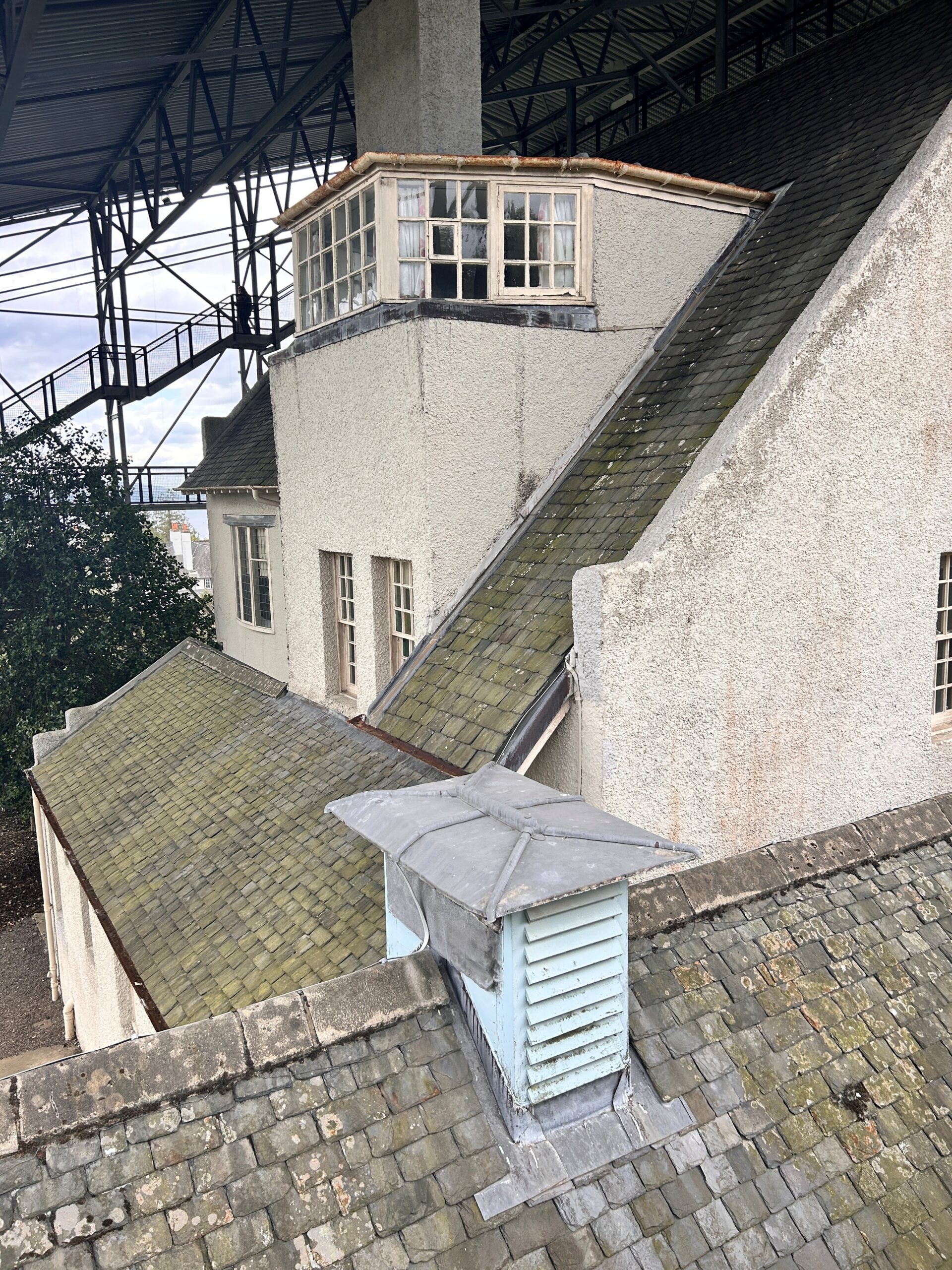
The Hill House
At The Hill House, we saw innovation in action. Enclosed in a protective steel “Box,” the Mackintosh-designed masterpiece is slowly being saved from the elements—a vivid example of the kind of bold, long-term conservation the Trust leads with donor support.
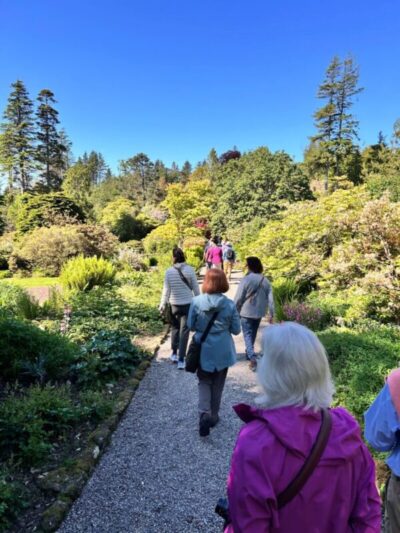
The NTSUSA tour group at Arduaine Garden
Further west, Arduaine Garden welcomed us into a dreamlike coastal landscape of rare rhododendrons, azaleas, and tree ferns. Its unique microclimate nurtures plants from across the globe, but recent storm damage served as a stark reminder of how delicate—and vital—this balance is.
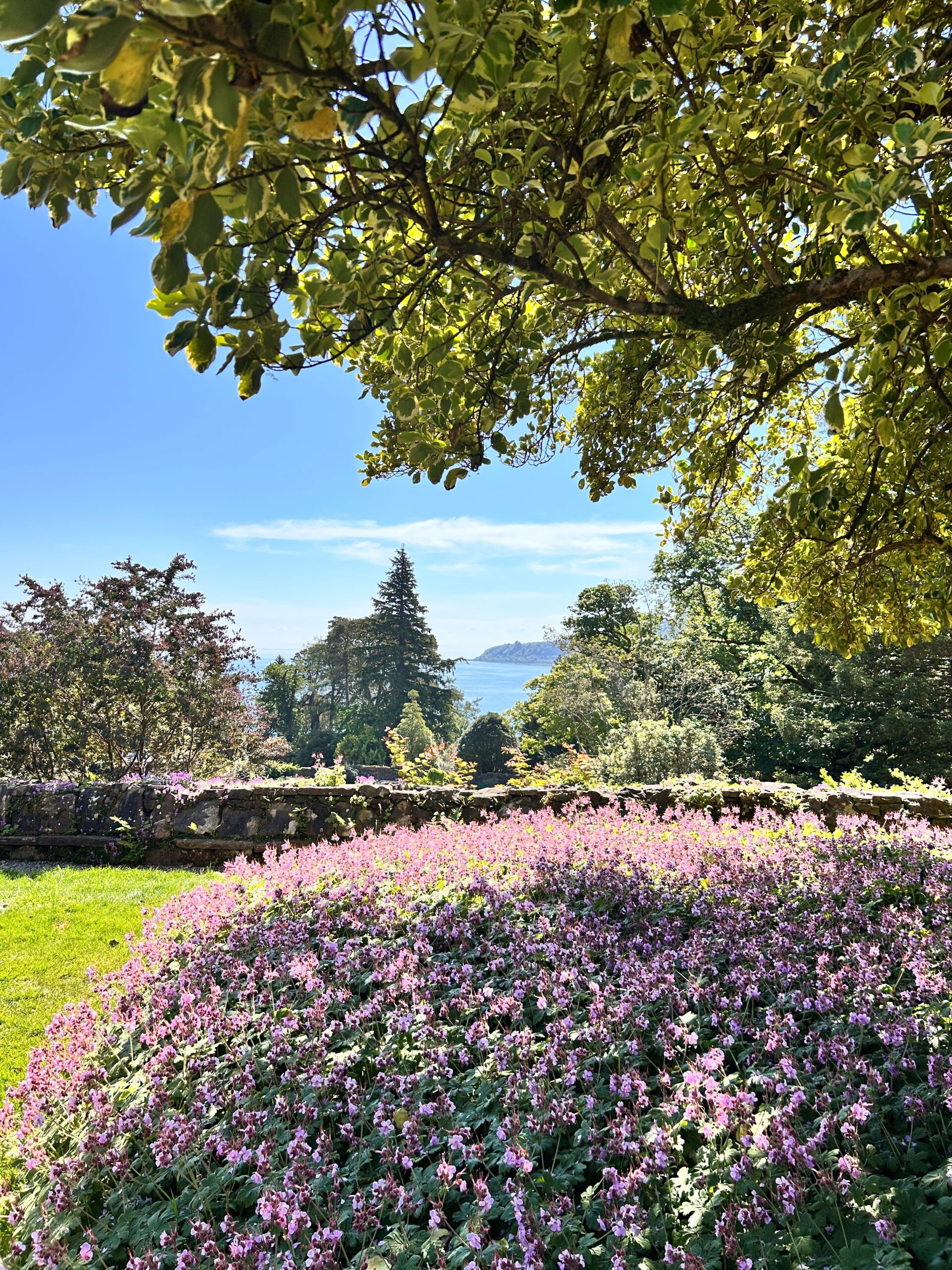
Brodick Bay as seen from the ground of Brodick Castle
On the Isle of Arran, Brodick Castle’s expansive grounds and National Collection of rhododendrons showed us what thoughtful, sustained stewardship can achieve. We explored the walled garden, the whimsical Bavarian summer house, and the extensive woodlands. However, the evidence of recent storms reminded us that careful stewardship is essential to preserve these gifts for future generations.
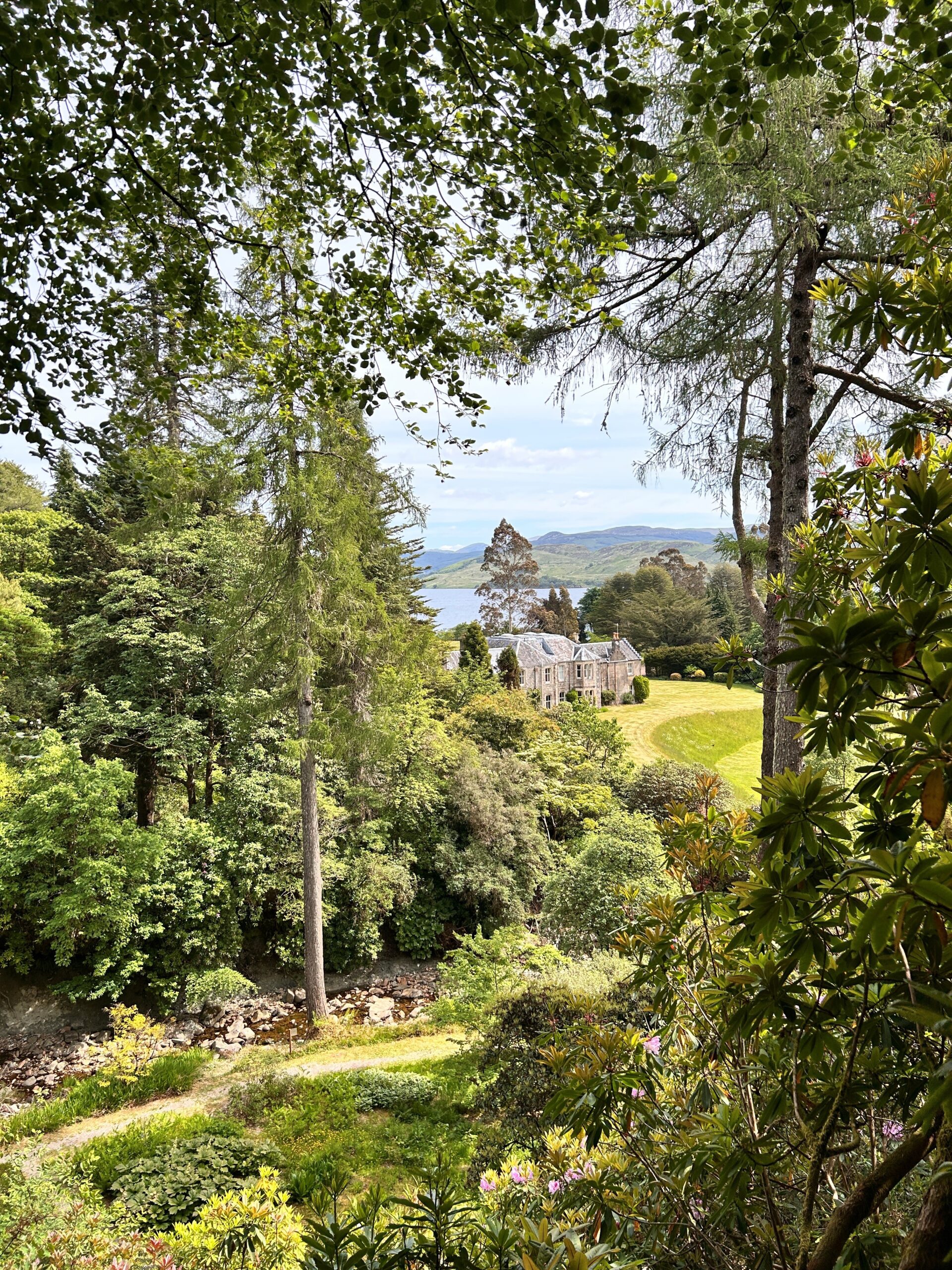
Crarae Garden
At Crarae Garden, towering trees shaded winding ravines filled with Southern Hemisphere plants. It’s a garden unlike any other in the Trust’s care—lush, wild, and deeply impacted by changing climate conditions. Meanwhile, at Inveraray Castle, we walked through formal lawns and flowerbeds that reflected generations of design and labor, their beauty matched only by the dedication required to keep them thriving.
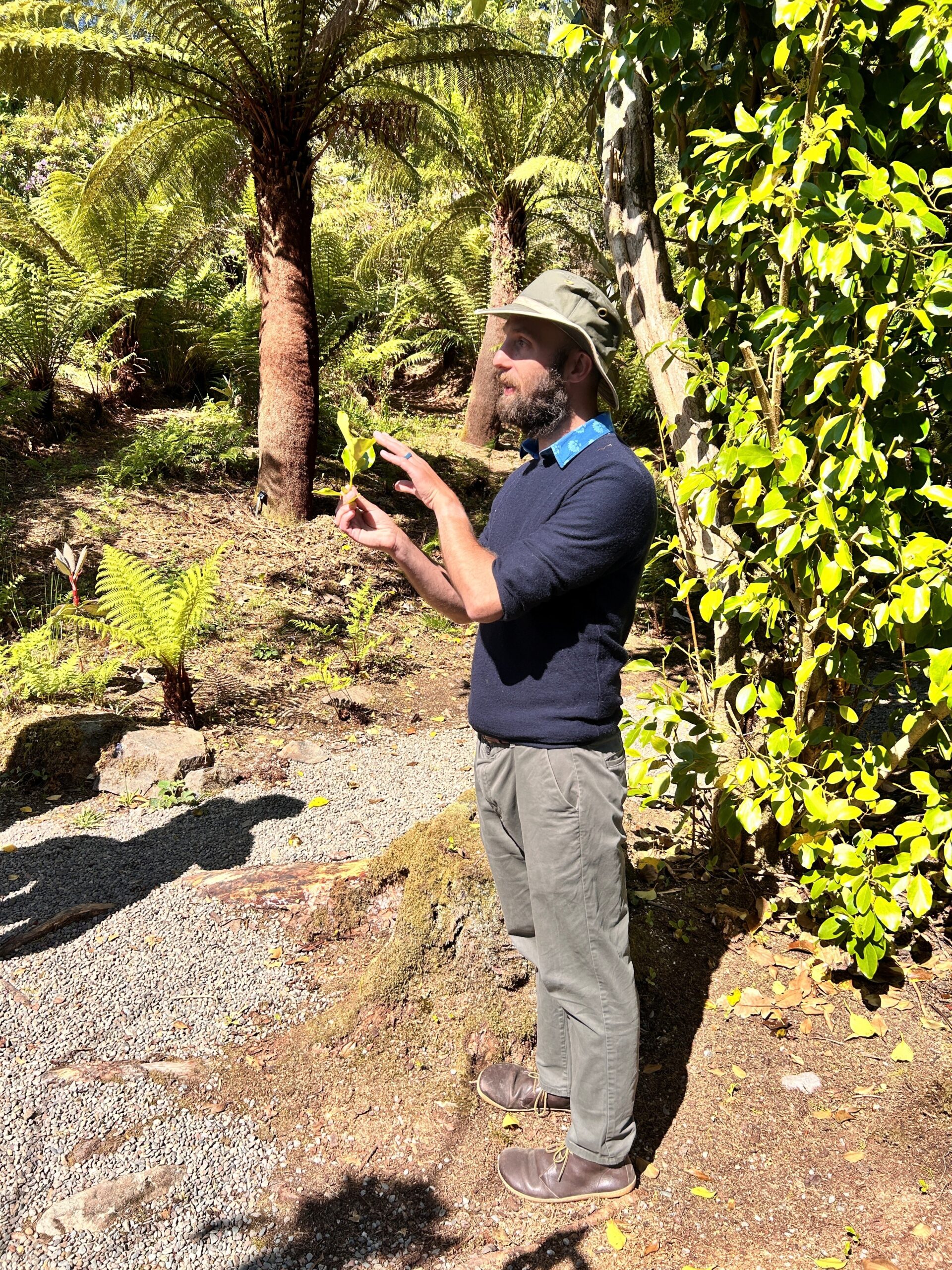
NTS Head Gardner Tim Keyworth
Throughout the trip, we were guided by expert gardeners and NTS staff and local volunteers who shared their deep knowledge and ongoing challenges. Their work—preserving Scotland’s garden heritage through storms, seasons, and centuries—depends on continued investment from people who care.
To walk through these places is to walk through layers of history, artistry, and ecology. To support them is to ensure that future generations will be able to do the same.
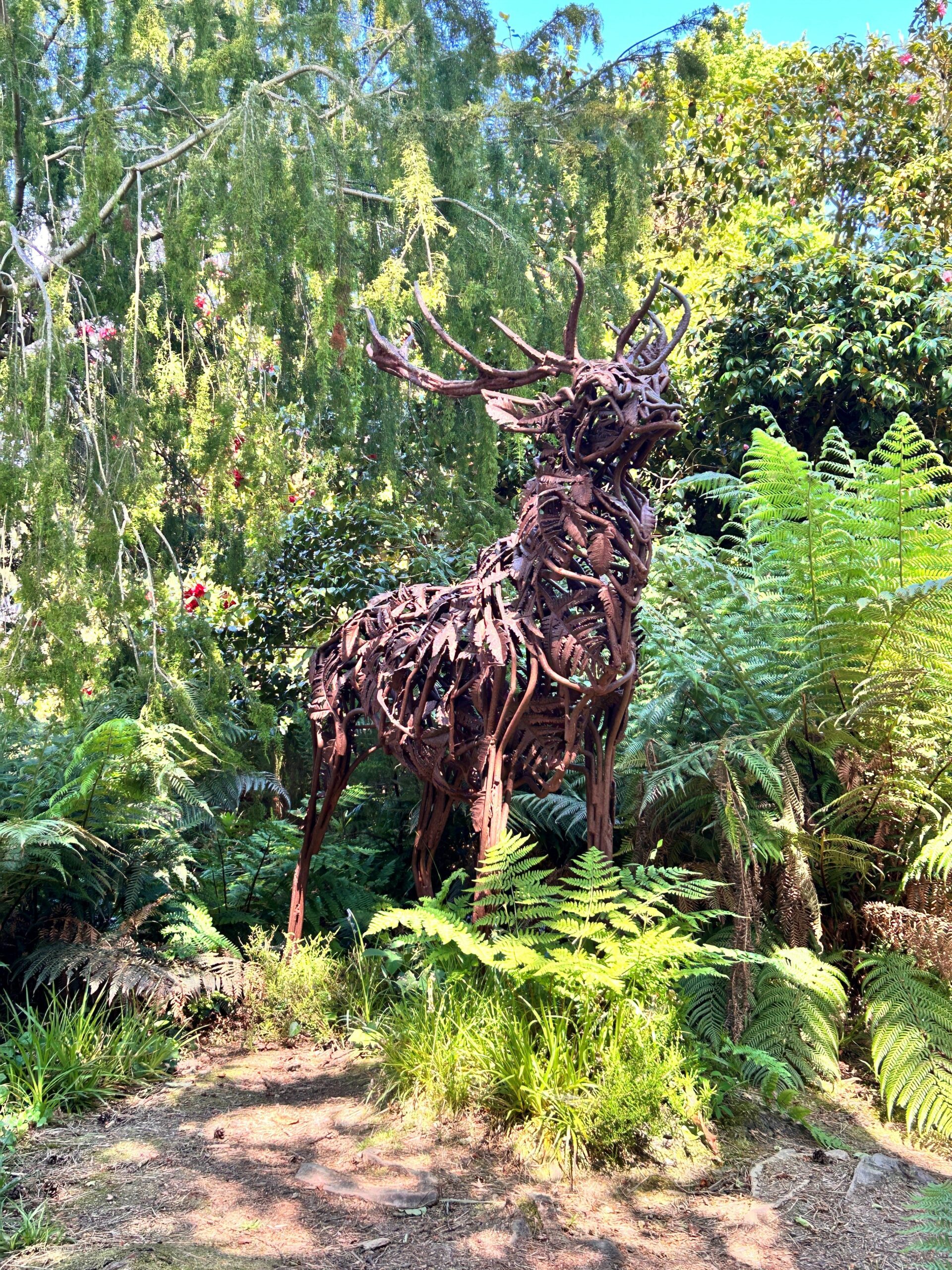
The stag in the woodland gardens of Brodick
As I look back at my photos from this trip—walled gardens, stunning skylines, and a full rainbow of flowers and plants—I’m so thankful for everyone who makes this work possible. These gardens are more than beautiful destinations; they are symbols of what we can achieve together.
Caroline Fonseca
Membership & Annual Programs Manager