
Bringing Burns to the Blue Ridge: Reflections from the Grandfather Mountain Highland Games
Each year, the National Trust for Scotland Foundation USA sends a representative from the Trust to the Grandfather Mountain Highland Games in North Carolina—one of the largest Scottish gatherings in the United States. This July, we were thrilled to have Chris Waddell, Learning Manager at the Robert Burns Birthplace Museum, return for his second visit. Below, Chris reflects on the meaningful connections, cultural celebrations, and memorable moments that made this year’s trip so special.
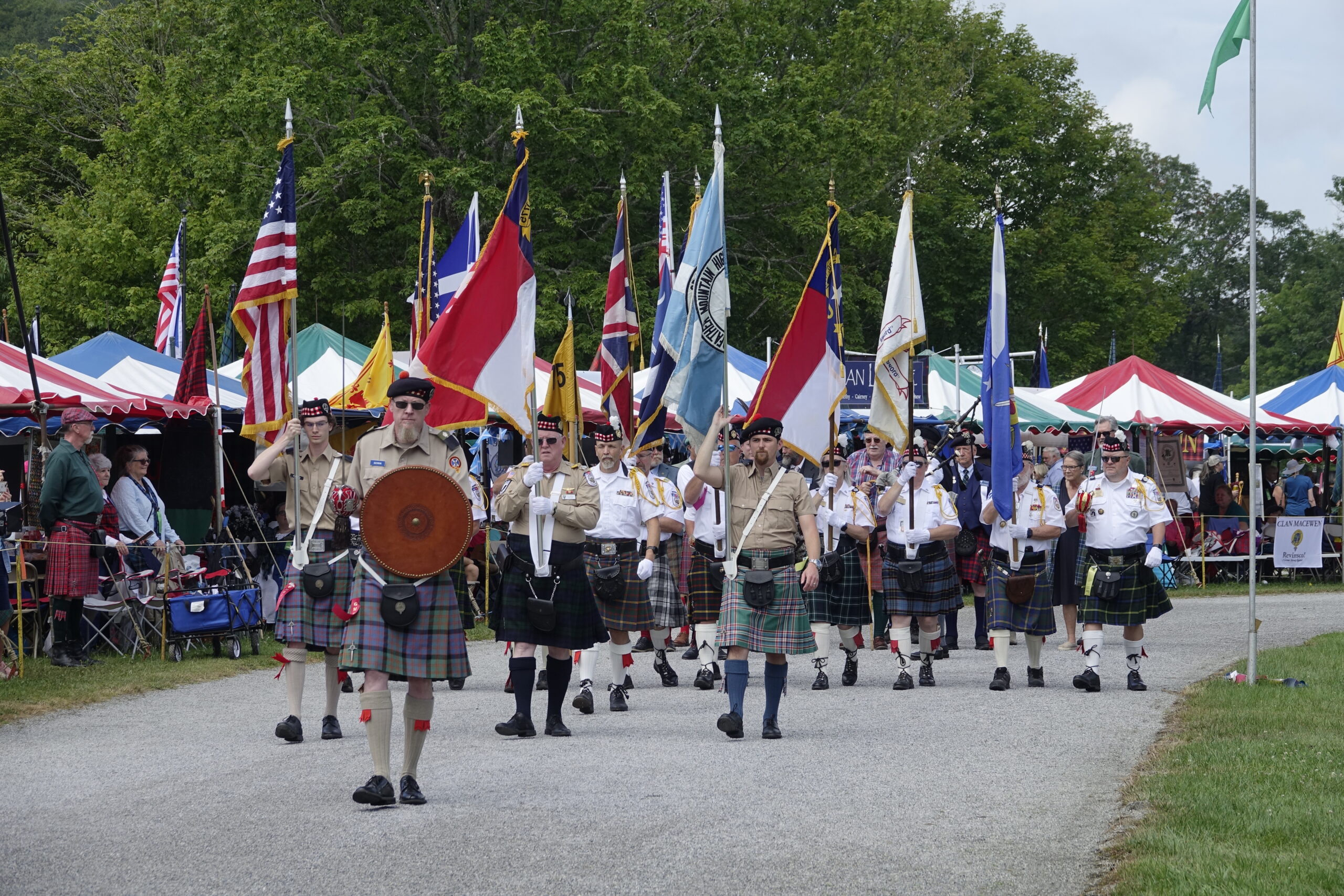
Photo: Bruce T. Hamilton
My name is Chris Waddell, and I am the Learning Manager at the Robert Burns Birthplace Museum in Alloway, Ayr—part of the National Trust for Scotland. This July, I was delighted to return to the Grandfather Mountain Highland Games in western North Carolina, having previously attended in 2023. I had a fair idea of what to expect, but the experience was no less impressive the second time around.
Each year, an NTS representative is invited to attend the Games under the aegis of the NTSUSA Foundation, in partnership with SHUSA (Scottish Heritage USA). I believe this representation is hugely important—it allows NTS to build and foster relationships with our U.S. partner organisations and to strengthen the deep ties that already exist between us.
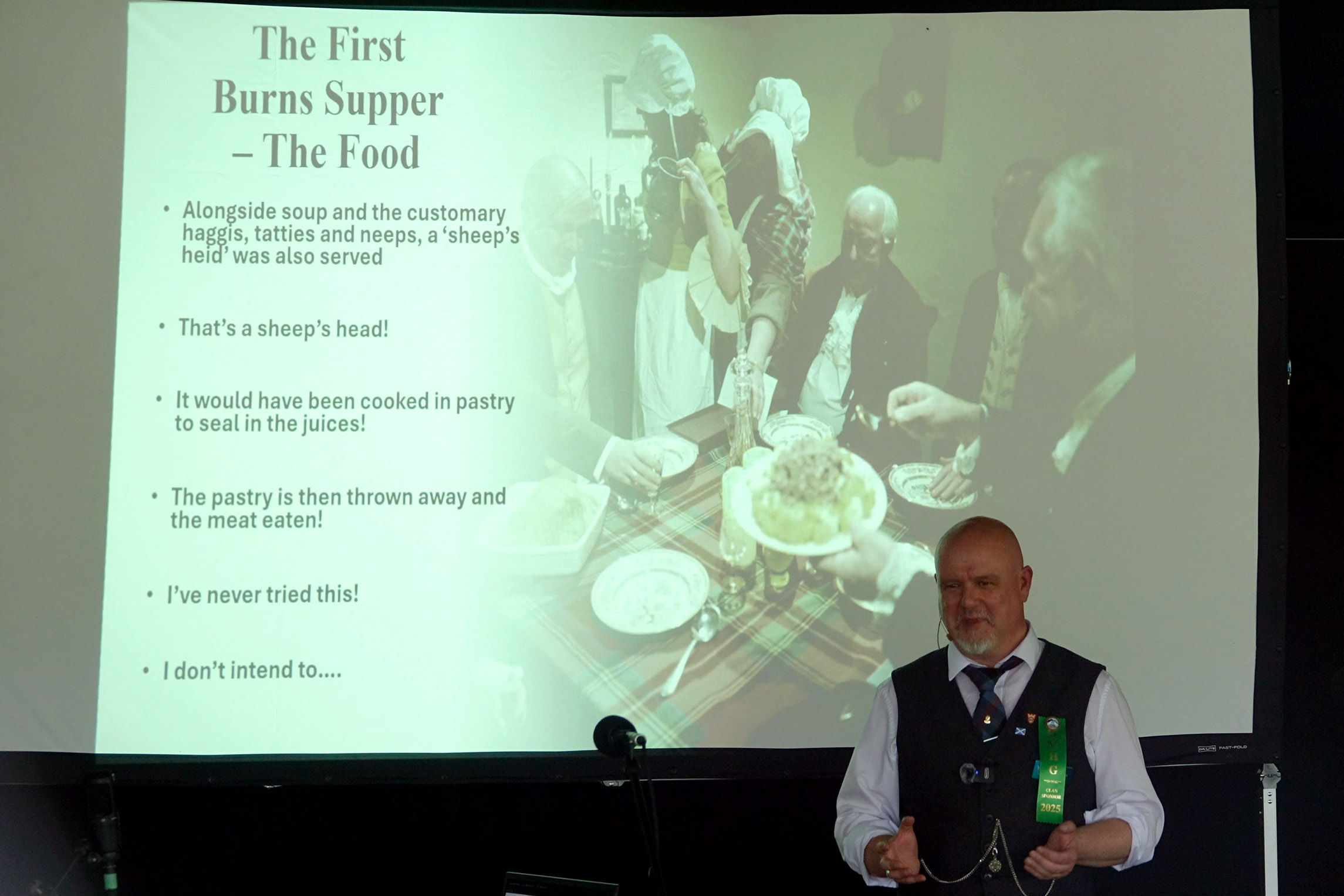
Photo: Bruce T. Hamilton
The primary reason for my visit was to deliver a talk on two consecutive days in SHUSA’s Cultural Village tent. My presentation, entitled From Nine to Nine Million, focused on the genesis and history of the Burns Supper, that auspicious annual event by which we Scots (and others) memorialise our National Bard, Robert Burns. Mine was just one of several talks and musical interludes held in the Cultural Village. The tent, as on my previous visit, drew significant numbers—and it was truly gratifying to speak to such an enthusiastic and receptive audience.
Betty Johnson, a SHUSA board member, arranges the speakers and runs the Cultural Village each year. I can honestly say it’s a pleasure to work with Betty—everything, from the tech setup to the timings, runs with pinpoint accuracy. It’s genuinely gratifying to turn up and find everything in place and good to go! I had met Betty and her husband Sam on my previous visit, and we struck up a terrific relationship. They embody everything that the Games represent—a true love for Scotland coupled with a desire to share our culture and heritage with a broader North American audience.
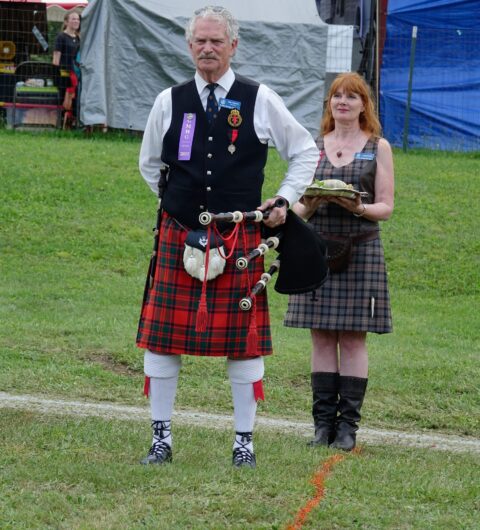
Photo: Bruce T. Hamilton
Sam, a piper of some renown, had previously come up with the idea of piping the haggis into the tent during my talk, followed by me addressing it. We followed through on this, and it went down a storm with the audience! We were ably assisted by Mrs. Jennifer Begley, who carried the haggis—an often overlooked and yet vital part of the ceremony!
Even though I had visited the Games before, I was still struck by the sheer scale of the event. Tens of thousands of people attend from all across North America—including dozens of Clan Societies, pipe bands, traditional musicians, craftspeople, and of course, the Games competitors themselves. The clan element is particularly striking. Our American cousins have a deep desire (naturally) to determine and connect with their roots, and the various clan societies—dozens of whom were in attendance—provide people with the opportunity to do just that.
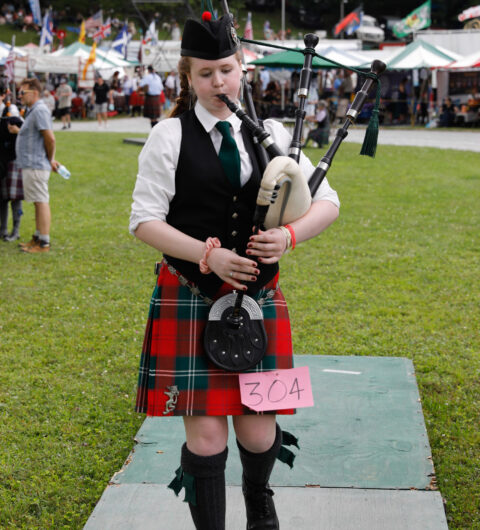
Photo: Bruce T. Hamilton
Once again, I was invited to stay with SHUSA colleagues in a beautiful cabin house in the picturesque town of Banner Elk. I had stayed in the same house on my previous visit. It’s a wonderful spot, set on a wooded slope with views across a broad valley to Sugar Mountain—a noted ski resort in this part of Appalachia. I sat on the balcony in the mornings with my coffee and watched the play of groundhogs and white-tailed deer in the grasslands sloping down to the town. A true American idyll.
One can easily discern why this landscape attracted those ancestral Scots and Scotch-Irish to this region. The very place names themselves sing of Scotland’s genetic and cultural stamp, so deeply imprinted on this beautiful corner of North Carolina—Grouse Moor Road, Tynecastle Drive, the Scotchman retail centre, the Tartan restaurant, and of course, MacRae Meadows, where the Games are held.
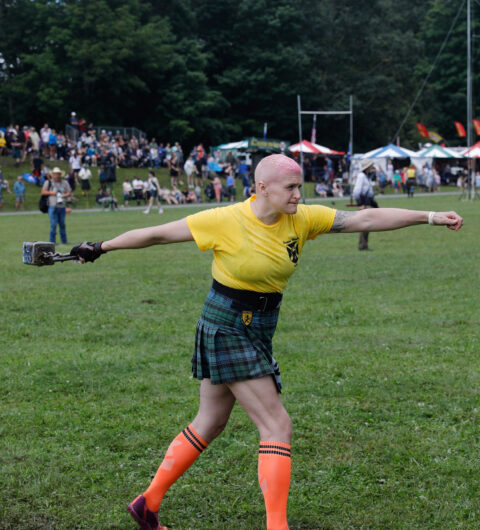
Photo: Bruce T. Hamilton
This is why I feel the work of both the NTSUSA Foundation and SHUSA is so vital. The links between the peoples of Scotland and the United States are strong. They run deep. The number of be-kilted bairns and young people in attendance and having a great time at the Games suggests that this will not change any time soon. That shared heritage and culture is manifest at Grandfather Mountain, and these two excellent organisations help maintain it.
A celebration of Scotland? Aye, it is that—but it’s a celebration of the United States too. Lang may it continue!
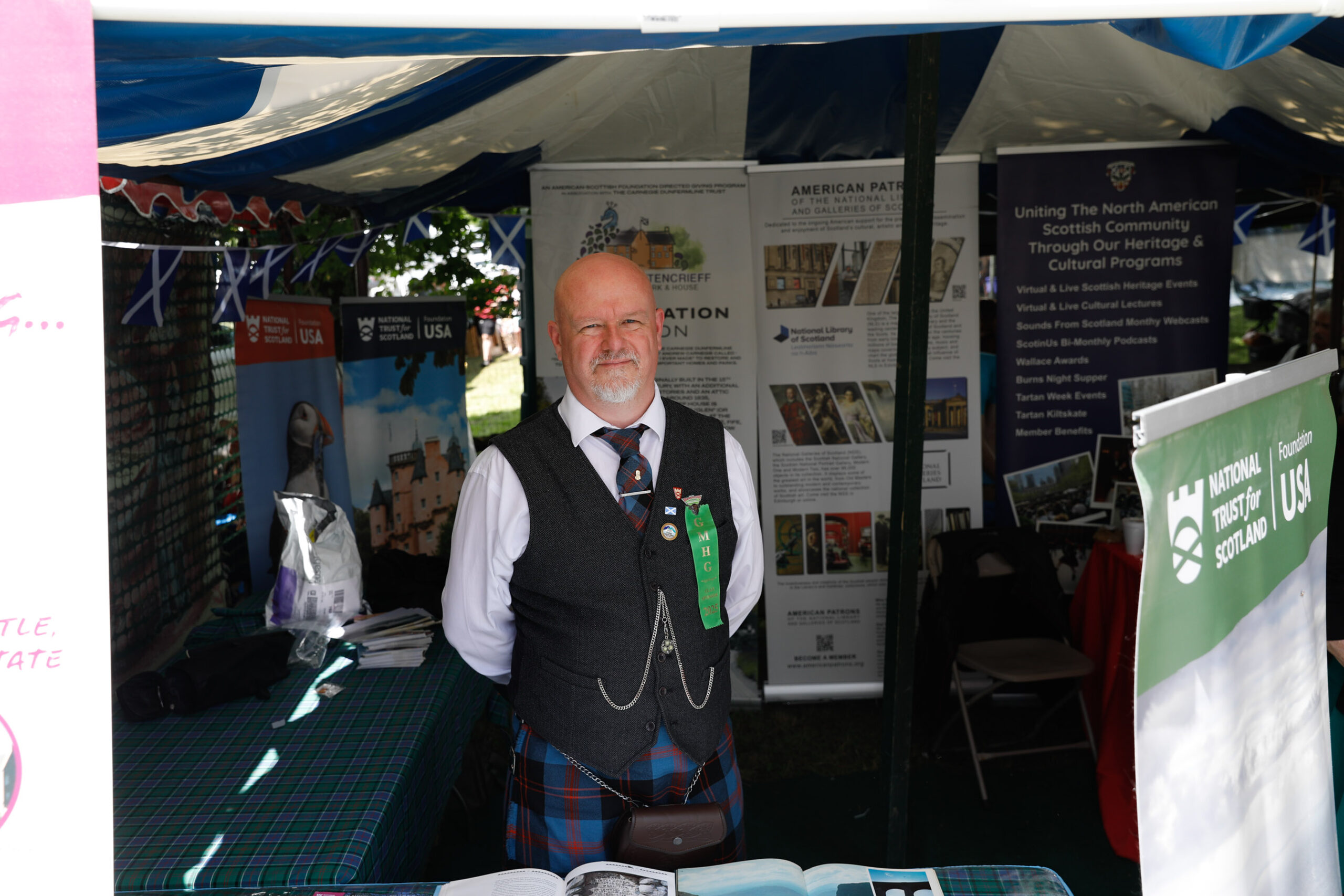
Photo: Bruce T. Hamilton
Finally, I would like to thank all of those who made my visit such a happy one: Peter Wilson, Betty Johnson, Sam Johnson, Randi Lowery, Jen Begley, Adrian Begley, Andrew Morrison, Pat and Elaine Apperson, Dan Henderson, Bruce Hamilton, Craig Long, Mike and Jackie Trotter, Bill Caudill, Camilla Hellman, Robin Duff, Suzie, Sylvia, and of course, my NTSUSA colleague, Caroline Fonseca.